Monday, June 6, 2011

War Stories

I had originally planned to post this on Memorial Day, but decided to save it until today, the 67th anniversary of th D-Day invasion of Fortress Europa.

*****

“Dad? What did you do during the war?” I imagine I was like many young boys my age when they first learned that their fathers had served in the military during World War II. My father would occasionally share some of his stories although I was perhaps too young to understand just what he was telling me or how painful these memories might have been for him. All sons look up to their fathers as heros. I did. It was not that many years earlier that he and his buddies, following the massive D-Day invasion, were slogging their way across northern France in late 1944, slowly pushing the Germans back to their own border. Dad never really went into many details about the war, or exactly what he did, but there were a few stories and I still remember them as clearly as the day he told them to me. Perhaps the most vivid of these, the one that still stands out in my own recollections of my childhood, was Dad’s participation in the Battle of the Bulge, also known as the Ardennes Offensive, the greatest land battle ever fought by the military forces of the United States between December 16, 1944 and January 25, 1945. This great battle halted the final Nazi juggernaut to defeat the Allies and turned the tide of war against the Germans who would surrender just six months later.

I wrote briefly about Dad’s wartime service shortly after his death, in October 2009. He had served in the104th Infantry Regiment, 26th Infantry (Yankee) Division in General George Patton’s Third Army during the northern European campaign, in 1944-1945. During my recent spring sojourn in Florida I visited Dad’s grave for the first time since his memorial service at the Florida National Cemetery the previous spring. It was my first opportunity to see the inscription on the marble tablet marking the niche containing his ashes. It was then and there that I learned for the first time, and much to my complete surprise, that Dad had received the Bronze Star, the fourth highest decoration awarded for distinguished, heroic or meritorious achievement or service in combat. He really was a hero even if not that many people knew it.

A few days later my wife and I visited with one of just a handful of surviving members of Dad’s unit. I first learned about Harry a few years ago when I was doing some online research on the Ardennes region of eastern Belgium and Luxembourg. I came across a photo essay on the area by a veteran of the Battle of the Bulge who had returned to visit the places he knew from the war. Many of the places and events he described seemed very similar to the ones my Dad had told me about when I was a kid. I called Dad up and asked him whether he knew the guy who had posted the photos. “Why sure,” he said.” Harry was one of my closest buddies during the war.” They had not seen each other since the early days of 1945, in the immediate wake of the battle, and, as it turned out, they lived only a few miles apart in Florida. Dad gave Harry a call and over the next few months they renewed their old friendship. Harry and I also exchanged occasional notes and we planned to meet one day when my travels took me to Florida. I regret that I was not able to meet with Harry when Dad was still alive, but over our recent lunch I told Harry what I knew of Dad’s wartime exploits and Harry was able to fill me in on many more details. He answered a lot of questions I had about that chapter of my Dad’s life.

*****

Dad was drafted into the US Army on April 3, 1943, just a couple months shy of his 19th birthday. He left his native Michigan and did his basic training at Fort Jackson, in Columbia, South Carolina, where he was eventually assigned to the 104th Infantry Regiment of the 26th Infantry (Yankee) Division. He underwent training there , at Fort Campbell, Kentucky, and participated in the Second Army’s maneuvers in Tennessee the winter of 1943/1944. Shortly thereafter Dad and Harry were both assigned to the regimental band at Fort Jackson. As Harry told me, the band was formed in early April 1944. It was originally established as a drum and bugle corps and the men were issued plastic bugles. Later they all sent home for their own instruments and became a band. Dad played the bass drum and Harry played the trumpet. The army’s table of organization had no provision for a regimental band (they were only authorized at the divisional level), but the regimental commander wanted a band “and by God he got one.” Tearing up a little, Harry told me that most of them, including himself and Dad, would not have survived the war had they not been plucked from their rifle companies and transferred to the band. Maybe so, but they saw combat once they arrived in Europe. There was plenty of death and destruction, but the band played on.

They finally left Fort Jackson, in August 1944, upon completion of basic combat training, and from there Dad and his unit were sent to the huge Camp Shanks - Last Stop USA” - in New York’s Hudson Valley. It was time to go to war. Dad would serve until his discharge in early January 1946 and he and Harry and their buddies would grow up fast in those years of hardship not knowing if they would survive. A lot of the brave men who went to war never came home. Dad and Harry were lucky.

The Yankee Division was originally formed out of Massachusetts National Guard units for service in World War I as part of the Allied Expeditionary Force. It has had a long and distinguished history. In World War I, its 104th Infantry Regiment became the first US Army regiment to receive the fourragère of the French Croix de Guerre after showing “fortitude et courage” in repelling a German attack at Aprémont on April 10-13, 1918. These words have been the regiment’s motto ever since.

After Camp Shanks the division embarked from Fort Miles Standish, at Boston, in late August 1944. It crossed the Atlantic on the SS Argentina, an old Moore-McCormack passenger liner built in 1924 to accommodate 750 passengers. As a troop ship plying the North Atlantic between 1942 and 1945, it carried almost 5000 fully armed troops on board as it transported the division directly to Cherbourg, France where it landed on September 7, 1944, some three months after D-Day. The division was attached to III Corps, Ninth Army at the Valognes staging area where it underwent extensive combat training and was assigned to local security duties along the Cherbourg peninsula and the Normandy beachheads used on D-Day.

Following this training the 26th Infantry Division was assigned in October 1944 to XII Corps in General George Patton’s Third Army which had been deployed to France after D-Day to support the Allied offensive. Third Army moved so quickly across northern France that it soon out distanced its supply line and had to slow down its advance. The division departed Normandy for the Third Army operational in the Lorraine region in northeastern France, the same area where it had served with distinction in World War I. There it took up a defensive position on Third Army’s right flank, relieving the 4th Armored Division near Salonnes. The 104th Infantry Regiment had its baptism of fire in an action against the German 11th Panzer Division in the Moncourt Woods, northwest of Bezange-la- Petite, in late October. This si where their training paid off as these green soldiers went up against a seasoned German division.

During the first week of November, Third Army prepared to launch a large-scale offensive along the front near the German border. The first major offensive action by the 26th Infantry Division was against German positions in and around Moyenvic and Vic-sur-Seille on November 8. The 104th Regiment advanced on the left flank toward Hampont and the Houbange Woods, and it captured Bennestroft two days later. The regiment proved it was up to the task assigned to it and it added a second regimental Croix de Guerre to its colors for service at Vic-sur-Seille.

The division continued to advance on Saar-Union in late November and into early December with the 104th Regiment crossing the Canal du Rhin au Marne on December 1. Just a few days later the regiment reached the Maginot Line, a system of concrete fortifications constructed by the French near the border with Germany after World War I. Thereafter the regiment regrouped and conducted mopping up actions in le Grand Bois before launching an attack against heavy German resistance at the Maginot Line near Kalhausen as part of Third Army’s assault on the Saar River basin and Germany. The 26th Infantry Division was relieved by the 87th Infantry Division in XII Corps sector on December 10, the day the rest of Third Army crossed into Germany. It was reassigned to III Corps and transported to a rear area near Metz for some much needed R&R.

But there was no rest for the weary. During the early morning hours of December 16, the Germans launched a surprise major counteroffensive through the Ardennes of Luxembourg and eastern Belgium in a last ditch effort to divide American and British forces advancing toward Germany. The Germans quickly advanced westward creating a large “bulge” in the Allied lines while never actually breaking out. Third Army was forced to suspend its offensive in the Saar Basin and reposition its forces in order to address the new German offensive. All units of Third Army would be thrown against the southern shoulder of the bulge. III Corps, including the 26th Infantry Division, was transported from Metz to the vicinity of Arlon, in southeastern Belgium, on December 19. The division found itself at Eischen, Luxembourg on December 21.

III Corps launched an assault northward through western Luxembourg the following day to help relieve American forces under siege at Bastogne, Belgium. Not knowing for certain where it would encounter the German salient, the 26th Infantry Division, with the 104th on its right flank, first encountered German resistance near Rambrouch some 16 miles north Arlon and Eischen. By December 23 the 104th was advancing through the hills and gorges of the Ardennes toward the Sûre (Saar) River north of Grobus where the Germans had counterattacked. III Corps met heavy Germany resistance throughout December 24 and Christmas day as it continued to advance northward. There was intense combat on Christmas morning in Eschdorf which fell to the 104th on December 26. Still on the division’s right flank, the 104th then moved up to Esch-sur-Sûre to establish important bridgeheads over the Sûre on the 27th. While the 104th secured the bridgehead, the remainder of the division continued its northward advance on the Wiltz River, in northern Luxembourg, in the closing days of 1944 in an effort to break the German siege of Bastogne. Dad and his unit remained in Esc-sur-Sûre for several day securing the regimental headquarters in the Hotel Ardennes. It was here that he won his Bronze Star.

By early January 1945 III Corps and the 26th Infantry Division had reached a virtual standstill just south of the Wiltz River. Heavy snow and German resistance stalled the drive to reinforce American forces that had finally broken the siege of Bastogne. The 104th was positioned north of Nothum and on the high ground above the river in the vicinity of Mon Schumann. The division would remained in this general vicinity until January 20 when the German offensive had all but collapsed. The division finally crossed the river on January 21 and secured the town of Wiltz. By January 25 the German offensive in the bulge was over and Third Army resumed its eastward advance from northern Luxembourg.

The 26th Infantry Division was transferred from III Corps to XX Corp in western France. The 104th, which had been held in reserve, departed Niederwiltz on January 27 and was sent to Boulay, in northeastern France. It was the first element of the division to arrive back in the same area of the Saar Basin where it fought back in November and early December. Never able to enjoy their relief from front line action, the division was sent to relieve the 95th Infantry Division and was on the right flank of Third Army near Saarlautern as it again entered Germany for the second time. The 26th Infantry Division had finally made it to Germany and it would not leave until the job was done.

The division’s regiments took turns securing the bridgeheads over the Saar until early March 1945 when it resumed the offensive in the vicinity of Saarburg. Third Army was already well on its way to the Rhine River and the heartland of Germany. The division continued eastward in mid-March as it met scattered yet heavy resistance as it moved ever closer to the Rhine. By March 21 Third Army was preparing to cross the river.

The 26th Infantry Division passed to XII Corps and on March 23 the 104th was the first of the division’s regiments to cross the Rhine at Oppenheim, south of Mainz, where it was supporting the 4th Armored Division, the same division it relieved when it first entered combat in Lorraine the previous October. German resistance diminished and the division advanced quickly south of Frankfurt to the bridgeheads over the Main River east of that city, reaching Fulda some 60 miles to the northeast by April 1. From there the division moved southeast with the 104th in reserve conducting mopping up operations near Meiningen and Suhl. On April 15 the entire division was approximately 10 miles from the Czechoslovakian border where it advance was intentionally halted.

XII Corps, including the 26th Infantry Division, was tasked with the pacification of eastern Bavaria, and it quickly advanced southward toward the Danube River and the Austro-German border near Passau. The division moved into Austria in early May and elements of the division took Linz on May 4. On the following day divisional units overran the Gusen concentration camp, part of the Mauthausen camp complex, east of Linz, and on May 6 it continued north into Czechoslovakia. Third Army had moved farther east than any other American unit in the European theater.

Germany surrendered unconditionally on May 7 and hostilities officially ended on May 9. The following day elements of the 104th Infantry Division made contact withe advanced elements of the Soviet Red Army in the vicinity of Ceske-Budejovice, Czechoslovakia. Since the autumn of 1944 the 26th Infantry Division had been in combat for 210 days; the 104th for 177 days. But the war was not over; the 26th with the 104th returned to the area around Linz to train for eventual deployment in the Pacific. Luckily the war ended there before they had to go and finish the work it began in the forest and hills of north eastern France almost a year earlier.

*****

When I was attending university in Germany in 1971-1972 I had an opportunity to visit some of the areas where the Yankee Division and the 104th Infantry regiment had served. During the war Dad had plotted the movements of his unit on various maps he had found along the way. He had also kept a small journal in his boot and I had all of these with me during my time in Europe. I spent quite a bit of time in the area of northeastern France, visited the Moncourt Woods where Dad first saw combat, and then traveled throughout the Ardennes looking for the various places Dad had told me about. Recalling some of the more vivid stories Dad had told me about his time in Esch-sur-Sûre, I visited the town several times. On one visit I managed to identify the house in the rue de l’eglise where Dad and his buddies bunked. I knocked on the door to discover that the family to whom the house belonged during the war, still lived there and they gave me a tour and invited me to stay for coffee and cake. Later that evening I had dinner at the Hotel Ardennes. When I told the waiter why I was there, he brought me a bottle of wine and my entire dinner was on the house. The American liberators were still looked upon as heros. And so were their sons. I can’t think of a time I was prouder to be an American.

It was a real treat to finally meet Harry. While Dad never really involved himself in veteran affairs and unit reunions after the war, Harry jumped in with both feet and even today he works hard to make sure younger generations never forget what he and Dad and so many like them did to preserve our way of life in this country. We remember and salute them all.

Wednesday, June 1, 2011

The Past Is Not Just A Good-Bye

I was recently walking past the National Archives building in downtown Washington, DC when I stopped to reconsider the inscriptions found below the imposing statues designed by Robert I. Aitken and carved by the Piccirilli Brothers Company. I am especially drawn to the two that have flanked the entrance on Pennsylvania Avenue since 1935. One calls on us to “Study the Past” while the other announces “What is Past is Prologue,” a line inspired by William Shakespeare’s “The Tempest.” Both of these inscriptions have stuck with me over the decades I conducted research here. There are two similar statues on the Constitution Avenue side of the building, and one of these offers another appropriate inscription. "The Heritage of the Past is the Seed that Brings Forth the Harvest of the Future."

Indeed, we all have a history which colors how we view and interpret our present circumstances while anticipating what the future might bring. It has been noted by others that much of the instability and recklessness in the present is due, at least in part, to the fact that we have not come to terms with what we have experienced yet failed to learn from in the past. We do not have a whole sense of who we are and why. We do not seem to learn from our mistakes. Many are too impatient to strike out into the future not knowing what it holds. Why are we in such a hurry? Maybe we should stick around and smell the roses for awhile.

One of the reason I post these blogs is to come to terms with various aspects of my own past. I really do want to know who I am and why. How did I get here? Why do I have the values I have? I am curious about the future, but I am just as happy to revel in the past and enjoy each day for what it has to offer. The future will get here soon enough.

Leaving the National Archives I walked across the street and went down into a Metro station serving Washington, DC’s subway system. I took a seat facing the rear of the car. I was not so interested in staring at the backs of heads of others who are plunging faceless into the future. I would rather look into the faces of those who look to the future yet are still in my immediate past. I am not turning my back on the future, but the past speaks to us in profound ways and should not be ignored nor neglected.

Wednesday, May 25, 2011

I'm Still Here!

This past weekend did not turn out the way we had planned. On Thursday we left home in the early morning hours with the idea of reaching Savannah, Georgia in time for dinner along that city’s river front. All was going according to plan until we reached downtown Richmond where our engine blew unexpectedly. After arranging for emergency road service and costly repairs that would take a week to complete, we abandoned our trip to Savannah and rented a car for the return trip to Maryland.

We were disappointed, of course, as we were looking forward to the change of venue and routine and all this had to offer. I am quite certain there will be other opportunities to visit Savannah yet our disappointment must pale in comparison to those who on Friday evening, May 20, anxiously awaited the end of days when God would call them home to heaven. Perhaps our car breaking down in Richmond was a not so subtle hint that we were wrong to plan a trip to Savannah when we should have been taking care of more important matters at home in preparation for the approaching Armageddon. The appointed day and hour came and went and nothing happened. Well, at least not as far as anyone could tell. I never made it to Savannah, but I’m still here. In fact, I know quite a few people whom I consider good Christians, and they are still here, too.

The predicted end of the world on Friday was the handiwork of Harold Camping, a former civil engineer and self-ordained preacher who is also proprietor of Family Radio International, an Oakland, California based national Christian network. He prophesied that the earth’s demise and concomitant rapture - the return of approximately 200 million Christians to heaven - would occur on May 20, a fact which he broadcast from his radio studio and plastered across thousands of billboards nationwide. We here in America are familiar with these foretellers of doom and gloom and a wide variety of conspiracies. In a recent review essay for a new book on conspiracists in this country, The Economist described America as “a country of 310 million people for whom free speech is a founding principle. So it should be no surprise that it is inhabited by a large number of individuals with some pretty strange views.” It goes on to argue that local and national radio networks and the internet make it possible to disseminate these views to others “rather than just muttering away to themselves” (yours truly, I hope, not being one of these).

So here it is a few days after that appointed time and we are all still here. Now Mr. Camping is claiming that his math was incorrect (as was the case when he previously predicted the end of the world in 1994). He now claims that Armageddon and the earth’s total destruction will actually occur on October 21. OK, so he was only five months off. Camping also assures us that what occurred on Friday was an invisible event. It was the day when God completed his reckoning of who shall be saved. Now it is just a waiting game for those judged to be good and true believers. For the rest, it is a time to put affairs in order because their prospects don’t look good. For them the earth will end in a cataclysmic earthquake. Believers will be taken into heaven while the wicked and the unfaithful will be left to face Armageddon and the fires of eternal perdition.

It is odd that someone like Mr. Camping, who usually advances a more literal interpretation of the Bible, is so heaven-bent on predicting the precise hour, day and year of the world’s end. Scripture tells us what will happen but not precisely when; “but about that day and hour, no one knows” Matthew 24:36. In Revelations 16:15, Christ warns us. “Behold, I come like a thief! Blessed is he who stays awake and keeps his clothes with him, so that he may not go naked and be shamefully exposed." So, I don’t expect the end of the world any time soon and I am happy that this all remains a great mystery. I’m still here and I kind of like it that way. I hope Mr. Camping doesn’t lose too much sleep between now and October 21. I don’t plan to. But if you can’t locate me after that date, you will know where I am.

Sunday, April 24, 2011

Running the Grunion

When I tell people about my early years living on the West Coast near Los Angeles, I always include my youthful recollections of running the grunion with my folks and their friends along Redondo Beach. I am not sure those hearing my stories always believed me; I was a young buck then, the scourge of Miss Dawn’s nursery school, and surely I was making up the whole thing . After all, I used to stand in front of the picture window in our living room watching the nighttime glow of wildfires burning in Malibu and Topanga Canyon across the bay and thinking that China was on fire. What did I know? But as I grew older and wiser I discovered that others have told similar tales. F. Scott Fitzgerald describes the running of the grunion in The Last Tycoon (the unfinished version published in 1941) as does Charles Bukowski in his poems “The Hunt” and “Grab the Grunion.” So it is not an urban myth as some of you might think. We are not talking snipe hunts here There really are grunion and people continue to run them to this very day.

The grunion is actually a small silver-sided fish measuring 5-7 inches which can be found along the Southern California coast below Point Conception, and as far south as the Mexican beaches of Baja California. They resemble smelt although they are not related. And they are not netted like smelt (in fact, netting is explicitly verboten) nor are they taken on bait like other fish. They are caught by hand and only by hand and collected in buckets for a fish fry the following day. There is no creel limit; you keep what you are able to eat and that’s all. There is a brief closed season during the height of the spring spawning season; but otherwise the bountiful grunion are fair game.

The iridescent “silversides” arrive on a nighttime high tide two to six days after a full moon and continue to come ashore for a few hours until the tide begins to ebb. The females come ashore, wiggle down into the sand to deposit their eggs, and then the males will gather around them to secrete their milt. It collects around the female’s body and fertilizes the buried eggs. The lucky ones do the deed and return to the ocean as subsequent waves wash over them. The less fortunate find themselves sloshing around in buckets of seawater and kelp and destined for the dinner table.

Fitzgerald called the grunion a “very punctual fish” and captured a grunion “run” on the beach at Santa Monica in The Last Tycoon. It was a fine blue night. The tide was at the turn and the little silver fish rocked off shore waiting for 10:16. A few seconds after that time they came swarming in with the tide and Stahr and Kathleen stepped over them barefoot as they flicked slip-slop in the sand . . . They came in twos and threes and platoons and companies, relentless and exalted and scornful around great bare feet of the intruder, as they had come before Sir Francis Drake had nailed his plaque to the boulder on the shore.

I still have very vivid memories of running the grunion on Redondo Beach back in the mid 1950s; the moonlit night, the flashlight beams sweeping across the sand and small bonfires on the beach. For a little kid it was great fun and adventure to be allowed to stay up after one’s normal bedtime to wander the beach and catch fish by hand. Everyone kept their flashlights trained on each succeeding wave as it stretched its waters over the sand. Soon we spotted a few fish dancing along the edges of the receding water. We were told these were scouts and they must be allowed to return to give their compatriots a thumbs up that the coast is clear. Soon, with each retreating wave, the sand was alive with thousands of tiny fish. We rushed forward and gathered the grunion into our buckets. Each wave would bring more ashore and soon our buckets were filled to the brim.

The next day my dad snipped off the heads and quickly dressed the tiny fish before drenching them with flour and deep frying then. I remember eating the grunion like I would french fries, dipping them in some tangy cocktail sauce. Not only did I get to catch these fish by hand, but I was allowed to eat them by hand, as well. What little kid wouldn’t like that?

Grunion, unlike smelt, are not available in stores or restaurants. If you want to eat them, you have to hit the beaches when they do. Running the grunion may not be as exciting as hooking and landing a fat, three-foot rockfish out in the middle of Chesapeake Bay, but I can’t think of a more memorable fishing

Thursday, April 14, 2011

Farewell to the Mullet Latitudes: Dispatches from the Sunshine State X

Tomorrow I say good-bye to Florida and take the long drive back up Interstate 95 to Maryland. At home I cross a state line several times each week yet for the past five weeks we have never left the confines of the Sunshine State. It is going to be hard to leave, but before I do, here is my last brief dispatch as I say farewell to what the late Al Burt, columnist for the Miami Herald, referred to lovingly as the “Mullet Latitudes.” This Florida sojourn has taken me around the state, to places both familiar and new on the main highways and the blue highways.

I have been coming to Florida regularly for over four decades. My family came here for winter vacations when I was in high school, and then I spent my undergraduate college years here in the late 60s and early 70s. My wife is a native Floridian and lived here her entire life until I married her and whisked her away to Arizona and eventually to Maryland. My parents moved here in retirement in the mid-1980s and my mom is still here as is my mother-in-law. Both of our dad’s are buried here. We may live in and travel to different places, but we always seem to “come home” to Florida. When I do, I am always amazed that I find something new to discover and explore.

This time around I have explored Aripeka, an old haunt along the Gulf Coast. It is a place I first explored over forty years ago and I ask myself why it has taken me so long to come back. I’m glad I did. It is still a backwater but on the fringes of civilization and strip malls are moving ever closer. I have pondered the billboard blight along Florida’s highways which is also creeping ever closer to Aripeka and other small out-of-the way communities. I wonder how much longer they can hold out. Al Burt also wondered about this and I can better understand his concern for the Florida of yesteryear. It is quickly disappearing. I have explored the scrub lands of central Florida where settlers and soldiers fought the Seminole in three wars in the 19th century to establish primacy over this new American territory. I have searched across the state for genuine Cuban sandwiches. Some were better than others but all of them were good. I have considered the plight of the bison herd on Paynes Prairie and explored the cracker haunts about which Marjorie Kinnan Rawlings wrote so eloquently and where I reacquainted myself with the fine cracker cuisine of north central Florida.

Most of all, we return to Florida to visit family and friends living and dead. This is the main reason we keep coming back. Yet, as we look around, we cannot ignore what we see around us. Perhaps Al Burt said it best in an April 27, 2003 editorial in the Tallahassee Democrat. “We common folk see Florida as a place struggling to stay true to itself--struggling to maintain an honest identity. We are people who find significance not only in headlines, and beauty not only in colorful horizons, but also in the small things of Florida--the sights and smells of home that were blooded and boned into our beings as we grew up. These represent heritage and affirming identity. For us they are the true things of Florida.“ Tomorrow we head north and home. We will be back. Of course we will! We can’t help but come back. Florida is in our blood and marrow.

Tuesday, April 12, 2011

Along the Fort King Military Road: Dispatches from the Sunshine State IX

I recently took a road trip from Gainesville down through the scrub cattle country of central Florida. This is a part of Florida that most tourists (indeed most Floridians) only see from their car windows as they drive down Interstate 75 at 70 mph (if not faster). That is a shame, because there is so much to see, along with a great deal of hidden history, if you know where to look. My route took me south from Gainesville to Williston where I joined US Highway 41, a main north-south route paralleling I-75. This highway runs from the Georgia border, near Valdosta, south through central Florida to Tampa and the Gulf coast before turning east near Naples to cross the Big Cypress Swamp and the Everglades as the Tamiami Trail. It ends on the shores of Biscayne Bay south of Miami.

The area I explored was the heart of the territory held since the early 1700s by the Seminoles, a southern branch of the Creek tribal confederation originally found in what is now Mississippi, Alabama, and Georgia. A dominion of Spain since 1513, this region of Florida hosted a number of Spanish missions and cattle ranches as well as native Timucuan Indians. There was also the Alacuha Seminoles led by Chief Cowkeeper who also raised cattle in this area.

Florida was transferred to British sovereignty by treaty in 1763 after the Seven Years War (known as the French and Indian War in this side of the pond). The British naturalist William Bartram traveled throughout this area in 1774, describing the Seminole cattle herds on the great Alachua savannah now known as Paynes Prairie (a tribute to the great Alachua Seminole chief King Payne) located just south of Gainesville. Florida did not remain British long, however, and was returned to Spanish rule in the 1780s following the British defeat during the American Revolution.

The infant United States flexed its military muscle and in 1814 American soldiers commanded by General Andrew Jackson defeated the Creek in their original tribal lands in the former southeastern colonies. They later pursued them into Spanish Florida in 1816 in what became known as the First Seminole War which ended in 1818. This was America’s first “foreign war” as Spain did not cede Florida to the United States until 1821.

With the influx of settlers into the new American territory, the Seminoles (this became a collective term for all Native Americans in Florida) were forced to move farther south. This resulted in clashes and loss of life which the new territorial government found unacceptable. The Seminoles provided sanctuary for fugitive slaves in the territory and this led to a further deterioration of relations. The white settlers also challenged the Seminoles for cattle grazing rights. Something had to give. The Treaty of Moultrie Creek, in 1823, established a number of Seminole reservations in the central Florida scrub country as a means of segregating the native population so that it could not interfere with further settlement of the territory.

Even with the creation of reservations, Seminoles and white settlers continued to clash and a number of forts and military fortifications were established throughout the Florida territory to keep an eye on the reservations and their inhabitants. Two of the most important of these were Fort Brooke, established at the confluence of the Hillsborough River and Tampa Bay, at present-day Tampa, in 1824, and Fort King, today Ocala, just over 100 miles to the northeast, in 1827. The Fort King Military Road, a wide path cut through scrub country (roughly following the route of State Route 41 today) connected these two fortifications.

The government in Washington quickly realized that the Seminoles were an impediment to the settling of the Florida territory. Following the passage of the Indian Removal Act in May 1830 during the administration of President Andrew Jackson, who was no friend to Native Americans, the government convinced a number of native chiefs that their people would be better off in unsettled territory west of the Mississippi acquired from the French in the Louisiana Purchase. This led to the Treaty of Payne’s Landing, in 1832, and plans for the westward resettlement of Florida’s Seminoles. Both Fort Brooke and Fort King would play a major role in protecting settlers from encroachment by the Seminoles while assisting in their resettlement to “Indian Territory” in what is now Oklahoma.

The treaty was ratified in 1834 giving the Seminoles three years to accomplish the move. A core group of Seminole under chiefs Osceola and Micanopy opposed this plan and chose to defend their homeland against further American expansion. Fort King, which had closed in the meantime, was reopened to enforce the treaty and to facilitate the westward migration. Seminole continued to clash with white settlers and Osceola and Micanopy conducted hit and run raids throughout the territory. Washington responded by sending more troops to Florida to reinforce the existing garrisons. By 1835 there were approximately 550 regular troops and more volunteers stationed throughout the Florida territory. The situation remained tense and Fort King, with a garrison consisting of a single company of 50 men, feared it might be overrun.

A decision was made to transfer two additional companies from Fort Brooke to Fort King. Two days before Christmas, 108 American troops under the command of Major Francis L. Dade, departed Fort Brooke for the march up the military road to reinforce the garrison at Fort King. A band of Seminole shadowed their route almost from the outset, and on December 28, the Seminole war party ambushed the column along the military road just a short distance from the present day town of Bushnell. The troops dug in to fend off the attackers but were eventually overwhelmed. During the skirmish all but three of the American soldiers were killed. Two made their way back to Fort Brooke and one of these died a few days later; only one lived to tell what happened on that fateful day.

The Dade massacre, as it came to be called, precipitated the Second Seminole War which eventually forced the Seminoles southward out of central Florida and into the swampy Everglades. The United States eventually committed over 30,000 troops to the struggle and suffered nearly 1500 battle deaths. With the expenditure of millions of dollars, the Second Seminole War was the longest and costliest of all the Indian wars fought throughout the 19th century. Osceola was captured in 1837 and imprisoned at Fort Moultrie, in Charleston, South Carolina, where he died the following year. His Seminole warriors continued to fight until 1842 by which time they were all but eradicated. Most of those who did survive were moved west to Oklahoma while a few small bands remained on reservations scattered across the Everglades. The peace treaty ending the Second Seminole War was not formally signed until 1934.

This war did not, however, bring a final and lasting peace to Florida. The few remaining Seminole in Florida retaliated again when the American authorities continued to press for their final removal from Florida. Their hit and run raiding parties against settler communities resulted in a third and final war between 1855 and 1858 which left only a hand full of Seminole in Florida.

I was thinking about this mostly forgotten chapter of American and Floridian history as I wandered through the scrub land near Bushnell where Major Dade and his band of soldiers met a quick and unmerciful end. This is still cattle country, and herds of cracker cattle and Black Angus wander the Florida prairie here in central Florida. It is quiet and peaceful now and it is difficult to imagine what happened here on a quiet December morning in 1835. Or is it?

Sunday, April 10, 2011

Cracker Chidlings: Dispatches from the Sunshine State VIII

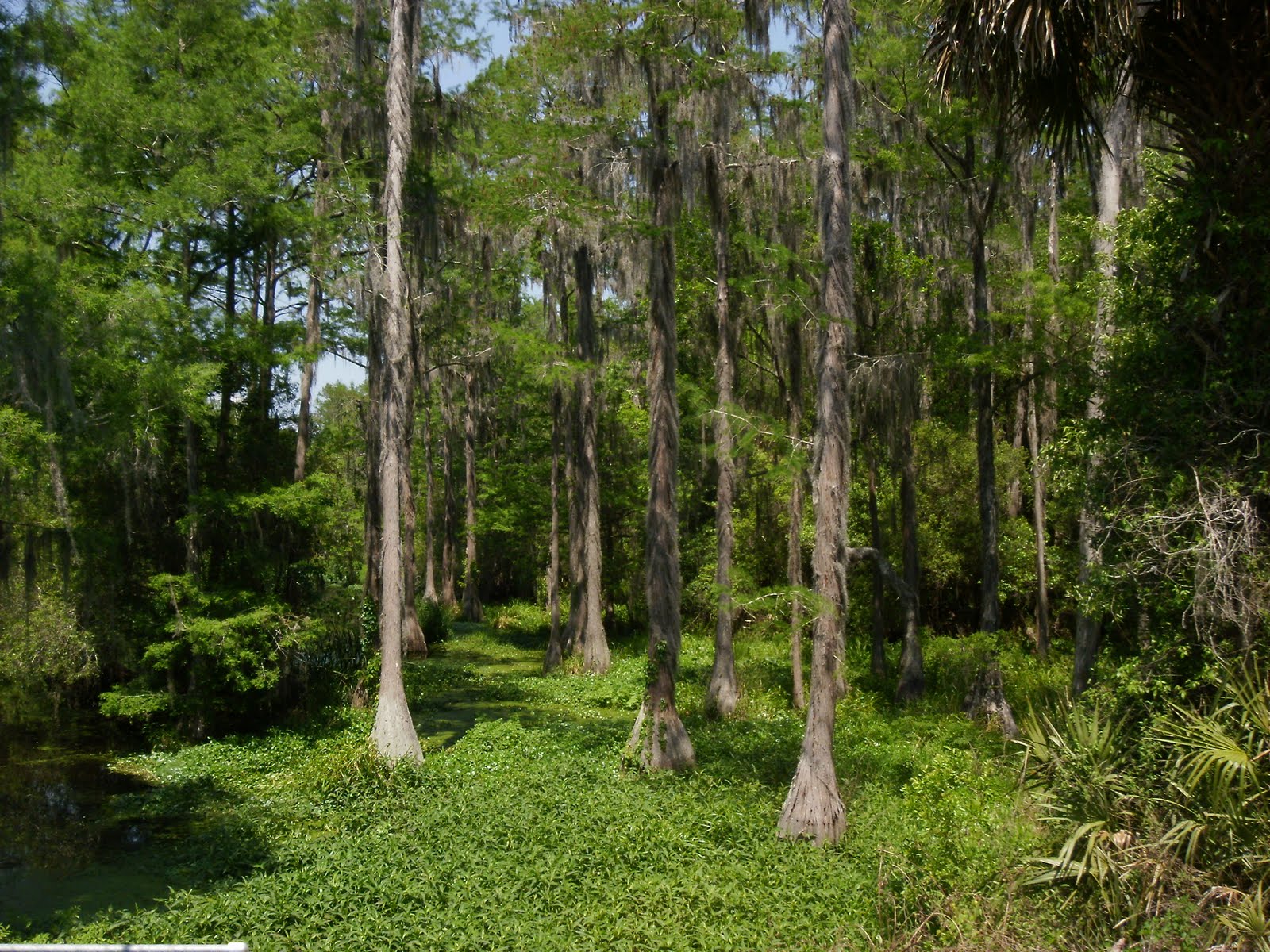
My first blog posting back on December 1, 2008 described a visit to Marjorie Kinnan Rawling’s homestead at Cross Creek, Florida. I take every opportunity I can to return to that magical place and I can certainly understand how Rawlings fell in love with the area when she first visited in 1928. So it is not surprising that I headed down to the Creek, as Marjorie called it, a few days ago to wander through the pine hammocks with their saw grass, palms and palmettos; the stands of live oak draped in Spanish moss and kudzu; and the cypress swamps of the Big Scrub of north central Florida. This is where the northern temperate zone meets the semi tropics, part of this place the late Al Burt once described as the “Mullet Latitudes.” I understand why Rawlings, upon discovering the Creek, came here to stay.

Born in Washington, DC, in August 1896, Rawlings spent her early years in that city’s Brookland neighborhood, just over the line from where I presently reside in the Maryland suburbs. Her family also owned a small farm in Maryland where they spent weekends and summer vacations. She attended Washington’s public schools and graduated from Western High School in 1913. Her mother moved her and a young brother to Madison, Wisconsin where she began her studies as and English major, in 1914. Following graduation in 1918, she worked as a writer an editor in upstate New York and in Louisville, Kentucky. She visited Florida for the first time during the summer of 1928 and she was so impressed with the scrub land, the cattle ranches and the citrus groves of north central Florida that she purchased a small farm and grove in the hamlet of Cross Creek. She moved there in November of that year and for the rest of her life, until her untimely death in January 1953, she would call this area of north Florida her home. She is buried in a small, isolated cemetery in Island Grove, just a few miles from her farm at the Creek.

During her years in Florida she would write and publish her impressions of the landscape that surrounded her and the people she would come to call neighbors and friends. She often described her Florida as a new Eden. “This is the Florida, wild and natural . . . the invisible Florida,” she told an audience at Florida Southern College, my alma mater, in 1935. “Its beauty must be seen with the spiritual eye as well as the physical eye.” The first of these stories appeared as “Cracker Chidlings” in Scribner’s Magazine in February 1932. She continued to write about life at the Creek, and a decade after her arrival she would publish her classic novel The Yearling (1938).

On this recent trip I revisited Rawlings’ farm and wandered around the house and the various out buildings. There are still a few orange trees in the yard although most of the groves have gone back to the wild. There is her typewriter on the screened-in front porch where she did most of her writing. I can almost see her sitting there while Max Perkins, her editor at Scriber’s, sat nearby in his white suit and fedora sipping a martini. “The region is beautiful, but not pretty,” she wrote to Perkins shortly after he took her under his wing in 1931. “It is like a beautiful woman capable of deep evil and a great treachery. Back of the lushness is something stark and sinister.”

Just up the road from the farm is Cross Creek, which runs the short distance between Orange Lake and Lake Lochloosa. At present it is mostly dried up as the drought in central Florida continues. Cashing in on the popularity of Rawlings and her books, The Yearling restaurant first opened on the bank of the Creek in 1952 and continued to offer north central specialties until it closed its doors in 1991. It was here that I was first introduced to the local cuisine, my favorite being a generous serving of cooter (fresh water turtle found in the local creeks and ponds). We use to eat here frequently on our regular visits to nearby Gainesville and we were greatly saddened when it closed and fell into disrepair. On each return visit to the Creek I would drive by hoping to find it open. There were a couple ill-fated attempts to revive the place, but they never seemed to catch on. Thankfully it finally reopened for good a few years ago, serving lunch and dinner on Friday and during the weekend.

It was open when I passed by a few days ago and so I stopped in to check it out. I found it much as I remembered it. The menu is not extensive, but they serve what I came for. I feasted on a sampler of cracker offerings - frog legs, gator tail, fried green tomatoes, mushrooms and hushpuppies. All of this washed down with very cold beer. Despite the logo on the servers’ shirts urging one to “Eat Mo Cooter,” The Yearling only rarely serves this delicious swamp delicacy. My server claims it is still available but all of it is shipped to Japan where it brings top dollar. “We send them our fine cooter,” she told me under her breath. “All we get is that cheap plastic crap.” I was sorry I was not able to enjoy a fine piece of cooter pie.

After lunch I drove to Antioch Cemetery, a few miles east of the Creek near Island Grove. Here Marjorie is buried beside Norton Baskin, her beloved husband who survived her by 43 years (“A woman has got to love a bad man once or twice in her life, to be thankful for a good one.”), and near to still others, friends and neighbors whom she had described to one degree or another in her stories and novels. Baskin came up with a simple yet appropriate epitaph for his wife. “Through her writings she endeared herself to the people of the world.” It seems entirely appropriate that she rests in the sandy scrub land and near the people she loved so dearly.

This trip to the Creek will have to last me for awhile. We will soon be returning home to Maryland after several weeks enjoying our annual springtime hiatus here in the Sunshine State. The memories of this time will have to tide me over once I return to the city. “We cannot live without the earth or apart from it,” Marjorie wrote in The Yearling. “And something is shriveled in man’s heart when he turns away from it and concerns himself only with the affairs of men.” Marjorie will keep me whole and full.

Friday, April 8, 2011

Rattling the Stick: Dispatches from the Sunshine State VII

“Advertising is the rattling of a stick inside a swill bucket,” according to George Orwell. I am reminded of this as I drive along US Highway 19 through Pinellas and Pasco counties on the Florida Gulf Coast. I also recall the Baltimore bard Ogden Nash’s witty stanza from Songs on the Road (1941):

I think that I shall never see
A billboard lovely as a tree.
Indeed, unless the billboards fall
I’ll never see a tree at all.


This stretch of highway, as it passes through St. Petersburg, Pinellas Park, Clearwater, Tarpon Springs, New Port Richey and a host of smaller communities, has got to be one of the ugliest clutter of strip malls, car dealerships, restaurants and fast food joints, liquor stores, trailer parks, pawn emporiums and t-shirt shops I have found anywhere in the United States. It has no soul whatsoever; nothing beckoning one to come here and stay. It is a road to be avoided at all costs yet a stream of traffic travels up and down it every day. Is there anything man can do to make this jumbled and muddled abysm of commerce even less inviting? Yes!

As one drives this route (and so many others throughout the state) one is confronted by a continuous phalanx of outdoor billboard signs. Here along US 19 they sing the praises of doctors who offer to lift your face, correct your sight, remove your ugly fat, and my personal favorite, provide you with a vasectomy without the use of knives or needles. Is this a great country or what? More often than not these offers are accompanied by the doctor’s smiling portrait and an 800 number and/or internet website. It is difficult to enjoy life as it is when there are all these constant reminders of how much better it can be. No thanks!

Add to this the numerous billboards advertising the friendly yet “aggressive” services of Florida’s ubiquitous personal injury attorneys who hope to cash in (“we only get paid if you get paid”) on what must be a growing problem here in the Sunshine State. One is left with the distinct impression that Floridians must be one of the most litigious populations in this country. Why else would one need so many attorneys? These guys must make a pretty good living. How else can they pay for all these billboards with their smiling faces (I thought they were aggressive?) and promises to fight for the rights of the little people?

Even in the unlikely event that all of these billboards somehow disappear, the chances of seeing any trees are negligible. This area of Florida has been pretty much paved over and the vegetation that has managed to survive is limited to a few scrubby bushes here and there and an occasional palmetto or palm tree reminding travelers that they are in Florida. Thankfully, as one leaves this urban blight behind, the billboards become fewer and farther between, and there are a few more trees, but one can never completely escape their clutches and promises of a better life.

Driving the highways and byways of rural Florida there are fewer billboards shilling for doctors and lawyers (they are still there, however), but now they tend to focus on retirement communities in Florida and beyond; antique stores purchasing and selling gold and silver; military surplus and guns; truck stops and “cheap” fuel, BBQ joints, and countless tourist traps selling citrus, t-shirts, fireworks, wind chimes, gator heads, jewelry, saltwater taffy, and souvenir bric-a-brac. There are billboards displaying American flags and “patriotic” encomiums while others offer Biblical passages and the promise of eternal salvation. There are even billboards advertising strip joints and “We Bare All.” You name it and you can probably find it on a Florida billboard.

Some rather strong storms swept across central Florida over the past week and one can see the evidence of their passing by the many downed trees and branches. Small planes were tossed about at local airports and roofs were torn from homes and other buildings. Trees and branches scattered about but nearby the billboards continue to stand unmolested. Not even Mother Nature can deliver us from this man-made scourge on the landscape. Frankly, I prefer trees.

Poems are made by fools like me,
But only God can make a tree.

Thursday, April 7, 2011

Preserves Are For Preserving: Dispatches from the Sunshine State VI

I don’t usually return to a topic quite so quickly, but the great bison debate is still a hot issue here in central Florida. A few days ago I reported on this debate in general terms and noted that one of the main reasons given for removing or reducing the size of the small bison herd at the Paynes Prairie State Preserve near Gainesville was the issue of safety and liability should any of the bison get loose or endanger visitors to the preserve. This week The Gainesville Sun recalled two specific instances last year when male bison wandered off the preserve.

In the first incident last May, a male bison was reported wandering in an area very near the preserve’s northern boundary. Local law enforcement was alerted as were the State Fish and Wildlife authorities and the Florida Park Service. All responded with the intention of herding the vagabond bison back to the preserve, and if this failed, to tranquilize it to facilitate its return. Observing the bison moving in his general direction, the preserve’s manager fired his shotgun striking the bison squarely between the eyes. This was followed by two more shots to the side of the head. A state park police officer also fired several shotgun rounds at the beast before the manager finished it off with a shot to the head and one to the heart. So much for tranquilizing the poor critter who was probably more scared than any of its human pursuers. Reports indicate that the bison was unarmed.

A few days later a second male bison was spotted near a popular trail, part of which runs across preserve property. Authorities judged this bison to be “aggressive” although they provided no specific details as to who was threatened and why. The bison was cornered and shot several times with a shotgun and a semi-automatic AR-15 rifle. A Department of Environmental Protection spokesperson later stated that “deadly force” is only used when an animal poses imminent danger to humans whether they are on the preserve or not. Of course, this makes sense. I am not certain, however, that either of these animals were a viable threat to anyone, and I don’t believe “He is coming your way” constitutes “imminent danger,” especially if you are armed with a shotgun or a semi-automatic rifle. I have encountered bison at very close range in Yellowstone National Park and never felt like I was threatened by the simple fact that they were nearby or moving in the same direction I was.

In both of these instances there appears to be no evidence of any attempt to tranquilize or otherwise subdue the two bison in question. Why not? The Paynes Prairie State Preserve was established to preserve and protect the natural environment and the animal and birds that call it home. Yet there are those who do not see it that way. No one can argue for the need to protect human life, and if an animal poses a theat and cannot be captured or subdued, it may be necessary to destroy the animal. But I do not sense that this was the case in the two incidents reported by The Gainesville Sun and described here. I think it is quite clear that there is no genuine concern for these animals among those who are duty-bound to protect them. Once again it proved too much trouble to handle this situation the right away. The State wants to reduce the herd and it has found a easy way to do it. If a bison wanders where it should not be (or where the State doesn’t want it to be), it becomes an imminent danger and is quickly dispatched.

Preserves are for preserving. This bison herd only numbers 60-70 animals and one would think the State could come up with a practical solution to the problem of bison wandering off the reservation. After all, Paynes Prairie is 22 thousand acres and there must be a area where the bison can roam and not pose a threat to anyone. I hope the State of Florida will make a more concerted effort to find a better solution to the problem. Killing animals does not seem like a good way to protect them.

Sunday, April 3, 2011

Where The Buffalo Roam(ed)?: Dispatches from the Sunshine State V

Regular readers of this blog are already familiar with my interest in and love for the bison. There is a debate ongoing here in central Florida for almost three years that is beginning to heat up again. What shall be the fate of the roughly 60 American bison that currently graze on the 22,000 acre Paynes Prairie Preserve State Park south of Gainesville? The fate of the cracker horse population as well as that of the small shrub cattle are also in question. The concerns and question are basically the same for all involved, but permit me to focus on the fate of the bison herd.

The State of Florida’s Department of Environmental Protection is struggling with a new livestock management program for he preserve which calls for the removal of the male bison population, reducing the size of the herd to approximately a dozen females and guarantee that it would not grow any larger. There is also the question of inbreeding and the general health of the herd which was first introduced to the area in the mid 1970s. On top of this, there is concern that the current size of the herd is taxing the grazing land on the preserve and creating an ecological dilemma. Some state officials are worried that more time and money will be spent on livestock management rather than on the protection of the endangered natural resources. Moreover, there is the issue of liability and safety should a member of the herd escape from the preserve and create damage or injure someone (injury is also a concern on the preserve although there seems to be very limited human access to the herd). The remaining bison would be limited to a fenced paddock of approximately 150 acres near the visitors center.

Reduction of the herd was a concern for many who feared that the males would be sold and slaughtered for food although the State is not authorized to sell bison through the traditional channels. It has also stated that the male bison would be moved to another protected area in Florida with limited public access where they would be treated “humanely” (whatever that means). This guarantee does not mean that all will be permitted to live. Sterilization of the male bison (and male cracker horses) is also being considered as an option to removal although this would not reduce the size of the herd or address ecological concerns or the liability and safety issues. It seems to me that this is moving the problem in one area to another area without seeking a realistic and practical solution.

Some local members of the state legislature in Tallahassee have recently jumped on the bandwagon to oppose the reduction of the herd through removal from the preserve. They have offered legislation that will address the safety and liability concerns which appear to be the main sticking points in the debate. In my humble opinion, the American bison wandering the scrub land of Paynes Prairie are a natural resource that deserve protection.

Despite efforts to keep the herd intact, the State has ultimately decided that the male bison must be removed; although there is no practical plan in place as far as their fate is concerned. Removing them seems to me a simplistic solution to a complex problem. Let’s hope the herd will be permitted to thrive for many years to come through a well thought out and balanced livestock management. Attention should be paid to the herd’s best interest and I am still hopeful saner minds will prevail. I am afraid, however, that these bison may have lost their home and their freedom to roam.

Wednesday, March 30, 2011

Searching For El Cubano: Dispatches from the Sunshine State IV

I have often listened to my wife tell stories of growing up in rural Florida. One of things she recalls fondly are visits to the local Publix supermarket for a Cuban sandwich. I grew up mostly in the Midwest and I had never heard of such a thing. When she described it to me I told her we called them “heros” and “submarine sandwiches,” or subs. In New England they are referred to as “grinders;” “hoagies” in Philadelphia; “po’boys” in St. Louis; and “muffulette” in New Orleans. Today some throughout the USA refer to them simply as “paninis.” So I just assumed the “Cuban sandwich” was the local Florida variant. I was wrong. It is unlike any of the aforementioned.

I had my first Cuban sandwich - sandwiché Cubano, or simple el Cubano - at Phil-Nick’s, a hole-in-the-wall joint on Main Street, in downtown Gainesville, Florida. It was nothing like any sub, or whatever you want to call it, that I had ever eaten. My wife assured me it was genuine - sliced ham, pork marinated in a citrus and garlic concoction know as mojo, Swiss cheese, mustard and sliced dill pickles served on a soft Cuban bread - pan de aqua - which resembles French or Italian bread yet it is prepared with lard and is lighter and flakier. There are other variations of el Cubano, but the best and truest stick to the traditional ingredients. Finally, the sandwich is heated and pressed in a device know as a plancha (or a bacon press or a large spatula, if there is no plancha handy). The flaky bread turns crunchy and the finished sandwich is often served with a bowl of black bean soup - frijoles negro - over yellow rice (another favorite Cuban dish). This is exactly how I enjoyed my first Cubano. Spanish, or garbanzo, bean soup is also a satisfactory substitute and I highly recommend it.

There is some debate surrounding the origins of the Cuban sandwich. It appears to date back to the turn of the previous century when it was popular lunchtime fare for workers at Havana’s cigar factories and sugar mills. Others will claim that it was cooked up by Cuban immigrants making cigars in Ybor City, the Cuban quarter just east of downtown Tampa. Today it remains popular with the large Cuban exile and immigrant community in south Florida, and the farther south you go in the Sunshine State the more apt you are to find a genuine Cubano on authentic Cuban bread. To borrow a phrase from the character Oddball, played by Donald Sutherland in the 1970 film Kelly’s Heroes, “To a New Yorker like you, hero is some type of weird sandwich.” Once you have a real Cubano, anything else - hero, sub, grinder, etc. - just does not measure up.

Phil-Nick’s is still on Main Street although the brothers who founded the place are no longer there and gone with them are the authentic Cubanos. You can still get a pretty decent Cubano at any Publix market across the state - our arrival in Gainesville is frequently an appropriate occasion for one and we have had one since our arrival. I have found a few Publix stores that cut corners and play around with the traditional ingredients and serve them on French or Italian bread. No thanks But the local Publix in Gainesville fixes them right. Authentic Cubanos are de rigueur in Ybor City and have been for over a century. There are good ones to be at the Columbia Restaurant (and also at the Columbia in St. Augustine). So, too, in Miami-Dade. Where there are Cubans, you are sure to find an authentic Cubano. I have found tasty Cubanos in the Everglades, including a particularly good one at a truckstop in Immokalee (about the only reason I would ever go back to that desolate and godforsaken place). I recall another purchased at a stonecrab emporium along the Barron River, in Everglades City. There were no stonecrabs to be had one evening and so I settled for a Cubano with a bowl of black beans over rice. A satisfactory substitute for a plate of cracked claws and that is saying something right there. More recently we had a real Jones for a Cubano for lunch and found some in Bevilles Corner, a rural cross-roads in the central Florida scrub country. There are not too many Cubans here but we were able to find freshly made Cubanos at a quick market where we had stopped to top off our gas tank. They were not too bad, and although they were missing the requisite pickle slices, they were served on Cuban bread. And there in Bevilles Corner I learned something new about Cuban bread. The process of making authentic pan de aqua begins with palmetto leaves soaked in water which are then placed over the rolled dough. This creates the unique and rather irregular topography on the upper portion of the loaf. As the dough rises it can encircle the palmetto and it is not uncommon to find remnant fibers baked into the bread as an avatar of authenticity. So, whereas the fixings were not bona fide in the strictest sense, the bread was and it tasted pretty good regardless. Our jones was satisfied.

I think there are a few Cuban sandwiches in our immediate future before it is time to head back up north. We have even carried them home on planes and in a car cooler and I am guessing we will do so again. But eating Cubanos is much like eating crabs in Maryland, or lobster along the coast of Maine. It’s best to eat the local cuisine locally. Our search across Florida continues.

Today (March 30, 2011) Marks 10,000 Hits!!!!

Friday, March 25, 2011

Rediscovering a Forgotten Piece of Florida: Dispatches from the Sunshine State III

Very few people have heard of Aripeka and fewer still have ever been there. I recall first visiting this tiny fishing hamlet on Florida’s Gulf Coast back in the mid-1960s when my family began to frequent the beaches near St. Petersburg and Clearwater. I didn’t recall very much about that first visit, and although I have driven by the sign on US Route 19 pointing out its location down State Route 595, I had not returned there until just a couple of days ago. From the looks of it, nothing much has changed since my first visit.

Aripeka, originally known as Gulf Key when it was first settled in the early 1870s, straddles both the Pasco-Hernando county line as well as the two branches of Hammock Creek as they meander from the Gulf of Mexico through marshland and sand flats bordered by saw grass and clumps of red mangrove. Ironically, it changed its name to Aripeka around 1886 to commemorate a Mikasuki Seminole chieftain who had fought against the encroachment of white settlers during the Seminole wars and who died of old age near here twenty years earlier.

For most of its quiet history, this unincorporated town has consisted of a few simple homes scattered along the branches of Hammock Creek and what little dry ground there is between them. A post office was first established in Gulf Key in 1883 when population was 24 souls, and it has, with a couple of interruptions, continued to operate to the present day. There was once a school and a store, and the Osowow Hotel was situated on the south branch of Hammock Creek throughout the first half of the 20th century until it burned in 1960. It was home to the Aripeka Saw Mills Corporation and there were sugar cane fields nearby as well as turpentine stills in the pine hammocks to the east. The Gulf and the coastal waters are rich in marine life, including snook and striped mullet, and the locals have always been involved in subsistence fishing and guiding sportsmen. There has never been a commercial fishing operation in these waters. This area, along with the Homosassa and Crystal rivers just north of here in Citrus County, has long been a wintertime mecca for the West Indian manatee who enjoy their warm waters.

In 1910 the entire town, save the post office, school and the Baptist church which had been established two years earlier, passed to the ownership of Eugene D. Willingham (1839-1922), a prominent Atlanta lumber tycoon, who chose Aripeka as his winter home and bought up the foreclosed mortgage on the land. It was Willingham who had helped lay the groundwork for the Baptist church and who was largely responsible for the construction of a new highway from Brooksville, the seat of Hernando County, to Aripeka and then further south to Tarpon Springs and eventually to Tampa. Until then the town could only be reached by boat and was a regular stop on the coastal steamer route between the railhead at Cedar Key and Tampa Bay. Despite these improvements, Aripeka remained a backwater until the middle of the 20th century. The Rural Electrification Agency extended the power grid to the area in 1941-1947, and the first telephone appeared in 1950. Aripeka has one claim to fame although the stories vary, depending whom you talk to. The basic facts are there. During the 1920s Babe Ruth, often in the company of some of his teammates, used to travel north from St. Petersburg, where the New York Yankees were based during spring training, to fish and hunt in the area. Local lore has him staying at any number of places around town, but it would appear that he actually stayed at the Osowow Hotel on Hammock Creek. He is reputed to have thrown lavish parties at the hotel and during one of these he lost his World Series ring down the hotel’s privy. There are other stories - that Jack Dempsey use to train here and that the Wright Brothers once stayed in town - but these legends tend to be slightly more opaque.

We found Aripeka to still be a sleepy fishing hamlet although in more recent years it has turned into a budding artist colony. There are some newer homes fronting the creek and along the main channel leading out to the Gulf, but otherwise it hasn’t really changed much in years. The local Norfleet family, who started a fishing camp adjacent to the bridge over the north branch of Hammock Creek back in the 1940s, still operates a small grocery and general store on the site. The store once had a single gas pump which has since disappeared. A sign over the entrance announces we are “5.9 miles from Heaven.” I am not sure exactly in which direction one needed to go to reach that point, and neither did the fellow working behind the counter, but we took this claim to be true. It sure is a beautiful spot on the edge of the Gulf of Mexico.

There were a number of men fishing from the bridge - some fishing for striped mullet with snagging hooks (they are delicious smoked and their roe is a tasty delicacy) while others cast nets for baitfish. They told us we had just missed a manatee cruising along the mangrove roots, but there was a mature and juvenile bottlenose dolphin splashing in the creek lagoon and we watched as they passed under the bridge on their way to the Gulf, pausing to harass a school of mullet. I am not sure one needed to travel almost six miles to find heaven. I think we may have found a little piece of it right here.

Wednesday, March 23, 2011

Tekkin It Eezzee, Mon!: Dispatches from the Sunshine State II

I turned 60 years old a couple of days ago and I guess this means that I am officially in the autumn of my life. Well, put it this way - my past is now longer than my future. I guess one doesn’t want to think of it in those terms, but it is true. No sense ignoring it. The aches and pains are more prevalent than they use to be and they seem to last longer. On top of that, I am getting old man hands and feet and dry skin seems to be more of a concern. That said, I am convinced that I still have a lot of life left in me. I don’t feel 60, and I certainly don’t act 60. I hope I don’t look 60, but that might be stretching it just a bit. Yet, entering my seventh decade, I am reminded of something Proust once wrote. “We are all dead people, waiting to take up our posts.” Hmmmm. I am in no big hurry.

Now that I am retired (it has been just over a year) I am around the house a lot more than I use to be and I sometimes wonder if I am not slowly driving my wife (36 years and counting) close to the precipice. I don’t mean to do this, but she has had the house to herself for so long and now all that has changed. Virginia Ironsides, a British columnist writing about her husband as she entered her own sixties, captured the state of affairs with this appropriate bon mot. “I married him for life, not for lunch.” I wonder if Sally Ann feels this way. I am almost afraid to ask. I try to stay busy. I enjoying crafting these blog postings and I recently signed a contract for a new book on the American novelist Thomas Wolfe. I have a number of other research projects and freelance consultant jobs to keep me off the streets and it is not like I am sitting at home dreaming up ways to drive my wife crazy; although that has a certain degree of charm to it.

I spent my birthday (and the days leading up to it) here in Florida as part of our annual spring hiatus and escape from DC’s late winter doldrums. The weather here has been sunny and in the low 80s since our arrival; spring has definitely arrived here in central Florida. The azaleas have pretty much come and gone and the tree pollen forces those of us with allergies indoors even if the weather is otherwise pleasant. Nevertheless, I have tried to get out and about as much as possible, scratchy eyes and throat be damned.

We drove over to the Gulf of Mexico at Tarpon Springs so we could spend a little time on the beach. We forgot that it was spring break and the entire beach was covered by tanned bodies of every shape, size and dimension. Sally Ann did her best to look for shells but there was little room to maneuver. I chose to sit in a palm tree’s evasive shade while trying to enjoy a view of the Gulf’s aquamarine waters. Unfortunately, the undulating movement of bikinied bodies was a constant distraction. Soon, but not too soon, we retreated to the Sponge Docks along the Anclote River and enjoyed a light lunch at our favorite little Greek taverna - saganoki (more on this in an upcoming dispatch) and souvlaki and a couple of Greek beers. That evening we returned to my favorite local shrimp house for a horiatiki salad (cucumbers, tomatoes, green peppers, pepperocini, Greek olives, and feta cheese doused in extra virgin olive oil), a large platter of boiled shrimp slathered in olive oil, and a couple more Greek beers. Opa!

So it was a nice way to celebrate the beginning of my geezerdom. I have much I still want to do before that final sleep. Proust might ultimately be right, but don’t be surprised if I come up AWOL. Life is too good to let it pass me by. I’m just tekkin it eezzee, mon! Cheers!

Saturday, March 19, 2011

Slinging Hash: Dispatches from the Sunshine State I

When I was a kid I wanted to grow up to be a short-order cook. I still enjoy sitting at the counter of any diner or greasy spoon and watching the cooks juggling the orders. Perhaps I can find work slinging hash during my retirement? I haven’t so far, but I am still young (kind of). It is an idea worth serious consideration.

On our way down to Florida we were eating lunch at one of the ubiquitous Waffle Houses found throughout the southern United States. We sat at the counter and I watched the cook preparing my wife’s “checkerboard” (a large waffle) and my “heart attack on a rack” (toasted Texas biscuits with sausage gravy), a large rasher of bacon “in the alley” (on the side), while our waitress, who called both of us “darlin’,” poured me a large cup of joe “flowing like the Mississippi” (black coffee) . . . . no “blonde with sand” (cream and sugar) for me. And there is something appealing about the attire of a good grill man. It can fluctuate depending on mood, or whatever happens to be clean or thrown over the bedroom chair (or on the floor) that morning. One should be comfortable in their own skin and clothes when they cook for others. I like that.

As the aroma of our meal gathered around us I read how Joe Rogers, Sr. (no relation), learned how to make a perfect omelet from one of the legendary grill men who worked for him at a Toddle House restaurant in Memphis, Tennessee. Rogers would later join forces with a local Georgia businessman named Tom Fokner to found Waffle House near Atlanta in 1955. Although the Waffle House remains a culinary institution throughout the South (including near almost any interstate interchange), it has expanded to 25 states with over 1500 franchises as far west as California and north to Illinois and Delaware. But I digress.

There is something poetic and mesmerizing about watching a good grill man (for some reason they usually seem to be men) slinging hash at a greasy spoon diner. He is his own boss and there is no one standing over his shoulder telling him the best or proper way to whip up eggs for an omelet or scrambled eggs. He alone determines the ingredients and portions that go into the makings of pancake and waffle batter. He regulates the crispiness (or greasiness) of the bacon, sausage, scrapple or other breakfast meats sizzling on the grill. And that is just for breakfast!

Of course, timing is probably the most important skill, and perhaps the most difficult to master. Regardless of whether one is making eggs, cooking pancakes and waffles, or grilling burgers and other dishes, attention must be paid to cooking times so that everything is prepared and served in an orderly fashion. Sometimes there are warming stations to keep plated meals hot until they are served, but more often than not it is up to the cook to prepare the main and side dishes so that they can be served hot to the customer. This also means juggling several different orders so that they arrive at the counter or table together. Occasionally there will be a few moments when there is nothing on the grill and the cook will dispatch cooking scraps and other oddments with the edge of the omnipresent spatula or grill press.

I could sit there all day watching a good short order cook slinging hash. But the road was calling and we had many more miles to go before we reached Gainesville and the end of the day’s journey. But tomorrow is always a new day and there will be other roads and other diners beckoning us to stop and eat. And there will always be the next short-order cook to watch and marvel at his magic as he slings his hash onto my plate.

Tuesday, March 15, 2011

A Spring Hiatus in Florida

My wife and and I have returned to Florida for a month of rest and relaxation in warmer climes. The drive down from Maryland (804 miles in 12 hours) was very relaxing . . . a beautiful day, very little traffic to speak of, a warm (and then a cool) car, and a good book to listen to as I watched the landscapes change with the gradual arrival of spring the farther south I drove. Stay tuned for "Dispatches from the Sunshine State" in the coming weeks.

Thursday, March 10, 2011

Quilts For Kids: Empowerment and Education in Kathmandu

James Hopkins is one of the sincerest and most humble individuals I have ever had the pleasure to meet. We have known each other for almost twenty years, since our years studying with the late Alaskan poet laureate John Haines. James is an interesting individual. After graduating from Duke University with a degree in French literature, he worked for 23 years as an investment broker in New York and Washington, DC. He retired in his early forties and six years ago relocated to Kathmandu where he studies Buddhism. Add to this the fact that he is an exquisite poet. But enough about James. I want to tell you about the good and righteous work he is doing.

Living in Asia he was troubled by the quality of life and limited possibilities of the people living around him. He discussed this with a local lama and asked how he might help and benefit his new neighbors. The lama gave him a simple answer. Go out and whoever appears in front of you help that person with whatever skills you have.

Wandering the street of Kathmandu James discovered an Indian street beggar camp located in the city’s Boudhanath neighborhood. Its inhabitants come from Punjab and Rajasthan, on India’s western border with Pakistan, and from Bihar state, situated along Nepal’s southeastern border. Living in what we would call poverty and squalor, James found the camp’s Hindu women working together to produce amazingly beautiful quilts and he realized that, with the right guidance and support, these women had a commodity they might sell to benefit their families and their community. Created and operated by James since 2006, “Quilts for Kids” is a successful micro-finance project which empowers impoverished women while at the same time providing a safe and secure education for their children: http://www.quiltsnepal.org/home.

The quilts are hand-stitched from scrap materials either found or purchased at local shops. Each quilt is unique in design, size and shape yet, as James tells us, “every stitch is done by hand and every flaw is made with love.” It normally takes three or four women an average of ten days to complete a quilt. While they work the women talk and share stories and information that are important for the viability of the local community.

James pays the women approximately US$40 for each quilt made. This money comes from his own pocket, and from sponsors, mostly in the United States. These transactions teach the women how they can market their traditionally crafted quilts and give them a stronger sense of self worth in a city and culture where they are more often than not marginalized. James then sells the quilts for US$140. The money donated by sponsors, and the payment provided by James, funds the salaries for the women, and 100% of the profits from the sale of each quilt goes to provide a quality education for one of their children. It pays tuition for one year at the local Kumari School and provides for a school uniform and shoes, books, a book bag and other supplies. This keeps the children off Kathmandu’s mean streets and gives them a promising alternative to begging. Recently donations have made it possible to construct a “study house” in the community where the children can come in the evening and find a safe and quiet place where they can do their homework lessons.

These are kids who want to go to school and want to succeed. It is heartwarming to watch these women work on their quilts, smiles on their faces as they carry on with their traditional craft amid conditions of extremity, knowing that each stitch on a quilt makes it possible for their children to have an opportunity for a better life. James has a vision and he is making it real. It is as easy as that.

Thursday, March 3, 2011

In A Hungry Winter Season

My dear friend John Haines passed away in Fairbanks yesterday evening. John was 86 and in failing health in recent months and it has been painful to follow his slow descent from so many miles away. I wish I could have been there to talk to him and tell him all the things I still had left to tell. Thankfully he was surrounded by good friends who read his poems to him in his final hours. As perhaps it should be, one of his early popular poems, “Winter News” was read as last rites.

They say the wells
are freezing
at Northway where
the cold begins.

Oil tins bang
as evening comes on,
and clouds of
steaming breath drift
in the street.

Men go out to feed
the stiffening dogs,

the voice of the snowman
calls the white-
haired children home.

For most of his life John cherished his solitude in the quietness of the natural world, yet he also celebrated his many friendships around the world. As one of his friends said upon learning of John’s passing. “Thankfully he did not lose himself in age.” He has been called home.

Born into a naval family in Norfolk, Virginia on June 29, 1924, John and his family moved around the United States before arriving in Washington, DC in 1938. He resided at the Old Washington Navy Yard, attended school in the city, and he always enjoyed his occasional return visits. He served in the United States Navy during World War II, first on a subchaser in the Atlantic before seeing service in the Pacific theater on board the destroyer USS Knapp. After the war he attended the National Art School in Washington before pulling up stakes in 1947 and moving to Alaska where he established a homestead at Mile 68 on the Richardson Highway, southeast of Fairbanks. There he constructed a simple cabin on a wooded hillside above the Tanana River. Although he would travel and teach in the Lower 48 throughout his life, he would always return to the Alaskan interior, his spiritual home for the rest of his life. Perhaps Dana Gioia said it best in his introduction to John’s New Poems: 1980-1988. “Many young men, hoping to become writers, embark on romantic lives in the wilderness. But exhausted by responsibilities, unsupported by colleagues, and hungry for human society, few have the discipline to achieve their literary ambitions. Through patience, strength, and uncommon intelligence, Haines did. He is virtually unique among the significant poets of his generation in having emerged outside of either the university or an urban bohemia.”

Just a month ago I joined Dana and others at the annual meeting of the Association of Writers & Writing Programs here in our nation's capital where we shared our recollections and stories in a touching tribute to the man and the poet. John was with us in spirit if not in body, and the warmth and good feelings in that room were palpable. In my closing remarks at the tribute I read John’s “Last Words on the Poet.”

He owed his enemies a debt of gratitude.
Enemy or friend, those who could not see,
excused from failure by their nature;
those who saw a little way, by laziness
or habit unable to see farther;
and those who followed nearby to the end,
then in some latent disposition
turned aside before their eyes knew light.

Acquaintance or relation, loved or not,
in ignorance and fear they set up walls
before him, switched the roadway signs
and sought to mine the very ground
beneath his feet. Some beckoned
from a pleasant meadow, bidding him
stay awhile; and others merely laughed
to see him climb the barriers,
stumbling at the crossways, and hesitate
before the smile and languor of reclining
ladies. But he could not condemn them,
their fortunes and solace were not his,
and likely enough their hearts
would have rejoiced if they had understood.

They had all served; their walls and
misdirections, snickerings and enticements,
only served to set his foot the firmer
and slowly teach his eyes to fasten
on the troubled slope ahead,
as tooth and claw develop keenness
in a hungry winter season.

Though blind before it all, his enemies
were spurs, through that perhaps
his friends; and those who turned away
disclosed the road he was to travel.

I told the audience of John’s condition and why he could not be with us that day. “John is now living in his own hungry winter season. He is afraid when his time runs out, he will be forgotten.” Little did I know at the time that perhaps John had written his own epitaph. Now I am haunted by these words.

I am the writer I am today due in large part to John and the decades of friendship he offered to me unconditionally. A man as hard and uncompromising as the Alaskan tundra yet in possession of a soft and tender heart, he was a rare presence and one that will be greatly missed. It was a good life lived the way he wanted to live it. I know he is in a better place, but I will miss his words and the images and feeling they have always aroused deep within me. John was a poet, of this there can be no doubt.

I rose and left that room,
the house of my grief
and my bondage, my book
never again to be opened.

To see as I once saw,
steadied by the darkness
in which I walked
and would make my way.

I am certain John is listening now. Rest in Peace, my friend.