We have just returned from another adventure on and beyond the edge of America. This past weekend my wife and I headed north from the lake cottage, spending time at my favorite lodge in far northern New Hampshire and visiting with friends who call the North Country their home. While we were there we had an opportunity to enter nearby Canada twice in order to do a little sightseeing and exploring in Québec’s beautiful Canton de l’Est (the Eastern Townships south and east of Montréal along the borders with Vermont, New Hampshire and Maine). This is stunningly beautiful country with rolling hills populated by small, idyllic villages and farmsteads.
http://lookingtowardportugal.blogspot.com/2010/07/j-le-quebec.html
http://lookingtowardportugal.blogspot.com/2009/06/one-step-over-line-part-1.html
This use to be the bastion of the province’s Anglophone communities. Today one is hard put to find anyone who can speak much more than rudimentary English. Blame this on Québec’s rather draconian language laws which demand that French be the only official language spoken in the province. But this does not bother me. I get along fine when I am there. I can read the signs and make myself understood when necessary. The scenery is too good to pass up. C’est la vie, non? But I am getting ahead of myself.
The first time we entered Canada over the weekend was at Norton, Vermont/Stanhope, Québec. I pulled up to the modest custom house where the inspector looked at our passports, asked a couple perfunctory questions, and sent us on our way as we admired the awesome scenery we had come north to see.. The next day we entered at Pittsburg, NH/Chartierville, Québec, a crossing I have been using for years. Once again the Canadian customs inspector emerged from a structure very similar to the one we encountered the previous day. He also looked at our passports and waved us through satisfied we were who we claimed to be.
By entering Canada twice, we also had to reenter the USA twice . . . and that was an eye opening experience. After the first day touring around some of our favorite places in the Canton de l’Est, we returned to New Hampshire via the Pittsburg port of entry. Marking the northern terminus of US Route 3, this is the only crossing point along the 58-mile international border separating New Hampshire and Québec. And there are several miles of wilderness between it and the first human habitation on the American side. It really is the end of the road. I have been doing this for years and I have always thought of the Pittsburg customs house as a good case in point for the old saw that the US-Canadian border is the longest undefended border in the world. That may have been true once, but it is the farthest thing from the truth now.
Back in the day this border crossing was about as isolated as any along the US-Canadian frontier. In fact, until 1960 there was no official border crossing here. That only occurred in 1960 when US 3 was completed the last few miles to the border. And even then it was only manned during the day and only at certain times of the year. Persons arriving at other times were directed to cross and report to the customs house located in Beecher Falls, Vermont several miles farther down US 3. The US and Canadian customs houses were small ramshackle wooden structures manned by a skeleton staff and situated on a wind-swept notch in the Height of Land that delineated the border. A pair of small granite pylons set between US and Canadian flags marked the actual border and one could be photographed there with one foot in each country. Otherwise there was very little else to see. I have also parked here several times and wandered up to the Fourth Connecticut Lake, the headwaters of New England’s grandest river nestled on the US side just below the crest of these forested hills that are the divide between the Atlantic and St. Lawrence River watersheds. Part of the trail is marked with small metal discs attached to rocks marking the border. I crossed back and fourth over the border several times on the short hike to the lake that is nothing more than a glorified marsh.
http://lookingtowardportugal.blogspot.com/2009/07/one-step-over-line-part-2.html
That was then. The events of September 11, 2001 have unfortunately changed everything forever as the US authorities have gradually sealed the borders of Fortress America. The Canadian border station here has seen a few upgrades over the past decade, most noticeably a barrier gate that rises and lowers admitting vehicles once they have completed inspection. Otherwise there are few discernable changes on that side of the line. The pylons and the flags are still here but now stand isolated in a virtual no man’s land between the two border posts. Gone is the small wooden US customs house that stood here for 50 years. In it’s place is an unsightly 6500 square foot monstrosity that belies the fact that this is still an isolated and infrequently used border crossing. It handles only a few automobiles and commercial vehicles (most of them seem to be logging trucks) annually, and most of these in July and August. During the winter months there is virtually no traffic going through here; a few cars braving the heavy snowfalls and the occasional snowmobile. But that is about it!
As we passed through what the Department of Homeland Security now calls a LPOE, or a Landed Port of Entry, we were confronted not only with the structural monstrosity which went into full operation one year ago after a two year construction project costing the American taxpayers almost $8 million, but also encountered a menacing and forbidding array of nuclear material detectors, spotlights, vehicular barriers and chain link fencing incongruous with the unpopulated wilderness where it is located. I remarked to my wife at that time that it reminded me of the East German border control stations I use to pass when I crossed through the former Iron Curtain. Thankfully those ugly lusus naturae have passed into history only to be replaced by an American LPOE on a quiet ridgeline in the New Hampshire wilderness. How sad.
Once safely sealed into the inspection area with all the gates down in front and behind us and our engine shut off, we presented our passports to a friendly but officious and well-armed Customs and Border Protection agent. Gone, too, are the days when the border patrol official steps out of the small customs house to ask a few questions and send you on your way. One almost feels guilty of something and I have to remind myself that I am an American simply returning to the land of my birth. I can only imagine how Canadians and other foreign travelers must feel when they arrive in the Home of the Free and the Land of the Brave.
And it does not stop here. The rest of the 58-mile border between New Hampshire and Québec, longed marked by a wide clear-cut, is now festooned with cameras and motion detectors in case anyone hopes to sneak into America through the woods. Helicopters, which have been used for years along the Mexican border, are occasionally observed here. Unmanned and unarmed Predator drones similar to the armed version deployed in Afghanistan and which are now commonplace for surveillance purposes along our southern borders, have been tested along the Canadian border in recent years, although the authorities are unclear whether they are in use here now. I have spoken to inhabitants of the North Country who have assured me that they have seen and heard them. This seems all the more ominous when I see current reports in the media that Homeland Security is now considering weaponizing these drones in order to “immobilize” targets in border areas. Considering all of the negative media attention the deployment of armed drones in Afghanistan has stirred up with reports of civilian collateral damage (i.e. innocent civilians being mistaken for terrorists and killed in a drone attack), I cannot fathom the possibility that the US government would consider deploying armed drones against targets along the US border.
The following day we returned to Canada briefly to do some additional exploring before crossing back into the United States farther east, at Coburn Gore, Maine. Once again we drove north on US 3 through miles and miles of uninterrupted wilderness. We passed Third Connecticut Lake on the left . . . long one of my favorite places on earth which I return to time and time again in every season. Another mile and we follow a slight bend in the road and we are once again confronted with the back side of the new LPOE surrounded with more high chain-link fencing. Another high fence runs down both sides of the northbound lane of traffic, strangely reminiscent of a recent photo I saw of the Kaesong Highway that runs across the demilitarized zone (DMZ) separating South and North Korea. Certainly the Department of Homeland Security would shun the comparison, but there it is. We emerge from this ugly cage as we pass the granite pylons marking the international border. The pleasant agent steps out and wishes us a “Bon Jour!” Sally Ann asks if he will stamp her passport and he is happy to do so. The barrier goes up and we descend down the long northern face of Mégantic Hill to the charming hamlet of Chartierville, the expansive farmland of the Canton de l’Est before us.
Later in the afternoon it is time to finally head back to the lake in Maine. We make our way to Coburn Gore, the southern most of the border crossings into Maine. It is equally isolated yet it still looks very much like it always has. The big yellow nuclear material detector gates have been added and there are a couple barriers that go up and down and perhaps a few more spotlights. We pull in and shut off the engine as the inspector steps out to check our license plate.
“How are you folks doing today?” he asks.
We say we are fine and ask after him.
“Oh, fair to partly cloudy,” he responds with a smile.
He asks us the standard questions and checks our passports.
“Welcome home,” he says as he hands them back. “Have a nice day.”
The gate went up and we were on our way back to the lake.
The United States is not the only country fighting the war on terror. This past week two residents of British Columbia were arrested for attempting to plant bombs near the provincial legislature in Victoria. Earlier this spring two Tunisian immigrants studying in Quèbec with alleged links to al-Qaida were arrested for conspiring to bomb the Via Rail train between Toronto and New York City. And there is the infamous Toronto 18 who plotted to storm Parliament Hill in Ottawa and set off truck bombs throughout Ontario. The Royal Canadian Mounted Police and the Canadian Security Intelligence Service work together regularly to thwart terrorist threats along US border. Still, most of the visible security upgrades are evident only on the US side of the line. It is possible to fight terrorism successfully without hermetically sealing the border and treating all travelers as suspect.
There is a good way to welcome people to the United States, both native sons and daughters happy to be home, and foreign guests who come here by choice hoping to see if all the good things they have heard and read about America are true. Entering through the lonely crossing in Pittsburg, NH left me cold. Arriving at Coburn Gore is as it should be. There is a wrong way and a right way, and these are good examples of each.
Check out the "Looking Toward Portugal" Facebook page for more information and photos.
Wednesday, July 10, 2013
Friday, July 5, 2013
A Return to True's Point - Dispatches from Maine
I will be posting several “Dispatches from Maine” throughout the summer months.
Where has the past year gone to? It seems like we were just packing up the cottage last October for our return to Maryland and here we are again on the shores of Sabbathday Lake where we will be in residence until the leaves are once again taking on their autumnal colors. It has been a busy year, especially the past few months of spring. “Long stormy spring-time, wet contentious April, winter chilling the lap of very May; but at length the season of summer does come.” So Thomas Carlyle (1795-1851), the Scottish essayist and historian, reminds us. And that was certainly the case in the Mid-Atlantic states, as well as here in northern New England.
We are happy to be back here among the peace and quiet of this lovely lake on the edge of the foothills of the White Mountains although the first few days of our stay have been accented with cool temperatures and rain that seemed not to want to stop. But now the skies have finally cleared and the sun and the warmer temperatures have returned just in time for this mid-year holiday weekend marking the true beginning of summer in New England . . . and with more humidity than we have come to expect up here. Luckily we have the lake nearby, when the heat and humidity become too much to deal with. Still, I would prefer cooler days.
The last time I was here was back in mid-January, when I was passing through Maine on my way home from my annual wintertime escape to Tall Timber Lodge, in the far northern extremities of New Hampshire hard on the Canadian border. At that time the lake was covered by a thick mantle of ice and snow and populated with a few bobhouses manned by intrepid icefishermen. Not wanting to get bogged down in the deep snow, I parked out by the main road and hiked into the cottage, just to know that it was still standing sentinel again the frozen winds and snows of a typical Maine winter. What a difference a few months can make.
Today we are heading back up to New Hampshire for a couple days. We look forward to visiting with friends over this holiday weekend . . . and I can never get enough of the wonderful North Country scenery with its rolling, forested hills and its many pristine lakes and ponds. We also plan to pop over the border into the Eastern Townships of Québec just to show our Canadian neighbors there are no hard feelings. In fact, just a few days ago they celebrated their own national day with fireworks and BBQs. When it comes down to it, we are not all that different.
Check out the "Looking Toward Portugal" Facebook page for more information and photos.
Where has the past year gone to? It seems like we were just packing up the cottage last October for our return to Maryland and here we are again on the shores of Sabbathday Lake where we will be in residence until the leaves are once again taking on their autumnal colors. It has been a busy year, especially the past few months of spring. “Long stormy spring-time, wet contentious April, winter chilling the lap of very May; but at length the season of summer does come.” So Thomas Carlyle (1795-1851), the Scottish essayist and historian, reminds us. And that was certainly the case in the Mid-Atlantic states, as well as here in northern New England.
We are happy to be back here among the peace and quiet of this lovely lake on the edge of the foothills of the White Mountains although the first few days of our stay have been accented with cool temperatures and rain that seemed not to want to stop. But now the skies have finally cleared and the sun and the warmer temperatures have returned just in time for this mid-year holiday weekend marking the true beginning of summer in New England . . . and with more humidity than we have come to expect up here. Luckily we have the lake nearby, when the heat and humidity become too much to deal with. Still, I would prefer cooler days.
The last time I was here was back in mid-January, when I was passing through Maine on my way home from my annual wintertime escape to Tall Timber Lodge, in the far northern extremities of New Hampshire hard on the Canadian border. At that time the lake was covered by a thick mantle of ice and snow and populated with a few bobhouses manned by intrepid icefishermen. Not wanting to get bogged down in the deep snow, I parked out by the main road and hiked into the cottage, just to know that it was still standing sentinel again the frozen winds and snows of a typical Maine winter. What a difference a few months can make.
Today we are heading back up to New Hampshire for a couple days. We look forward to visiting with friends over this holiday weekend . . . and I can never get enough of the wonderful North Country scenery with its rolling, forested hills and its many pristine lakes and ponds. We also plan to pop over the border into the Eastern Townships of Québec just to show our Canadian neighbors there are no hard feelings. In fact, just a few days ago they celebrated their own national day with fireworks and BBQs. When it comes down to it, we are not all that different.
Check out the "Looking Toward Portugal" Facebook page for more information and photos.
Thursday, July 4, 2013
What the Fourth of July is All About - Dispatches from Maine
This morning I participated in the annual reading of the Declaration of Independence at the History Barn located behind the New Gloucester (Maine) Meeting House in the Lower Village. As a regular summer resident of the town, I was honored to be a part of this fine tradition marking the day we celebrate our revocation of British tyranny. I think every American should read this document from time to time to remind ourselves of the promises we made as a nation and its citizenry over two centuries ago. I fear we have strayed far from many of the freedoms and rights granted to us by our forefathers.
I wish everyone a festive and safe holiday among family and friends. And as you celebrate, take a look through the Declaration of Independence. These are good words that deserve our attention and respect.
Saturday, June 29, 2013
Missing John Haines
Today would
have been John Haines' (1924-2011) 89th birthday. John, who passed away
in Alaska in March 2011, was born in Norfolk, Virginia, the son of a
naval officer. As a boy, Haines attended school here in Washington,
D.C., while his father was stationed at the Washington Navy Yard.
After serving on a navy destroyer in the South Pacific during World War II, Haines studied at American University and the National Art School, both in Washington, and the Hans Hoffmann School of Fine Art in New York City and Provincetown, Massachusetts.
In 1947, Haines left Washington and eventually homesteaded acreage along the Richardson Highway approximately 68 miles southeast of Fairbanks, Alaska. It was here that he spent much of the next four decades running his trap lines and living off the land while trying to realize his artistic talents. It was here that he moved from the visual to the literary arts, and his experiences in the Alaskan wilderness were the inspiration for his early poetry collections - Winter News (1966) and The Stone Harp (1971), the essay collection Living Off the Country (1981), and the memoir The Stars, the Snow, the Fire (1989).
Haines came back to Washington in 1991-92 as Jenny McKean Moore Writer-in-Residence at the George Washington University, and visited Washington frequently during the last two decades of his life. He also taught at several other colleges and universities; his last academic appointment was as an instructor in the Honors Program at the University of Alaska-Fairbanks.
His later books included New Poems 1980-88 (1990), The Owl in the Mask of the Dreamer (1993), Where the Twilight Never Ends (1994), Fables and Distances (1996), A Guide to the Four-Chambered Heart (1997), For the Century’s End: Poems 1990-1999 (2001), and Descent (2010).
Haines was honored for his writing, receiving the Lenore Marshall Poetry Prize, the Western States Book Award, two Guggenheim Fellowships, a National Endowment for the Arts Fellowship, a Bellagio Fellowship, a Lifetime Achievement Award from the Library of Congress, and the Alaska Governor’s Award for Excellence in the Arts, among others. He was also named a fellow of the Academy of American Poets in 1997.
I met John as a Jenny McKean Moore fellow at George Washington University in 1991 and we remained good friends during the final two decades of his life. He was a guest in my home during his visits to Washington, and I look back with particular fondness on the days he and I spent together in Big Sky, Montana in the autumn of 2004 following the release of A Gradual Twilight: An Appreciation of John Haines which I edited and which was published by CavanKerry Press.
So Happy Birthday, John! I miss you.
After serving on a navy destroyer in the South Pacific during World War II, Haines studied at American University and the National Art School, both in Washington, and the Hans Hoffmann School of Fine Art in New York City and Provincetown, Massachusetts.
In 1947, Haines left Washington and eventually homesteaded acreage along the Richardson Highway approximately 68 miles southeast of Fairbanks, Alaska. It was here that he spent much of the next four decades running his trap lines and living off the land while trying to realize his artistic talents. It was here that he moved from the visual to the literary arts, and his experiences in the Alaskan wilderness were the inspiration for his early poetry collections - Winter News (1966) and The Stone Harp (1971), the essay collection Living Off the Country (1981), and the memoir The Stars, the Snow, the Fire (1989).
Haines came back to Washington in 1991-92 as Jenny McKean Moore Writer-in-Residence at the George Washington University, and visited Washington frequently during the last two decades of his life. He also taught at several other colleges and universities; his last academic appointment was as an instructor in the Honors Program at the University of Alaska-Fairbanks.
His later books included New Poems 1980-88 (1990), The Owl in the Mask of the Dreamer (1993), Where the Twilight Never Ends (1994), Fables and Distances (1996), A Guide to the Four-Chambered Heart (1997), For the Century’s End: Poems 1990-1999 (2001), and Descent (2010).
Haines was honored for his writing, receiving the Lenore Marshall Poetry Prize, the Western States Book Award, two Guggenheim Fellowships, a National Endowment for the Arts Fellowship, a Bellagio Fellowship, a Lifetime Achievement Award from the Library of Congress, and the Alaska Governor’s Award for Excellence in the Arts, among others. He was also named a fellow of the Academy of American Poets in 1997.
I met John as a Jenny McKean Moore fellow at George Washington University in 1991 and we remained good friends during the final two decades of his life. He was a guest in my home during his visits to Washington, and I look back with particular fondness on the days he and I spent together in Big Sky, Montana in the autumn of 2004 following the release of A Gradual Twilight: An Appreciation of John Haines which I edited and which was published by CavanKerry Press.
So Happy Birthday, John! I miss you.
Thursday, June 27, 2013
Let the Turkish Government Come After Me!!
The government of Turkey is threatening to investigate social media postings that allegedly insult Prime Minister Recep Tayyip Erdogan and other officials.
http://www.huffingtonpost.com/2013/06/27/turkey-investigates-social-media_n_3509365.html?utm_hp_ref=world
According to the Turkish newspaper Aksam, the police have provided Istanbul prosecutors with a list of 35 names of people who allegedly insulted Erdogan or other officials on Twitter or Facebook. It did not indicate whether blog postings are included. So I guess I am safe although I said nothing insulting. I merely spoke the truth when I condemned the Turkish government's crackdown on peaceful demonstrators who are concerned with the erosion of their personal freedoms in a country that calls itself a democracy. Deputy Prime Minister Bekir Bozdag acknowledged the probe, but would not confirm the list of those under investigation. I am presuming they are all Turkish citizens. Bozdag singled out those social media users who allegedly used "profanities and insults conducted electronically" which is, according to him, against the law. "No one has the right to commit crimes under the rule of law." So much for the freedom of speech in Turkey!
Monday, June 24, 2013
Celebrating 100,000 Hits!!
Wow!!!! !00,000 hits as of today. Once again I want to sincerely thank everyone worldwide who has visited Looking Toward Portugal since
December 2008. This endeavor has been more successful than I could have
ever imagined when I first started out. I hope you will continue to look in from time to time for
more random notes from the edge of America. Better yet, become a
follower. I always enjoys your comments, suggestions and your e-mails. Please feel to to contact me at derholzer@aol.com.
Friday, June 21, 2013
Zwei Smarte Boys Redux
![]() |
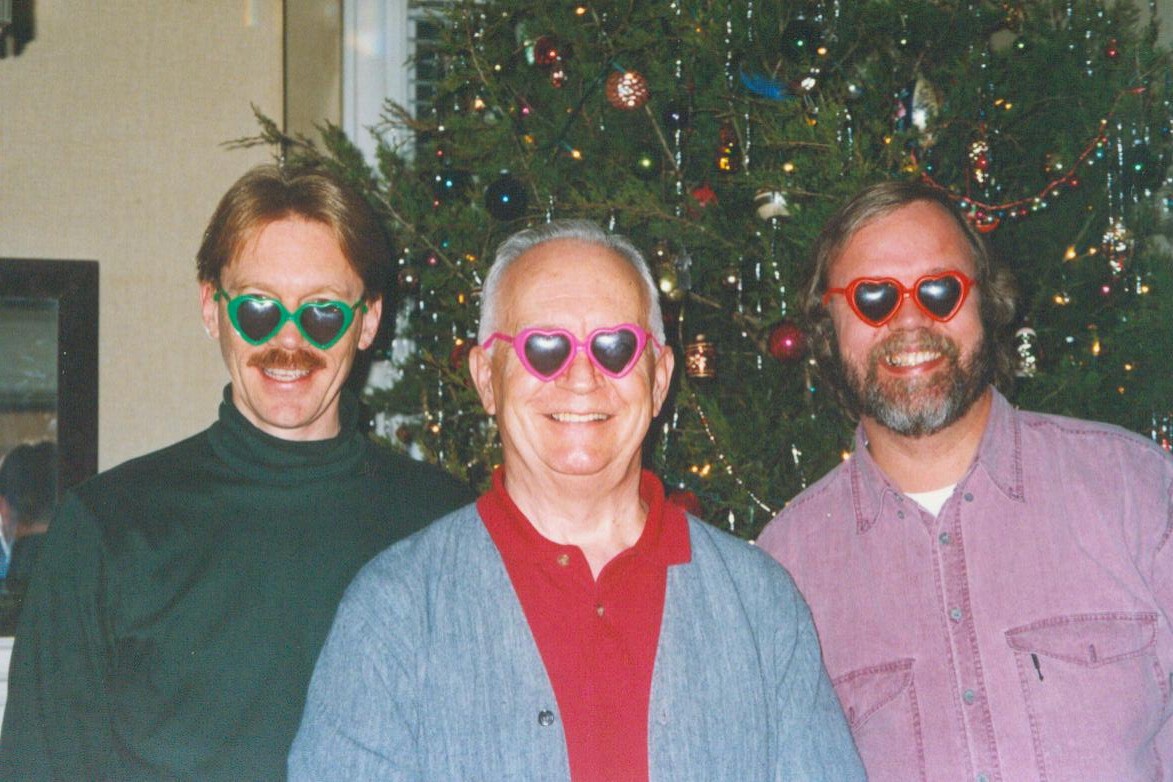
| Robert O Goebel, Max Dufner, and Steve Rogers taken in Richmond, Virginia, Christmas 1993 |
Today I am thinking of my mentor, the late Professor Max Dufner (1920-1999), who shepherded me through my MA program in the Department of German at the University of Arizona back in the early 1970s. June 17th would have been his 93rd birthday. He was a great influence on my life and professional career and a dear friend whom I miss very much. He took good care of his "Zwei Smarte Boys."
See my original tribute to Max back in June 2009:
http://lookingtowardportugal.blogspot.com/2009/06/zwei-smarte-boys.html
Thursday, June 20, 2013
Monday, June 3, 2013
Let Turkey Sing!
We should stand up and show our solidarity with the good people of Turkey who in recent days have been striving to regain the freedoms which the current authoritarian government of Prime Minister Recep Tayyip Erdogan has been slowly stripping away, including the right to peaceful assembly and to a free media. What started as a small sit-down protest in Istanbul's Taksim Square to question the government's plan to destroy one of the few remaining parks in a city of over twelve million people, has now become nationwide effort to safeguard this country's fragile secular democracy.
I want to share a blog posted today by George Takei. I can't say it any letter than he does:
June 3, 2013
June 3, 2013
The mainstream media is barely covering this story, but
it is of utmost importance. What began as a quiet protest last week in
Taksim Square against the razing of one of the last green parks in
Istanbul turned horribly violent as police fired tear gas and aimed
water cannons against peaceful protestors. One death and a number of
blindings were reported.
What followed was a nationwide uprising against the anti-democratic rule of Turkey’s Prime Minister Erdogan as police brutality became a symbol and rallying point against an increasingly unpopular government. This regime has, bit by bit, stripped away the rights and liberties of its people. Despite promising respect for democratic principles, Erdogan has held a tight grip on media and clamped down on the opposition. During the protests over the past five days, state-run media instead ran story after story on Miss Turkey and “the world’s ugliest cat.”
Social media was said to have been the galvanizing force behind the uprisings in places like Iran and Egypt, and so it is no surprise that the Turkish government is now seeking to silence platforms such as Facebook and Twitter. After protests began, the authorities severed access to these popular social media sites, hoping that word of what had transpired would not get out. Even the Western media, which appears to have fallen well short of its obligation to report the truth, remains curiously silent, as if dependent on social media to gauge newsworthiness.
While any political uprising carries with it complex issues, and any “people’s revolution” could have various unknown factions involved, as we’ve seen in other regions and countries, one thing remains clear: The use of violent suppression can only lead to greater unrest and instability. So to Prime Minister Erdogan, I say this: The world is watching. We call upon your government to stop the violence and engage in peaceful dialogue with the Turkish people.
–George Takei
What followed was a nationwide uprising against the anti-democratic rule of Turkey’s Prime Minister Erdogan as police brutality became a symbol and rallying point against an increasingly unpopular government. This regime has, bit by bit, stripped away the rights and liberties of its people. Despite promising respect for democratic principles, Erdogan has held a tight grip on media and clamped down on the opposition. During the protests over the past five days, state-run media instead ran story after story on Miss Turkey and “the world’s ugliest cat.”
Social media was said to have been the galvanizing force behind the uprisings in places like Iran and Egypt, and so it is no surprise that the Turkish government is now seeking to silence platforms such as Facebook and Twitter. After protests began, the authorities severed access to these popular social media sites, hoping that word of what had transpired would not get out. Even the Western media, which appears to have fallen well short of its obligation to report the truth, remains curiously silent, as if dependent on social media to gauge newsworthiness.
While any political uprising carries with it complex issues, and any “people’s revolution” could have various unknown factions involved, as we’ve seen in other regions and countries, one thing remains clear: The use of violent suppression can only lead to greater unrest and instability. So to Prime Minister Erdogan, I say this: The world is watching. We call upon your government to stop the violence and engage in peaceful dialogue with the Turkish people.
–George Takei
Saturday, June 1, 2013
Thursday, May 16, 2013
The Pentagon Memorial
I have recently posted comments about the 9/11 memorials located in Shanksville, Pennsylvania and at the World Trade Center, in New York City. So it is only right that I give the Pentagon Memorial is just due.
On that fateful morning of September 11, 2001 I was at my desk just three short blocks from the White House as my colleagues and I followed the unfolding of those tragic events in New York City. And while we and much of America watched in horror as two commercial airliners crashed into the twin towers of the World Trade Center in lower Manhattan, American Airlines Flight 77, a Boeing 757 carrying 59 passengers and crew, was hijacked by five terrorists after its departure from Washington’s Dulles International Airport and deliberately crashed into the west side of the Pentagon at 9:37am. The plane struck the building at the first-floor level while traveling at 345 mph, and debris and fires penetrated the three outermost rings of the building. The building was severely damaged, and one section at the impact site collapsed. In the aftermath, I joined thousands of others crowding the streets and sidewalks of downtown Washington as we made our way out of the city on foot, the smoke of the burning Pentagon rising into an otherwise cloudless blue sky.
Following the investigation and clean-up of the crash site, the Phoenix Project was initiated to repair and to reoccupy the outermost ring of the rebuilt section by September 11, 2002, the first anniversary of the attack. This goal was bettered by nearly a month, when Pentagon employees returned to the previously destroyed and damaged section on August 15, 2002. This rebuilt section also houses a small indoor memorial cenotaph and chapel situated at the point of impact.
Dedicated on September 11, 2008, it is a lasting tribute to the 184 who died that morning - the passengers of American Flight 77 and the men and women at the Pentagon. Like the Shanksville site dedicated to the memory of the heroic passengers of United Flight 93 who foiled the hijackers goal to crash the plane into a target in Washington, DC, the Pentagon Memorial is administered by the National Park Service and is opened to the public free of charge every day of the week.
The exterior memorial consists of a series of 184 bench-like granite-covered structures, each one overlying a small pool and bearing the name of one of the victims. All are aligned in the direction the plane was traveling when it struck the Pentagon. The names on each memorial bench face east or west. If the victim was on the plane, visitors read the name as they look toward the western sky. If the person was inside the Pentagon, you read the name looking at the building, facing east.
One survivor who lost a loved one in the attack on the Pentagon stressed the importance of such sites to families and friends left behind. They have a place to go other than a burial plot or a vacant stone in a cemetery. We all need a place to go to ponder and reflect on what happened on that bright, sunny September morning.
Check out the "Looking Toward Portugal" Facebook page for more information and photos.
On that fateful morning of September 11, 2001 I was at my desk just three short blocks from the White House as my colleagues and I followed the unfolding of those tragic events in New York City. And while we and much of America watched in horror as two commercial airliners crashed into the twin towers of the World Trade Center in lower Manhattan, American Airlines Flight 77, a Boeing 757 carrying 59 passengers and crew, was hijacked by five terrorists after its departure from Washington’s Dulles International Airport and deliberately crashed into the west side of the Pentagon at 9:37am. The plane struck the building at the first-floor level while traveling at 345 mph, and debris and fires penetrated the three outermost rings of the building. The building was severely damaged, and one section at the impact site collapsed. In the aftermath, I joined thousands of others crowding the streets and sidewalks of downtown Washington as we made our way out of the city on foot, the smoke of the burning Pentagon rising into an otherwise cloudless blue sky.
Following the investigation and clean-up of the crash site, the Phoenix Project was initiated to repair and to reoccupy the outermost ring of the rebuilt section by September 11, 2002, the first anniversary of the attack. This goal was bettered by nearly a month, when Pentagon employees returned to the previously destroyed and damaged section on August 15, 2002. This rebuilt section also houses a small indoor memorial cenotaph and chapel situated at the point of impact.
Dedicated on September 11, 2008, it is a lasting tribute to the 184 who died that morning - the passengers of American Flight 77 and the men and women at the Pentagon. Like the Shanksville site dedicated to the memory of the heroic passengers of United Flight 93 who foiled the hijackers goal to crash the plane into a target in Washington, DC, the Pentagon Memorial is administered by the National Park Service and is opened to the public free of charge every day of the week.
The exterior memorial consists of a series of 184 bench-like granite-covered structures, each one overlying a small pool and bearing the name of one of the victims. All are aligned in the direction the plane was traveling when it struck the Pentagon. The names on each memorial bench face east or west. If the victim was on the plane, visitors read the name as they look toward the western sky. If the person was inside the Pentagon, you read the name looking at the building, facing east.
One survivor who lost a loved one in the attack on the Pentagon stressed the importance of such sites to families and friends left behind. They have a place to go other than a burial plot or a vacant stone in a cemetery. We all need a place to go to ponder and reflect on what happened on that bright, sunny September morning.
Check out the "Looking Toward Portugal" Facebook page for more information and photos.
Wednesday, May 15, 2013
Sunday, May 5, 2013
The 9/11 Museum Should be Free to All
This morning I read with not a small degree of dismay that the non-profit corporation and foundation responsible for constructing and operating the new museum at the site of the 9/11 terror attacks on the World Trade Center in lower Manhattan is now planning to charge up to a $25 per person mandatory entrance fee when the museum open to the public next year (although the exact amount of the fee is yet to be determined). Apparently I am not the only one who feels this way.
Karen Matthews of the Associated Press reports via the Huffington Post that the Foundation claims it is facing sizeable operating costs in the neighborhood of $60 million annually, due in large part to the security that will be required to protect the site from future terrorist attacks. “This is something that is going to be important and is going to be worth the expenditure,” according to Joseph Daniels, the president of the National September 11 Memorial and Museum since October 2006, adding that there would be student and senior discounts while rejecting the idea of optional donations as unfeasible.
There was a great deal of debate and hair-pulling concerning the final design and ultimate mission of the Memorial and Museum, as well the proposed construction and operation budget funded by private and public funds. Cost concerns surfaced early in the process with the public disclosure that both would cost an estimated $672 million. Furthermore, it would take a total of at least $973 million to fully develop the memorial setting which would be owned, operated and finance by the Foundation. A subsequent estimate put the cost $494 million and the budget was cut to $530 million, with an additional $80 million grant from New York State for the construction of the museum pavilion. Even with this reduced budget, over $700 million has been raised to date, with more than half coming from private donations from hundreds of thousands of donors in all 50 states and more than 100 foreign countries. The remainder consists of federal grants through the Lower Manhattan Development Corporation (LMDC). The first capital fund-raising goal of US$350 million was raised by April 2008 to be used to build the memorial and museum and to create an operating endowment for the museum after which Thomas S. Johnson, chairman of the Foundation's executive committee announced the decision not to actively pursue new fund-raising efforts until there was “complete clarity” concerning the design and the costs of the project.
Construction for the memorial began in August 2006, and despite delays, the Foundation was still confident that the memorial would be completed by the tenth anniversary of the attacks on September 11, 2011. Mayor Michael Bloomberg, who is also the Foundation’s chairperson, received a low interest $15 million dollar loan to cover budget shortfalls, and there has also been federal and state funding along with monies from the Port Authority. If you visit the Foundation’s website - http://www.911memorial.org - there is ample opportunity for you and other private individuals, corporation and foundations to make tax deductible donations, and in doing so recognizing that “the National September 11 Memorial & Museum is only possible because of your support.” Well, that is not completely true is it?
The late Senator Daniel Inouye (D-Hawaii) proposed Senate Bill 1537 (the National September 11 Memorial and Museum Act of 2011) which would have transferred the site of the memorial and museum to the Secretary of the Interior so that it could be administered by the National Park Service while providing an additional $20 million in US taxpayers’ money to be applied toward the annual operating budget of the memorial and museum (this is approximately one third of the proposed annual operating budget). The bill was introduced on September 9, 2011 and sent to committee. House Resolution 2882 was introduced by Representative Jerrold Nadler (D-NY8) on September 12, 2011 and was co-sponsored by three other representatives from New York State as it was sent to committee. On October 19, 2011, William D. Shaddox of the National Park Service testified before the Senate Committee on Energy and Natural Resources and raised concerns regarding the ability of the National Park Service to provide the funds required by the legislation. Shaddox testified that there was no precedent for the Park Service to hold title to a property over which it does not also have operational and administrative control as required by the bill. Both the Senate bill and the House Resolution died in committee and were never enacted. What a shame.
Almost a month ago I visited the Shanksville, Pennsylvania memorial to the heroic passengers of United Flight 93 who foiled the attempt by terrorist hijackers to fly a fourth commercial airliner into a target in Washington, DC on the morning of September 11, 2001 [ http://lookingtowardportugal.blogspot.com/2013/04/a-common-field.html ]. This memorial is operated by the National Park Service and is open daily to the public free of charge. The Pentagon Memorial to the 184 who died that morning - the passengers on American Flight 77 and the men and women at the Pentagon - was dedicated on September 11, 2008 and is also administered by the National Park Service and opened to the public free of charge every day of the week.
One wonders why the federal government through appropriate Congressional legislation has not found it fitting to financially support a memorial to ALL victims of the 9/11 attacks and not just those who perished at the Pentagon and in Pennsylvania. Throughout our nation’s history, Congress has stepped forward to authorize operating funds – in partnership with private donors – for memorials and museums of national significance. Congress has authorized funding for numerous Civil War battlefields, for the United States Holocaust Memorial Museum, and for numerous museums and other historical sites. Why not support of memorial museum in New York City to recognize and honor the victims of the largest foreign attack on American soil? It seem like a no-brainer to me.
The museum’s mission statement claims that it exists to bear “solemn witness” to the terrorist attacks and to honor the nearly 3,000 victims of these attacks as well as those who risked their lives to save others. “The Museum attests to the triumph of human dignity over human depravity and affirms an unwavering commitment to the fundamental value of human life.” Furthermore, Alice M. Greenwood, the museum’s director, tells us that “the Museum will explore the very real impact of terrorism in the lives of very real people, and their families, friends, colleagues and communities.” If this is the case, why should these same families and friends be expected to pay such an exorbitant entry fee? Why should anyone, whether they be American or not? “As custodian of memory,” she goes on to say, “the Museum will take on the mantle of moral authority that will define its continuing and evolving role. This Museum will do nothing less than underscore the absolute illegitimacy of indiscriminate murder.” I would certainly hope so at $25 a head!
If there is as much money in the coffers as one is led to believe, it seem to me a rather specious argument to suggest that there is not enough to fund an endowment to cover the operating and security budgets for the new memorial and museum. How odd that we can visit the Holocaust Memorial Museum and learn about Nazi criminal intentions and actions toward innocent victims and to memorialize and honor in some small way the memory of Nazi victims, yet we are expected to pay top dollar to memorialize and honor our own victims of wanton violence and murder.
Frankly, I think it is offensive to the memory of those who died at Ground Zero, those passengers in the two planes, the workers at the World Trade Center, and those dedicated first responders who gave their lives so that the lucky might return home to their family and friends. It is an insult to these same families and friends who must soon pay to honor their loved ones.
If the Foundation is truly the custodian of memory cloaked in the mantle of moral authority, it will find a way to make the museum and the surrounding memorial open and free to all who now live daily with the threat of global terrorism that is inalterably changing the fabric of our daily lives.
Check out the "Looking Toward Portugal" Facebook page for more information and photos.
Karen Matthews of the Associated Press reports via the Huffington Post that the Foundation claims it is facing sizeable operating costs in the neighborhood of $60 million annually, due in large part to the security that will be required to protect the site from future terrorist attacks. “This is something that is going to be important and is going to be worth the expenditure,” according to Joseph Daniels, the president of the National September 11 Memorial and Museum since October 2006, adding that there would be student and senior discounts while rejecting the idea of optional donations as unfeasible.
There was a great deal of debate and hair-pulling concerning the final design and ultimate mission of the Memorial and Museum, as well the proposed construction and operation budget funded by private and public funds. Cost concerns surfaced early in the process with the public disclosure that both would cost an estimated $672 million. Furthermore, it would take a total of at least $973 million to fully develop the memorial setting which would be owned, operated and finance by the Foundation. A subsequent estimate put the cost $494 million and the budget was cut to $530 million, with an additional $80 million grant from New York State for the construction of the museum pavilion. Even with this reduced budget, over $700 million has been raised to date, with more than half coming from private donations from hundreds of thousands of donors in all 50 states and more than 100 foreign countries. The remainder consists of federal grants through the Lower Manhattan Development Corporation (LMDC). The first capital fund-raising goal of US$350 million was raised by April 2008 to be used to build the memorial and museum and to create an operating endowment for the museum after which Thomas S. Johnson, chairman of the Foundation's executive committee announced the decision not to actively pursue new fund-raising efforts until there was “complete clarity” concerning the design and the costs of the project.
Construction for the memorial began in August 2006, and despite delays, the Foundation was still confident that the memorial would be completed by the tenth anniversary of the attacks on September 11, 2011. Mayor Michael Bloomberg, who is also the Foundation’s chairperson, received a low interest $15 million dollar loan to cover budget shortfalls, and there has also been federal and state funding along with monies from the Port Authority. If you visit the Foundation’s website - http://www.911memorial.org - there is ample opportunity for you and other private individuals, corporation and foundations to make tax deductible donations, and in doing so recognizing that “the National September 11 Memorial & Museum is only possible because of your support.” Well, that is not completely true is it?
The late Senator Daniel Inouye (D-Hawaii) proposed Senate Bill 1537 (the National September 11 Memorial and Museum Act of 2011) which would have transferred the site of the memorial and museum to the Secretary of the Interior so that it could be administered by the National Park Service while providing an additional $20 million in US taxpayers’ money to be applied toward the annual operating budget of the memorial and museum (this is approximately one third of the proposed annual operating budget). The bill was introduced on September 9, 2011 and sent to committee. House Resolution 2882 was introduced by Representative Jerrold Nadler (D-NY8) on September 12, 2011 and was co-sponsored by three other representatives from New York State as it was sent to committee. On October 19, 2011, William D. Shaddox of the National Park Service testified before the Senate Committee on Energy and Natural Resources and raised concerns regarding the ability of the National Park Service to provide the funds required by the legislation. Shaddox testified that there was no precedent for the Park Service to hold title to a property over which it does not also have operational and administrative control as required by the bill. Both the Senate bill and the House Resolution died in committee and were never enacted. What a shame.
Almost a month ago I visited the Shanksville, Pennsylvania memorial to the heroic passengers of United Flight 93 who foiled the attempt by terrorist hijackers to fly a fourth commercial airliner into a target in Washington, DC on the morning of September 11, 2001 [ http://lookingtowardportugal.blogspot.com/2013/04/a-common-field.html ]. This memorial is operated by the National Park Service and is open daily to the public free of charge. The Pentagon Memorial to the 184 who died that morning - the passengers on American Flight 77 and the men and women at the Pentagon - was dedicated on September 11, 2008 and is also administered by the National Park Service and opened to the public free of charge every day of the week.
One wonders why the federal government through appropriate Congressional legislation has not found it fitting to financially support a memorial to ALL victims of the 9/11 attacks and not just those who perished at the Pentagon and in Pennsylvania. Throughout our nation’s history, Congress has stepped forward to authorize operating funds – in partnership with private donors – for memorials and museums of national significance. Congress has authorized funding for numerous Civil War battlefields, for the United States Holocaust Memorial Museum, and for numerous museums and other historical sites. Why not support of memorial museum in New York City to recognize and honor the victims of the largest foreign attack on American soil? It seem like a no-brainer to me.
The museum’s mission statement claims that it exists to bear “solemn witness” to the terrorist attacks and to honor the nearly 3,000 victims of these attacks as well as those who risked their lives to save others. “The Museum attests to the triumph of human dignity over human depravity and affirms an unwavering commitment to the fundamental value of human life.” Furthermore, Alice M. Greenwood, the museum’s director, tells us that “the Museum will explore the very real impact of terrorism in the lives of very real people, and their families, friends, colleagues and communities.” If this is the case, why should these same families and friends be expected to pay such an exorbitant entry fee? Why should anyone, whether they be American or not? “As custodian of memory,” she goes on to say, “the Museum will take on the mantle of moral authority that will define its continuing and evolving role. This Museum will do nothing less than underscore the absolute illegitimacy of indiscriminate murder.” I would certainly hope so at $25 a head!
If there is as much money in the coffers as one is led to believe, it seem to me a rather specious argument to suggest that there is not enough to fund an endowment to cover the operating and security budgets for the new memorial and museum. How odd that we can visit the Holocaust Memorial Museum and learn about Nazi criminal intentions and actions toward innocent victims and to memorialize and honor in some small way the memory of Nazi victims, yet we are expected to pay top dollar to memorialize and honor our own victims of wanton violence and murder.
Frankly, I think it is offensive to the memory of those who died at Ground Zero, those passengers in the two planes, the workers at the World Trade Center, and those dedicated first responders who gave their lives so that the lucky might return home to their family and friends. It is an insult to these same families and friends who must soon pay to honor their loved ones.
If the Foundation is truly the custodian of memory cloaked in the mantle of moral authority, it will find a way to make the museum and the surrounding memorial open and free to all who now live daily with the threat of global terrorism that is inalterably changing the fabric of our daily lives.
Check out the "Looking Toward Portugal" Facebook page for more information and photos.
Monday, April 29, 2013
A Flâneur in Washington, DC
Please check out my blogspot, A Flâneur in Washington, DC, as I explore the neighborhoods, streets, and various haunts and hangouts in our Nation's Capital. http://flaneurinwashington.blogspot.com.
Monday, April 22, 2013
Wednesday, April 17, 2013
Trouble
![]() |
| “I don't go looking for trouble. Trouble usually finds me.” -- J.K Rowling |
Oh trouble can't you see
You're eating my heart away
And there's nothing much left of me.
I have had a variety of pets over the years, but few have resulted in a long or an endearing relationship.
There were goldfish and tropical fish, but you can’t play with them or take them on walks through the neighborhood, and so my affinity with these was as short lived as the fish themselves. I did have a piranha for a time when I was in high school, but even it lost its attraction after awhile. You can only watch so many goldfish devoured before it cuts into your dating time. My girlfriend ultimately carried the day. I had a pet chicken, consequences of an Easter chick that grew up too fast. We finally found it a good home on a farm outside of town where I doubt it lived a full and rewarding life. There was a frog I raised . . . from a tadpole at school which I brought home at the end of the year. It never made it through the summer. There was a chameleon or two. A cute bunny that grew into a rabbit who liked to bite. I discovered I liked Hasenpfeffer (and still do).
Cats seemed to fare better and I actually developed a good relationship with a couple over the years. There was a white Persian named Romeo whom I really liked. For some reason my dad and Romeo did not get along and a new home was found. I remember crying as I watched him disappear down the street while sitting up in the back window of our car. Shortly after my wife and I moved into our first apartment here in Maryland we adopted a black and white kitten which we named Gretchen. We had her for several years and she was truly a part of our family. We watched her have kittens of her own and mourned her when she was hit and killed by a car. We still think of her when we drive down that stretch of highway.
I had two dogs . . . a beagle and a golden retriever . . . but they came along at a time when I really did not have the time to give them the love and attention they deserved. I like dogs, and given the right circumstances, I think I would enjoy having one again. But maybe not. My wife grew up on ranches with dogs, and a few years after we were married (and after the sad loss of Gretchen) we became the owners of a beautiful Australian Shepherd puppy named Tara, and she was also a member of our family for several years. It was a present for my wife and she and our young son developed a very close bond with her. She would have been an ideal pet and companion had she not hated the very sight and sound of me. We never figured out why. For most of her life she refused to be in the same room with me, and as much as I tried, I could not get her to like me. In her later years she tolerated me, I think, but that was it. There was never really any love lost between us. Still, I will admit I shed a few tears the day I had to drive her to the vet to have her put down. So I think you are probably getting the point I am driving at here. I am basically not a pet person. Most of these pets were long ago forgotten. Except for one.
One autumn in the mid 1950s I had a pet raccoon named Trouble. It was not the name I gave it. Rather my grandmother christened him with this more than appropriate moniker because that was what he was from the day he became a temporary resident of my grandparents’ Michigan farmstead. But what city kid would not be fascinated with the idea of having a pet raccoon? I was. He was not really my pet, such as it was, for very long, but I still think back over the decades to that crisp autumn when Trouble descended on an otherwise peaceful farm.
Trouble was just a tyke when tragedy struck his own family. His mother was leading him and a couple of his sibling kits across the road in front of my grandparent’s farmhouse when they were run down by a speeding truck. Only Trouble, although this was not yet his name, survived the incident. My granddad found an old crate which he wrapped with chicken wire and this became the little racoon’s home. My grandmother fixed a bottle used to feed young calves and nourished Trouble until he was fully weaned and began to take a real interest in solid food . . . mostly table scraps but also the ubiquitous acorns produced that autumn by a gigantic oak tree between the farmhouse and the chicken coop. I would gather these by the pail full and delighted in pushing them through the wire cage while watching as Trouble doused each nut in his water bowl as he chewed his way to the meat inside. Trouble ate just about anything you put in front of him. Samuel I. Zeveloff, in his book Raccoons: A Natural History, says that raccoons "may well be one of the world's most omnivorous animals." Trouble certainly proved him correct.
Unfortunately, the older Trouble got, the more he lived up to his name. He would frequently escape, but knowing what a good thing he had going, he never wandered very far. My granddad would always manage to find him nearby and capture him or coax him back to his cage. More of a nuisance than trouble. The older and larger he got, however, the more unpredictable he became and I was warned in no uncertain terms to keep my hands and fingers out of the cage when I fed him.
I remember it was a snowy morning when my grandfather returned from the milking barn cussing under his breath. Trouble had escaped again and this time he found the chicken coop. Need I say more? Trouble had finally become trouble with a capital T. I did not realize this until that afternoon, having returned from school to find Trouble’s cage empty again. I took my pail and filled it with what acorns I could find under the snow, all the while looking for Trouble. He was nowhere to be found. I asked my grandmother and she told me to be patient; he would come back when he got hungry. She reminded me that although I thought of him as a pet, he was a wild animal and belonged in the wild. The next morning, before heading off to school, I checked the cage to see if Trouble had come home during the night. The cage was gone. And, as I left for school I saw my granddad walking up the hill from the chicken coop with his .22 rifle over his shoulder. I never saw Trouble again.
Trouble
Oh trouble move away
I have seen your face
and it's too much for me today.
[*] “Trouble” lyrics by Cat Stevens. Check out the "Looking Toward Portugal" Facebook page for more information and photos.
Tuesday, April 16, 2013
My Obession With Bacon
I have written about my bacon obsession before, and those who know me know that I hold all things bacon in the highest regard. Some might think it a joke, but I am really quite serious. It is Ur-Food in my book!
Returning home from Ohio recently, we stopped for breakfast near Zanesville. The choices at this particular interstate exit did not offer up a lot of possibilities and so we ended up at Denny’s Classic Diner. Generally, the food at Denny’s is not that bad, and for those of us in the 55 and older set, the menu selections and prices make for little complaint. This restaurant chain has been around for sixty years, starting out as Denny’s Donuts in California in 1953. The name changed to simply Denny’s in 1959, and since 1997 several of the franchises throughout the country have changed their look and now bill themselves as “Classic Diners.” Different look, same food. I first stopped at one of these diners last spring when I was stranded in a snow storm outside of Minneapolis. I had a great breakfast there and so we decided to give the one near Zanesville a chance. Little did I know that Denny’s shares and celebrates my bacon obsession.
Sitting at the counter, our very pleasant waitress offered us the standard menu as well as the special “Baconalia” menu, a limited time offering with which our visit had a most pleasant nexus. I am use to ordering breakfast while asking for an extra rasher of bacon. Not necessary this time around! I ordered the “Ultimate Bacon Breakfast” which proffered not just a side of bacon, but a “Baconalia side of bacon” - six hickory-smoked slices!! - served with two eggs any style, crispy hash browns, and a pile of buttered toast. And all for just six bucks! And you know what? One could add two extra strips of bacon to anything on the menu for an additional 99¢ . . . or four for $1.98. OMG!
What else, you may ask? There were choices to be had. There was the “Pepper Bacon & Eggs” which included a regular serving of bacon rubbed with black pepper. Looked good, but I was more interested in the quantity of bacon and not the manner in which it is prepared and served. Still, a pretty good deal at $5.49. There is a “Pepper Bacon Avocado Omelette” described as another “bacon-inspired dream come true” . . . a three-egg omelette with diced pepper bacon joined with fresh avocado, roasted peppers, onions, mushrooms, pico de gallo and cheese. It was tempting. Then there is “French Toast Stuffed With Carmel Bacon” . . . two slices of toast enclosing a layer of bacon and a white chocolate spread doused with a caramel sauce and covered with bacon bits. Add a couple of eggs and two more slices of bacon and anyone with a sweet tooth has a pretty good bargain at eight bucks. Too sweet for me, but hey!
Had we stuck around for lunch, we would have had a choice among the “Ultimate BLT” with its four slices of pepper bacon; the “Spicy Pepper Bacon Jack Burger” topped with slices of bacon and all the usual fixings coupled with sliced jalapeños and a chipotle sauce; and the “Bacon Pepper Jack Tilapia” with sauteed spinach, diced bacon and pico de gallo with jack cheese. The bacon sounds good . . . but tilapia? I’m sorry, but I view this species as just one small step above carp. A nice haddock, even catfish, is preferable as an affordable and tasty white fish. Yet, if you cover it with bacon . . . maybe.
For those with lighter appetites, there are the “BBQ Bacon Mac ‘n Cheese Bites” served with BBQ sauce and warm pepper jack cheese and topped with bacon bits, or the “Bacon Cheddar Red-Skinned Potatoes” which give the phrase “meat and potatoes” a whole new meaning.
So you see where I am going with this. Bacon give a wonderful flavor boost to anything and everything. A case in point. How about a “Maple Bacon Milk Shake” or a “Maple Bacon Sundae”? They are both on the menu. Vanilla ice cream with maple-flavored syrup (I would have sprung for the real thing) and bits and chunks of hickory-smoked bacon. Our waitress told us they are both “divine.” As much as I like bacon, I personally think this is pushing the envelope a bit, especially mixing the hickory and maple flavorings. But maybe it’s just me. Finally, a “Salted Caramel Brownie Sundae With Bacon” (also available without bacon). Nope. That IS going too far!
My wife had a waffle . . . she always goes for the waffle. Did it come with bacon? No, it did not. If it had, maybe I would have had the waffle. True, I could have had the special bacon side order, but that’s not the point. But I am not complaining. It was a great breakfast and soon we were headed down and bound for Wheeling and points east with visions of bacon dancing in my head.
[*] I have received neither enticements nor compensation of any kind from Denny’s . . . although our nice waitress was kind enough to give me a copy of the “Baconalia” menu for my collection. Check out the "Looking Toward Portugal" Facebook page for more information and photos.
Returning home from Ohio recently, we stopped for breakfast near Zanesville. The choices at this particular interstate exit did not offer up a lot of possibilities and so we ended up at Denny’s Classic Diner. Generally, the food at Denny’s is not that bad, and for those of us in the 55 and older set, the menu selections and prices make for little complaint. This restaurant chain has been around for sixty years, starting out as Denny’s Donuts in California in 1953. The name changed to simply Denny’s in 1959, and since 1997 several of the franchises throughout the country have changed their look and now bill themselves as “Classic Diners.” Different look, same food. I first stopped at one of these diners last spring when I was stranded in a snow storm outside of Minneapolis. I had a great breakfast there and so we decided to give the one near Zanesville a chance. Little did I know that Denny’s shares and celebrates my bacon obsession.
Sitting at the counter, our very pleasant waitress offered us the standard menu as well as the special “Baconalia” menu, a limited time offering with which our visit had a most pleasant nexus. I am use to ordering breakfast while asking for an extra rasher of bacon. Not necessary this time around! I ordered the “Ultimate Bacon Breakfast” which proffered not just a side of bacon, but a “Baconalia side of bacon” - six hickory-smoked slices!! - served with two eggs any style, crispy hash browns, and a pile of buttered toast. And all for just six bucks! And you know what? One could add two extra strips of bacon to anything on the menu for an additional 99¢ . . . or four for $1.98. OMG!
What else, you may ask? There were choices to be had. There was the “Pepper Bacon & Eggs” which included a regular serving of bacon rubbed with black pepper. Looked good, but I was more interested in the quantity of bacon and not the manner in which it is prepared and served. Still, a pretty good deal at $5.49. There is a “Pepper Bacon Avocado Omelette” described as another “bacon-inspired dream come true” . . . a three-egg omelette with diced pepper bacon joined with fresh avocado, roasted peppers, onions, mushrooms, pico de gallo and cheese. It was tempting. Then there is “French Toast Stuffed With Carmel Bacon” . . . two slices of toast enclosing a layer of bacon and a white chocolate spread doused with a caramel sauce and covered with bacon bits. Add a couple of eggs and two more slices of bacon and anyone with a sweet tooth has a pretty good bargain at eight bucks. Too sweet for me, but hey!
Had we stuck around for lunch, we would have had a choice among the “Ultimate BLT” with its four slices of pepper bacon; the “Spicy Pepper Bacon Jack Burger” topped with slices of bacon and all the usual fixings coupled with sliced jalapeños and a chipotle sauce; and the “Bacon Pepper Jack Tilapia” with sauteed spinach, diced bacon and pico de gallo with jack cheese. The bacon sounds good . . . but tilapia? I’m sorry, but I view this species as just one small step above carp. A nice haddock, even catfish, is preferable as an affordable and tasty white fish. Yet, if you cover it with bacon . . . maybe.
For those with lighter appetites, there are the “BBQ Bacon Mac ‘n Cheese Bites” served with BBQ sauce and warm pepper jack cheese and topped with bacon bits, or the “Bacon Cheddar Red-Skinned Potatoes” which give the phrase “meat and potatoes” a whole new meaning.
So you see where I am going with this. Bacon give a wonderful flavor boost to anything and everything. A case in point. How about a “Maple Bacon Milk Shake” or a “Maple Bacon Sundae”? They are both on the menu. Vanilla ice cream with maple-flavored syrup (I would have sprung for the real thing) and bits and chunks of hickory-smoked bacon. Our waitress told us they are both “divine.” As much as I like bacon, I personally think this is pushing the envelope a bit, especially mixing the hickory and maple flavorings. But maybe it’s just me. Finally, a “Salted Caramel Brownie Sundae With Bacon” (also available without bacon). Nope. That IS going too far!
My wife had a waffle . . . she always goes for the waffle. Did it come with bacon? No, it did not. If it had, maybe I would have had the waffle. True, I could have had the special bacon side order, but that’s not the point. But I am not complaining. It was a great breakfast and soon we were headed down and bound for Wheeling and points east with visions of bacon dancing in my head.
[*] I have received neither enticements nor compensation of any kind from Denny’s . . . although our nice waitress was kind enough to give me a copy of the “Baconalia” menu for my collection. Check out the "Looking Toward Portugal" Facebook page for more information and photos.
Saturday, April 13, 2013
A Common Field
No one of a certain age who was alive on that September morning will ever forget the images of the two commercial jets flying wanton into the twin towers of the World Trade Center, in New York City, or the thick pall of black smoke rising from the Pentagon after a third airliner flew into its western elevation. But few seem to remember the fourth jet, the one that never reached its destination or its intended target. I hope I can rectify that overnight.
Personally, I will never forget the fate of United Flight 93, and for over a decade I have wanted to visit this solemn place near rural Shanksville, Pennsylvania. The reason for this being the fact that had it made its way to its intended target, which was rumored to have been either the White House or the Capitol Building, I might not be sitting here writing this today. That fateful morning I was at my desk just three short blocks from the White House. Despite the fear in Washington that day, I did not, at the time, consider myself in imminent danger. I joined my colleagues as we followed the unfolding of those tragic events and the confusion that ensued. We heard reports that other jets were headed our way. There were reports of fires and explosions throughout the city, none of which turned out to be true. Finally, I joined thousands of others as we crowded the streets and sidewalks and made our way out of the city on foot, the smoke of the burning Pentagon profaning what was otherwise a cloudless, robin egg blue sky. It was not until I watched the unfolding news reports at home that afternoon that I heard for the first time the fate of the fourth jet that crashed before it reached Washington. It was only then that I realized my day could have ended very differently than it did.
We will never know with absolute certainty what happened on board United Flight 93 on that tragic morning. It departed from Newark at 8:42am, almost 25 minutes late due to heavy traffic in the area that morning. Four minutes after it took off American Flight 11 crashed into the north tower of the World Trade Center. Seventeen minutes later United Flight 175 struck the south tower. Roughly a half hour after that, at 9:37am, American Flight 77 slammed into the Pentagon. Following the first three hijackings, the FAA and individual airlines began to warn their planes in flight to be aware of possible “cockpit intrusions” while the FAA ordered all civilian aircraft in American skies - approximately 45,000 planes - to land immediately, the first and only time that this has occurred in US aviation history. United 93 received the cockpit intrusion warning at 9:24am, just four minutes before the hijackers went into action and the flight deck declared a “Mayday” distress call as the plane was approaching Cleveland. In the background air traffic controllers could hear the sounds of a physical struggle in the cockpit as the crew repeatedly said “get out of here.” Four minutes later the hijackers informed the passengers, who had been moved to the rear of the cabin, that they had a bomb and that the plane was returning to Newark. Some of the passengers contacted family and friends by phone. Thirteen passengers placed a total of 37 separate calls, describing what was happening, telling that the hijackers were armed with knives and claimed to have a bomb, and that some of the crew might already be dead. The passengers also learned for the first time that three jets had already crashed into the World Trade Center and the Pentagon. They quickly realized that their plane was also destined for an unknown target. They were doomed unless they decided to act and take control of their own fate.
It was also during these phone conversation that people on the ground learned that the passengers had discussed and voted on whether to rush the hijackers in an attempt to regain control of the plane. They decided, and acted, and shortly before 10 am, a half hour after the hijacking and as the plane passed near the Pittsburgh airport, a group of passengers rushed the front of the cabin. The air traffic controllers in Cleveland heard, and the cockpit recorder picked up, the sounds of the struggle, a series of loud thumps, crashes, shouts, and breaking glasses and plates as the passengers and hijackers fought and the hijacker pilot pitched and rolled the aircraft in an attempt to knock the passengers off their feet. The sounds of fighting continued outside the cockpit until the very end. Realizing that they were losing control of the aircraft, one of the hijackers asked, “Is that it? I mean, shall we put it down?” Another answered, “Yes, put it in it, and pull it down.” Shortly after 10am, as the struggle for control of the aircraft continued, the hijackers rolled the plane on it back. Again a hijacker ordered, “Put it down.” That was it. United Flight 93 plowed into an empty field 80 miles southeast of Pittsburgh and 124 miles from Washington, DC . . . just 20 minutes’ flying time from the target in Washington it never reached. It was traveling 580 miles per hour at the time of impact and left a crater almost ten feet deep and 30 to 50 feet wide and surrounded by an extensive 70-acre debris field. All 40 passengers and crew, as well as the four hijackers, were killed instantly. The four hijacked aircraft strikes killed nearly 3000 people that morning, the deadliest foreign attack on American soil.
The destruction of the two airplanes in New York, and the aftermath of the Pentagon attack, are well-documented in photographs and film footage. The crash of United Flight 93, however, had few witnesses. People on the ground observed the plane flying very low and fast and moving about erratically. Shortly before impact, a number of residents in the small hamlet of Lambertsville, just northwest of the crash site, witnessed the plane’s final moments. One told of a “horrific” and “deafening” noise as it passed overhead. Others told how their houses and windows vibrated violently. They ran outside to watch the inverted plane disappear over a ridge to the southeast, there was a huge explosion, and a mushrooming fireball rose into the sky followed by a thick cloud of black smoke glittering with the metallic debris reflecting the morning sunlight. One of the residents took a photograph of the smoke as it rose over the crash site.
The first responders arrived approximately fifteen minutes after the crash but there was nothing they could do. All they found was a smoldering crater, some burning trees, and a broad expanse of largely unrecognizable debris. A very small section of the fuselage was the only evidence that a plane had crashed, while some debris was found as far as eight miles from the crash site. There was nothing else. Much of the aftermath and clean-up was completed far from the prying eyes of the public and the media, all of which added to the legend surrounding the fate of the jet and those who died. The FBI launched the largest investigation in its history as the site, thanks to its isolated setting, was the only one of the three that day that would offer up valuable evidence as to who planned and executed the attack.
A week ago my wife and I traveled to Columbus, Ohio to visit family, and on the return trip to Maryland we took a slight detour off the Pennsylvania Turnpike to visit this common field that will forever be a memorial to those who died here on September 11, 2001. There are small memorials to United Flight 93 located at the turnpike rest stops near the Somerset exit, but I wanted to visit the actual site which is located 18 miles from Somerset, near rural hamlets of Shanksville and Lambertsville.
The area was first settled in the late 18th century. Then it was mostly wooded with a scattering of small farms and their cultivated fields and pastures. Surface strip mining for coal began to transform this landscape in the 1950s, a practice which lasted into the mid-1990s. Abandoned mining machinery still litters the area. Events on that September morning almost twelve years ago have forever changed this area as it has been seared into the American conscience. This common field will tell the lasting and compelling story of courage.
There were a number of makeshift memorials to United Flight 93 in the early years after the tragedy. Even while the FBI was conducting its investigation, there was a long row of hay bales festooned with signs, flags, balloons, stuffed animals and other memorabilia. Congress designated the site a National Memorial, in 2002, and since then there has been an ongoing effort to restore the area by reforestation and the planting of memorial groves of trees and wild flowers, as well as to design and construct a lasting memorial to the brave crew and passengers who stood up to terrorism the only way they could . . . by standing together.
It opened to the public last year and it is still very much a work in progress. There is a small visitors shelter adjacent the parking area which sits atop a broad, wind-swept hill offering a broad panorama of the surrounding Laurel Highlands of southwestern Pennsylvania. A permanent visitors center is in the works. After viewing a number of information panels telling the story of September 11 and United Flight 93, one walks along a long sloping black wall which demarcates the northern edge of the debris field which is closed to the public. Following the completion of the lengthy FBI investigation, the Somerset County coroner, who along with the FBI was able to positively identify all of the victims, ordered the site filled in and it now constitutes the final resting place of the 40 passengers and crew who died here. The identifiable remains of the hijackers were removed and turned over to the FBI. Across this field, along the southern edge of the crash site, is a stand of hemlock partially destroyed by fire. There is a single large boulder which now marks where the impact occurred. At the end of the long walkway is the Wall of Names, a series of 40 white marble panels, each inscribed with the name of one of the passengers and crew.
It was a difficult, emotional and sobering moment for me to stand there alone. Had these brave women and men not banded together in a final moment of courage before they died, I could have very well been one of the thousands who were killed and wounded on that otherwise peaceful late summer morning. Blessed be their memories. I, for one, will never forget them.
[*] The information on the actual hijacking and crash of United Flight 93 is a summary of what appears in the official 9/11 Commission Report - Final Report of the National Commission on Terrorist Attacks Upon the United States - released on July 22, 2004 following a two year investigation of all available data. Check out the "Looking Toward Portugal" Facebook page for more photos.
Wednesday, April 10, 2013
Three More Strangers and the Thunderbolt of the Confederacy
A couple years ago I posted a short piece on my discovery of an unknown Confederate soldier buried not far from where we spend our summers in Maine – http://lookingtowardportugal.blogspot.com/2011/07/stranger.html. Just recently I chanced upon the graves of three more Confederate “strangers” buried far from home.
I never quite know what I am going to chance upon when I embark on a road trip. This past week we drove to Ohio to visit family near Columbus. On the return trip we jumped off Interstate 70 for breakfast near Zanesville, and afterwards we left the interstate to the trucks and the through traffic, choosing to continue our eastward journey along US 40 - the National Road - through Concord and Cambridge to Old Washington before rejoining the interstate. For awhile we seemed to have the highway to ourselves.
We made an unexpected stop in Old Washington. It was platted in 1805 as “New Washington,” making it the oldest permanent settlement in Guernsey County. It was incorporated as “Washington,” in 1829, and by mid-century it was known formally as “Old Washington.” As we passed through this small town I noticed the familiar silhouette of a historic marker high atop a hill and I wondered what made this quiet hamlet historic? I made a detour to the hilltop to discover that we had arrived at the site of the northernmost exchange of hostile fire between Union and Confederate troops during the Civil War. This was news to me; I had grown up in the belief that the Battle of Gettysburg, on July 1-3, 1863, was the geographic highwater mark of the Confederacy. Apparently not, as Old Washington is approximately ten miles further north in latitude than Gettysburg. Confederate raiders appeared in several Guernsey County villages, including Old Washington, where they wreaked havoc before being caught by Union cavalry. The three unknown Confederate troops killed at Old Washington are buried in the hilltop cemetery near the graves of two Union soldiers (local soldiers who were not killed here) and adjacent the historical marker. The town erected a tombstone in 1847 bearing the inscription "Here was laid to rest by the citizens of Washington under public authority, the bodies of three confederate cavalrymen killed during the battle of Washington July 24, 1863, when a force in command of Confederate General John Morgan, was overtaken and defeated by Federal cavalrymen in command of General James M. Shackelford." So when I got home I looked into this little known chapter of Civil War history.
At the same time Robert E. Lee was leading his army into southern Pennsylvania in his second invasion of the North (the first coming the previous September when he was defeated at Antietam/Sharpsburg), a regimental force of approximately 2500 calvary troops under the command of Brigadier General John Hunt Morgan was conducting a separate campaign of hit and run raids throughout Kentucky, Indiana and Ohio. This following Brigadier General Henry Heth’s earlier unsuccessful attempt to capture Cincinnati only to be turned back by redoubtable Union fortifications south of the Ohio River in Kentucky. “Morgan’s Raiders,” as they came to be known, spread a long swath of destruction in their wake during their raids of July 1863.
On July 8, 1863, Morgan led his troops across the Ohio River near Brandenburg, Kentucky despite specific orders not to do so. Morgan’s intention was to draw the attention of thousands of Union troops away from their normal duties, including support of the Union defenses farther east in Pennsylvania, and to strike fear among the civilian population in the north. They swept across southeastern Indiana in less than a week, procuring horses and provisions while the Indiana militia tried to organize defenses until Union reinforcement could arrive. Morgan and his troops entered Ohio just north of Cincinnati on July 13 thereby flanking the Union fortifications south of that city. The Ohio governor called out his own state militia on July 12, and Major General Ambrose Burnside, commander of the Department of the Ohio with headquarters in Cincinnati, quickly organized Union regulars and the Ohio militia in an attempt to protect the southern part of the state from Morgan and to cut off his escape across the Ohio River. But not before Morgan and his cavalry advanced across southern Ohio, torching fields and farms and bridges as they made their way east toward the Ohio River and the West Virginia border. Morgan had hoped to cross back into Kentucky but the river crossings were fortified by Union garrisons.
Morgan arrived at the river on the evening of July 18, but decided not to attempt a crossing that night. On the following day, Union troops under Brigadier-General E.H. Hobson, who had been pursuing Morgan since shortly after he entered Ohio, finally caught up with the Confederate raiders at Buffington Island, near Ravenswood, West Virginia where Morgan hoped to cross the swollen Ohio River. Morgan succeeded in getting a small number of his men across the river before Union gunboats arrived to block this route of escape. Union cavalry with a two-to-one superior force attacked the Confederates before most could cross, however, and in a very short period of time Morgan lost between 800 and 1200 men, nearly all of whom were captured. Such as it was, this “battle” was the largest fought on Ohio territory during the war.
Licking their wounds, Morgan and his remaining raiders turned north having broken through the Union lines. They eventually found an unguarded ford where some 300 Confederates succeeded in crossing while many others drowned before Union gunboats arrived. Morgan and what remained of his men then turned northwest feigning an advance in the direction of Athens and Columbus before turning northeast in the general direction of Zanesville and Cambridge. Union Brigadier General James M. Shackelford and elements of the 1st and 3rd Kentucky and the 14th Illinois followed in hot pursuit. On July 22 Morgan and his men forded the Muskingum River south of Zanesville before turning northward into Guernsey County near Cumberland.
This ragtag band of soldiers wanted to get across the Ohio River and return home. They stole horses and other provisions while burning bridges to slow down their Union pursuers. Still they had one more fight left in them. Morgan and his men reached Old Washington on the morning of July 24. They rested and sought food and new provisions in town until the early afternoon when there were reports that the Union calvary was approaching from the south. The Confederates prepared to flee and many had already left town when Shackelford’s troops gathered at the top of Cemetery Hill and open fired on the Confederates still in town. They returned fire and three Confederate soldiers were killed while several others were captured. A skirmish more than a battle. Those that escaped headed farther north, still hoping to find a way across the Ohio River.
Morgan and his troops lasted two more days, until Union cavalry under the command of Major W.B. Way and Major G.W. Rue finally surrounded them. They surrendered on July 26 near West Point, Ohio, in Columbiana County not far from the Pennsylvania border and some 100 miles northeast of Old Washington. Morgan and several of his officers were sent to the Ohio Penitentiary, in Columbus. Many of the enlisted men were confined in the Camp Chase Confederate prison camp west of there (where today almost 2300 Confederate dead are buried far from their homes) while others ended up in the Camp Douglas stockade in Chicago.
The story of Morgan Raider’s - the “Thunderbolt of the Confederacy - ends with an interesting footnote. After arriving at the penitentiary on October 1, 1863, Morgan and several of his men planned an escape, seven of them eventually tunneling their way to freedom on November 27. Using money smuggled to him in prison, Morgan purchased a train ticket to Cincinnati where he escaped across the Ohio River into Kentucky, something he and his men were unable to do during their three-week raid across Ohio. He returned to the war but was killed in action on September 4, 1864 at Greenville, Tennessee.
So now I know the rest of the story.
Check out and like the Facebook page for "Looking Toward Portugal" for more information and photos pertaining to this and other postings.
I never quite know what I am going to chance upon when I embark on a road trip. This past week we drove to Ohio to visit family near Columbus. On the return trip we jumped off Interstate 70 for breakfast near Zanesville, and afterwards we left the interstate to the trucks and the through traffic, choosing to continue our eastward journey along US 40 - the National Road - through Concord and Cambridge to Old Washington before rejoining the interstate. For awhile we seemed to have the highway to ourselves.
We made an unexpected stop in Old Washington. It was platted in 1805 as “New Washington,” making it the oldest permanent settlement in Guernsey County. It was incorporated as “Washington,” in 1829, and by mid-century it was known formally as “Old Washington.” As we passed through this small town I noticed the familiar silhouette of a historic marker high atop a hill and I wondered what made this quiet hamlet historic? I made a detour to the hilltop to discover that we had arrived at the site of the northernmost exchange of hostile fire between Union and Confederate troops during the Civil War. This was news to me; I had grown up in the belief that the Battle of Gettysburg, on July 1-3, 1863, was the geographic highwater mark of the Confederacy. Apparently not, as Old Washington is approximately ten miles further north in latitude than Gettysburg. Confederate raiders appeared in several Guernsey County villages, including Old Washington, where they wreaked havoc before being caught by Union cavalry. The three unknown Confederate troops killed at Old Washington are buried in the hilltop cemetery near the graves of two Union soldiers (local soldiers who were not killed here) and adjacent the historical marker. The town erected a tombstone in 1847 bearing the inscription "Here was laid to rest by the citizens of Washington under public authority, the bodies of three confederate cavalrymen killed during the battle of Washington July 24, 1863, when a force in command of Confederate General John Morgan, was overtaken and defeated by Federal cavalrymen in command of General James M. Shackelford." So when I got home I looked into this little known chapter of Civil War history.
At the same time Robert E. Lee was leading his army into southern Pennsylvania in his second invasion of the North (the first coming the previous September when he was defeated at Antietam/Sharpsburg), a regimental force of approximately 2500 calvary troops under the command of Brigadier General John Hunt Morgan was conducting a separate campaign of hit and run raids throughout Kentucky, Indiana and Ohio. This following Brigadier General Henry Heth’s earlier unsuccessful attempt to capture Cincinnati only to be turned back by redoubtable Union fortifications south of the Ohio River in Kentucky. “Morgan’s Raiders,” as they came to be known, spread a long swath of destruction in their wake during their raids of July 1863.
On July 8, 1863, Morgan led his troops across the Ohio River near Brandenburg, Kentucky despite specific orders not to do so. Morgan’s intention was to draw the attention of thousands of Union troops away from their normal duties, including support of the Union defenses farther east in Pennsylvania, and to strike fear among the civilian population in the north. They swept across southeastern Indiana in less than a week, procuring horses and provisions while the Indiana militia tried to organize defenses until Union reinforcement could arrive. Morgan and his troops entered Ohio just north of Cincinnati on July 13 thereby flanking the Union fortifications south of that city. The Ohio governor called out his own state militia on July 12, and Major General Ambrose Burnside, commander of the Department of the Ohio with headquarters in Cincinnati, quickly organized Union regulars and the Ohio militia in an attempt to protect the southern part of the state from Morgan and to cut off his escape across the Ohio River. But not before Morgan and his cavalry advanced across southern Ohio, torching fields and farms and bridges as they made their way east toward the Ohio River and the West Virginia border. Morgan had hoped to cross back into Kentucky but the river crossings were fortified by Union garrisons.
Morgan arrived at the river on the evening of July 18, but decided not to attempt a crossing that night. On the following day, Union troops under Brigadier-General E.H. Hobson, who had been pursuing Morgan since shortly after he entered Ohio, finally caught up with the Confederate raiders at Buffington Island, near Ravenswood, West Virginia where Morgan hoped to cross the swollen Ohio River. Morgan succeeded in getting a small number of his men across the river before Union gunboats arrived to block this route of escape. Union cavalry with a two-to-one superior force attacked the Confederates before most could cross, however, and in a very short period of time Morgan lost between 800 and 1200 men, nearly all of whom were captured. Such as it was, this “battle” was the largest fought on Ohio territory during the war.
Licking their wounds, Morgan and his remaining raiders turned north having broken through the Union lines. They eventually found an unguarded ford where some 300 Confederates succeeded in crossing while many others drowned before Union gunboats arrived. Morgan and what remained of his men then turned northwest feigning an advance in the direction of Athens and Columbus before turning northeast in the general direction of Zanesville and Cambridge. Union Brigadier General James M. Shackelford and elements of the 1st and 3rd Kentucky and the 14th Illinois followed in hot pursuit. On July 22 Morgan and his men forded the Muskingum River south of Zanesville before turning northward into Guernsey County near Cumberland.
This ragtag band of soldiers wanted to get across the Ohio River and return home. They stole horses and other provisions while burning bridges to slow down their Union pursuers. Still they had one more fight left in them. Morgan and his men reached Old Washington on the morning of July 24. They rested and sought food and new provisions in town until the early afternoon when there were reports that the Union calvary was approaching from the south. The Confederates prepared to flee and many had already left town when Shackelford’s troops gathered at the top of Cemetery Hill and open fired on the Confederates still in town. They returned fire and three Confederate soldiers were killed while several others were captured. A skirmish more than a battle. Those that escaped headed farther north, still hoping to find a way across the Ohio River.
Morgan and his troops lasted two more days, until Union cavalry under the command of Major W.B. Way and Major G.W. Rue finally surrounded them. They surrendered on July 26 near West Point, Ohio, in Columbiana County not far from the Pennsylvania border and some 100 miles northeast of Old Washington. Morgan and several of his officers were sent to the Ohio Penitentiary, in Columbus. Many of the enlisted men were confined in the Camp Chase Confederate prison camp west of there (where today almost 2300 Confederate dead are buried far from their homes) while others ended up in the Camp Douglas stockade in Chicago.
The story of Morgan Raider’s - the “Thunderbolt of the Confederacy - ends with an interesting footnote. After arriving at the penitentiary on October 1, 1863, Morgan and several of his men planned an escape, seven of them eventually tunneling their way to freedom on November 27. Using money smuggled to him in prison, Morgan purchased a train ticket to Cincinnati where he escaped across the Ohio River into Kentucky, something he and his men were unable to do during their three-week raid across Ohio. He returned to the war but was killed in action on September 4, 1864 at Greenville, Tennessee.
So now I know the rest of the story.
Check out and like the Facebook page for "Looking Toward Portugal" for more information and photos pertaining to this and other postings.
Monday, April 8, 2013
Fishing With Volmar
I first introduced my grandfather Volmar Miller (1902-1987) in my September 20, 2009 posting, “The Old Swimming Hole” -
http://lookingtowardportugal.blogspot.com/2009/09/old-swimming-hole.html - a description of some fond yet ever more distant memories of my youth. Here is more of the story . . . .
My grandfather, who grew up on Granly Farm in rural Almena, Michigan, was quite the outdoors man who would later serve on the Michigan State Waterways Commission in the 1960s under then Governor George Romney. It was at Blocker’s Pond, situated on the edge of Granly Farm and which most of the locals referred to as "Miller Pond," that Volmar first taught me the ways of the angler. He had also built two small fish ponds on his property just downstream from Miller Pond and stocked them with brook trout from the local hatchery. These ponds were fed by the stream flowing out of the Miller Pond, a small wooden waterwheel on to which old coffee cans had been fastened ladling stream water onto a wooden flume running down to the small fish ponds.
I was five years old when Volmar first started me out with a simple cane pole, a length of fishing line, and a red and white bobber below which a juicy nightcrawler hung suspended to entice a fat bluegill to the invisible hook. I eventually move up to a small spin-cast outfit and a variety of wooden and metal jigs and poppers. I finally graduated to a fly rod and reel and the mysteries of artificial flies crafted from thread and feathers, many of which Volmar tied himself.
I always looked forward to the quiet walk along the stream and up through the woods to Miller Pond. The Blockers had a small rowboat and from time to time I would see someone fishing from it along the opposite bank. I asked Volmar if we might not catch more fish from a boat. He impressed upon me the importance of patience when fishing, like so many other of life’s adventures. Patience, and the proper presentation of the bait whether it be a worm or an artificial lure or fly. Give the fish what it seeks and where it expects to find it. It could care less whether the angler was standing on the bank or sitting in a boat. There was truth in this. A string of bluegills would frequently find its way into a iron skillet sizzling with lard. Fishing for the beautifully-speckled brookies in the small trout ponds was a special treat. How to trick an Argus-eyed trout by presenting a fly that closely resemble its favorite meal. The brookies were fun to catch and we would always release them after finessing them to the net. We were tempted to keep a couple for a shore lunch because they taste so damn good when they go straight from the water into the frying pan. But we didn’t. They are too damn beautiful not to return to the water and watch that flash of color as they sound into the depths.
I visited these ponds less frequently as I grew older and eventually I moved beyond my own Midwestern roots once I entered college in Florida. I stopped to visit Volmar in January 1971, on my way home from New York City and Toronto where I had spent part of my holiday semester break. Miller Pond and the smaller trout ponds were covered with thick ice and snow drifted deep in the woods around the house. Volmar invited me to stay and do some ice fishing, but I was in a hurry to visit my girlfriend who attended college a few miles away. I stopped by again a few months later, on my way home for the summer break. This time Volmar and I tossed some flies and small poppers to the bluegills in Miller Pond. One last time we brought back a stringer of fish for lunch. Little did I know that this would be my last fishing trip to these ponds of my youth.
But this was not the end of my fishing adventures with Volmar. He would spend his winters along Florida’s Gulf coast and from time to time I would drive over on a weekend break from my studies to wet a line together. He had a nice little place directly on the Anclote River only a mile of two from where it flows into the Gulf at Tarpon Springs. We fished shrimp and crab right off his dock and were rewarded with sheepshead, redfish (channel bass), ladyfish (often called the poor man’s tarpon) and catfish. We would also boat out to the local mangrove flats where we tossed flies to cruising redfish after which we would return to the dock for “Miller Time” . . . a couple bottles of beer while Volmar filleted our catch (he also taught me the proper way to fillet fish). If time and weather permitted, we would take his boat, a Boston Whaler, out into the open Gulf to jig pinfish for grouper that populated the reefs and wrecks farther out. He loved to get out on the open water where he could open up the throttle and let fly.
It has been forty years since the last time Volmar and I fished together and a quarter century since he passed away there on the banks of the Anclote River, his beloved boat moored nearby. I still think back fondly on those times we shared on the banks of those small Michigan ponds and along the Gulf coast. And I thank him for teaching me the proper way to fish and for the right reasons. Never keep anything you don’t plan to eat. I have never lost my love of fishing and do it as often as I can. Volmar is always in my thoughts whenever I find myself on or near the water. Even when the fish aren’t biting, a day with a fishing pole in your hands is better than so many alternatives.
http://lookingtowardportugal.blogspot.com/2009/09/old-swimming-hole.html - a description of some fond yet ever more distant memories of my youth. Here is more of the story . . . .
My grandfather, who grew up on Granly Farm in rural Almena, Michigan, was quite the outdoors man who would later serve on the Michigan State Waterways Commission in the 1960s under then Governor George Romney. It was at Blocker’s Pond, situated on the edge of Granly Farm and which most of the locals referred to as "Miller Pond," that Volmar first taught me the ways of the angler. He had also built two small fish ponds on his property just downstream from Miller Pond and stocked them with brook trout from the local hatchery. These ponds were fed by the stream flowing out of the Miller Pond, a small wooden waterwheel on to which old coffee cans had been fastened ladling stream water onto a wooden flume running down to the small fish ponds.
I was five years old when Volmar first started me out with a simple cane pole, a length of fishing line, and a red and white bobber below which a juicy nightcrawler hung suspended to entice a fat bluegill to the invisible hook. I eventually move up to a small spin-cast outfit and a variety of wooden and metal jigs and poppers. I finally graduated to a fly rod and reel and the mysteries of artificial flies crafted from thread and feathers, many of which Volmar tied himself.
I always looked forward to the quiet walk along the stream and up through the woods to Miller Pond. The Blockers had a small rowboat and from time to time I would see someone fishing from it along the opposite bank. I asked Volmar if we might not catch more fish from a boat. He impressed upon me the importance of patience when fishing, like so many other of life’s adventures. Patience, and the proper presentation of the bait whether it be a worm or an artificial lure or fly. Give the fish what it seeks and where it expects to find it. It could care less whether the angler was standing on the bank or sitting in a boat. There was truth in this. A string of bluegills would frequently find its way into a iron skillet sizzling with lard. Fishing for the beautifully-speckled brookies in the small trout ponds was a special treat. How to trick an Argus-eyed trout by presenting a fly that closely resemble its favorite meal. The brookies were fun to catch and we would always release them after finessing them to the net. We were tempted to keep a couple for a shore lunch because they taste so damn good when they go straight from the water into the frying pan. But we didn’t. They are too damn beautiful not to return to the water and watch that flash of color as they sound into the depths.
I visited these ponds less frequently as I grew older and eventually I moved beyond my own Midwestern roots once I entered college in Florida. I stopped to visit Volmar in January 1971, on my way home from New York City and Toronto where I had spent part of my holiday semester break. Miller Pond and the smaller trout ponds were covered with thick ice and snow drifted deep in the woods around the house. Volmar invited me to stay and do some ice fishing, but I was in a hurry to visit my girlfriend who attended college a few miles away. I stopped by again a few months later, on my way home for the summer break. This time Volmar and I tossed some flies and small poppers to the bluegills in Miller Pond. One last time we brought back a stringer of fish for lunch. Little did I know that this would be my last fishing trip to these ponds of my youth.
But this was not the end of my fishing adventures with Volmar. He would spend his winters along Florida’s Gulf coast and from time to time I would drive over on a weekend break from my studies to wet a line together. He had a nice little place directly on the Anclote River only a mile of two from where it flows into the Gulf at Tarpon Springs. We fished shrimp and crab right off his dock and were rewarded with sheepshead, redfish (channel bass), ladyfish (often called the poor man’s tarpon) and catfish. We would also boat out to the local mangrove flats where we tossed flies to cruising redfish after which we would return to the dock for “Miller Time” . . . a couple bottles of beer while Volmar filleted our catch (he also taught me the proper way to fillet fish). If time and weather permitted, we would take his boat, a Boston Whaler, out into the open Gulf to jig pinfish for grouper that populated the reefs and wrecks farther out. He loved to get out on the open water where he could open up the throttle and let fly.
It has been forty years since the last time Volmar and I fished together and a quarter century since he passed away there on the banks of the Anclote River, his beloved boat moored nearby. I still think back fondly on those times we shared on the banks of those small Michigan ponds and along the Gulf coast. And I thank him for teaching me the proper way to fish and for the right reasons. Never keep anything you don’t plan to eat. I have never lost my love of fishing and do it as often as I can. Volmar is always in my thoughts whenever I find myself on or near the water. Even when the fish aren’t biting, a day with a fishing pole in your hands is better than so many alternatives.
Subscribe to:
Posts (Atom)


