Wednesday, March 30, 2011

Searching For El Cubano: Dispatches from the Sunshine State IV

I have often listened to my wife tell stories of growing up in rural Florida. One of things she recalls fondly are visits to the local Publix supermarket for a Cuban sandwich. I grew up mostly in the Midwest and I had never heard of such a thing. When she described it to me I told her we called them “heros” and “submarine sandwiches,” or subs. In New England they are referred to as “grinders;” “hoagies” in Philadelphia; “po’boys” in St. Louis; and “muffulette” in New Orleans. Today some throughout the USA refer to them simply as “paninis.” So I just assumed the “Cuban sandwich” was the local Florida variant. I was wrong. It is unlike any of the aforementioned.

I had my first Cuban sandwich - sandwiché Cubano, or simple el Cubano - at Phil-Nick’s, a hole-in-the-wall joint on Main Street, in downtown Gainesville, Florida. It was nothing like any sub, or whatever you want to call it, that I had ever eaten. My wife assured me it was genuine - sliced ham, pork marinated in a citrus and garlic concoction know as mojo, Swiss cheese, mustard and sliced dill pickles served on a soft Cuban bread - pan de aqua - which resembles French or Italian bread yet it is prepared with lard and is lighter and flakier. There are other variations of el Cubano, but the best and truest stick to the traditional ingredients. Finally, the sandwich is heated and pressed in a device know as a plancha (or a bacon press or a large spatula, if there is no plancha handy). The flaky bread turns crunchy and the finished sandwich is often served with a bowl of black bean soup - frijoles negro - over yellow rice (another favorite Cuban dish). This is exactly how I enjoyed my first Cubano. Spanish, or garbanzo, bean soup is also a satisfactory substitute and I highly recommend it.

There is some debate surrounding the origins of the Cuban sandwich. It appears to date back to the turn of the previous century when it was popular lunchtime fare for workers at Havana’s cigar factories and sugar mills. Others will claim that it was cooked up by Cuban immigrants making cigars in Ybor City, the Cuban quarter just east of downtown Tampa. Today it remains popular with the large Cuban exile and immigrant community in south Florida, and the farther south you go in the Sunshine State the more apt you are to find a genuine Cubano on authentic Cuban bread. To borrow a phrase from the character Oddball, played by Donald Sutherland in the 1970 film Kelly’s Heroes, “To a New Yorker like you, hero is some type of weird sandwich.” Once you have a real Cubano, anything else - hero, sub, grinder, etc. - just does not measure up.

Phil-Nick’s is still on Main Street although the brothers who founded the place are no longer there and gone with them are the authentic Cubanos. You can still get a pretty decent Cubano at any Publix market across the state - our arrival in Gainesville is frequently an appropriate occasion for one and we have had one since our arrival. I have found a few Publix stores that cut corners and play around with the traditional ingredients and serve them on French or Italian bread. No thanks But the local Publix in Gainesville fixes them right. Authentic Cubanos are de rigueur in Ybor City and have been for over a century. There are good ones to be at the Columbia Restaurant (and also at the Columbia in St. Augustine). So, too, in Miami-Dade. Where there are Cubans, you are sure to find an authentic Cubano. I have found tasty Cubanos in the Everglades, including a particularly good one at a truckstop in Immokalee (about the only reason I would ever go back to that desolate and godforsaken place). I recall another purchased at a stonecrab emporium along the Barron River, in Everglades City. There were no stonecrabs to be had one evening and so I settled for a Cubano with a bowl of black beans over rice. A satisfactory substitute for a plate of cracked claws and that is saying something right there. More recently we had a real Jones for a Cubano for lunch and found some in Bevilles Corner, a rural cross-roads in the central Florida scrub country. There are not too many Cubans here but we were able to find freshly made Cubanos at a quick market where we had stopped to top off our gas tank. They were not too bad, and although they were missing the requisite pickle slices, they were served on Cuban bread. And there in Bevilles Corner I learned something new about Cuban bread. The process of making authentic pan de aqua begins with palmetto leaves soaked in water which are then placed over the rolled dough. This creates the unique and rather irregular topography on the upper portion of the loaf. As the dough rises it can encircle the palmetto and it is not uncommon to find remnant fibers baked into the bread as an avatar of authenticity. So, whereas the fixings were not bona fide in the strictest sense, the bread was and it tasted pretty good regardless. Our jones was satisfied.

I think there are a few Cuban sandwiches in our immediate future before it is time to head back up north. We have even carried them home on planes and in a car cooler and I am guessing we will do so again. But eating Cubanos is much like eating crabs in Maryland, or lobster along the coast of Maine. It’s best to eat the local cuisine locally. Our search across Florida continues.

Today (March 30, 2011) Marks 10,000 Hits!!!!

Friday, March 25, 2011

Rediscovering a Forgotten Piece of Florida: Dispatches from the Sunshine State III

Very few people have heard of Aripeka and fewer still have ever been there. I recall first visiting this tiny fishing hamlet on Florida’s Gulf Coast back in the mid-1960s when my family began to frequent the beaches near St. Petersburg and Clearwater. I didn’t recall very much about that first visit, and although I have driven by the sign on US Route 19 pointing out its location down State Route 595, I had not returned there until just a couple of days ago. From the looks of it, nothing much has changed since my first visit.

Aripeka, originally known as Gulf Key when it was first settled in the early 1870s, straddles both the Pasco-Hernando county line as well as the two branches of Hammock Creek as they meander from the Gulf of Mexico through marshland and sand flats bordered by saw grass and clumps of red mangrove. Ironically, it changed its name to Aripeka around 1886 to commemorate a Mikasuki Seminole chieftain who had fought against the encroachment of white settlers during the Seminole wars and who died of old age near here twenty years earlier.

For most of its quiet history, this unincorporated town has consisted of a few simple homes scattered along the branches of Hammock Creek and what little dry ground there is between them. A post office was first established in Gulf Key in 1883 when population was 24 souls, and it has, with a couple of interruptions, continued to operate to the present day. There was once a school and a store, and the Osowow Hotel was situated on the south branch of Hammock Creek throughout the first half of the 20th century until it burned in 1960. It was home to the Aripeka Saw Mills Corporation and there were sugar cane fields nearby as well as turpentine stills in the pine hammocks to the east. The Gulf and the coastal waters are rich in marine life, including snook and striped mullet, and the locals have always been involved in subsistence fishing and guiding sportsmen. There has never been a commercial fishing operation in these waters. This area, along with the Homosassa and Crystal rivers just north of here in Citrus County, has long been a wintertime mecca for the West Indian manatee who enjoy their warm waters.

In 1910 the entire town, save the post office, school and the Baptist church which had been established two years earlier, passed to the ownership of Eugene D. Willingham (1839-1922), a prominent Atlanta lumber tycoon, who chose Aripeka as his winter home and bought up the foreclosed mortgage on the land. It was Willingham who had helped lay the groundwork for the Baptist church and who was largely responsible for the construction of a new highway from Brooksville, the seat of Hernando County, to Aripeka and then further south to Tarpon Springs and eventually to Tampa. Until then the town could only be reached by boat and was a regular stop on the coastal steamer route between the railhead at Cedar Key and Tampa Bay. Despite these improvements, Aripeka remained a backwater until the middle of the 20th century. The Rural Electrification Agency extended the power grid to the area in 1941-1947, and the first telephone appeared in 1950. Aripeka has one claim to fame although the stories vary, depending whom you talk to. The basic facts are there. During the 1920s Babe Ruth, often in the company of some of his teammates, used to travel north from St. Petersburg, where the New York Yankees were based during spring training, to fish and hunt in the area. Local lore has him staying at any number of places around town, but it would appear that he actually stayed at the Osowow Hotel on Hammock Creek. He is reputed to have thrown lavish parties at the hotel and during one of these he lost his World Series ring down the hotel’s privy. There are other stories - that Jack Dempsey use to train here and that the Wright Brothers once stayed in town - but these legends tend to be slightly more opaque.

We found Aripeka to still be a sleepy fishing hamlet although in more recent years it has turned into a budding artist colony. There are some newer homes fronting the creek and along the main channel leading out to the Gulf, but otherwise it hasn’t really changed much in years. The local Norfleet family, who started a fishing camp adjacent to the bridge over the north branch of Hammock Creek back in the 1940s, still operates a small grocery and general store on the site. The store once had a single gas pump which has since disappeared. A sign over the entrance announces we are “5.9 miles from Heaven.” I am not sure exactly in which direction one needed to go to reach that point, and neither did the fellow working behind the counter, but we took this claim to be true. It sure is a beautiful spot on the edge of the Gulf of Mexico.

There were a number of men fishing from the bridge - some fishing for striped mullet with snagging hooks (they are delicious smoked and their roe is a tasty delicacy) while others cast nets for baitfish. They told us we had just missed a manatee cruising along the mangrove roots, but there was a mature and juvenile bottlenose dolphin splashing in the creek lagoon and we watched as they passed under the bridge on their way to the Gulf, pausing to harass a school of mullet. I am not sure one needed to travel almost six miles to find heaven. I think we may have found a little piece of it right here.

Wednesday, March 23, 2011

Tekkin It Eezzee, Mon!: Dispatches from the Sunshine State II

I turned 60 years old a couple of days ago and I guess this means that I am officially in the autumn of my life. Well, put it this way - my past is now longer than my future. I guess one doesn’t want to think of it in those terms, but it is true. No sense ignoring it. The aches and pains are more prevalent than they use to be and they seem to last longer. On top of that, I am getting old man hands and feet and dry skin seems to be more of a concern. That said, I am convinced that I still have a lot of life left in me. I don’t feel 60, and I certainly don’t act 60. I hope I don’t look 60, but that might be stretching it just a bit. Yet, entering my seventh decade, I am reminded of something Proust once wrote. “We are all dead people, waiting to take up our posts.” Hmmmm. I am in no big hurry.

Now that I am retired (it has been just over a year) I am around the house a lot more than I use to be and I sometimes wonder if I am not slowly driving my wife (36 years and counting) close to the precipice. I don’t mean to do this, but she has had the house to herself for so long and now all that has changed. Virginia Ironsides, a British columnist writing about her husband as she entered her own sixties, captured the state of affairs with this appropriate bon mot. “I married him for life, not for lunch.” I wonder if Sally Ann feels this way. I am almost afraid to ask. I try to stay busy. I enjoying crafting these blog postings and I recently signed a contract for a new book on the American novelist Thomas Wolfe. I have a number of other research projects and freelance consultant jobs to keep me off the streets and it is not like I am sitting at home dreaming up ways to drive my wife crazy; although that has a certain degree of charm to it.

I spent my birthday (and the days leading up to it) here in Florida as part of our annual spring hiatus and escape from DC’s late winter doldrums. The weather here has been sunny and in the low 80s since our arrival; spring has definitely arrived here in central Florida. The azaleas have pretty much come and gone and the tree pollen forces those of us with allergies indoors even if the weather is otherwise pleasant. Nevertheless, I have tried to get out and about as much as possible, scratchy eyes and throat be damned.

We drove over to the Gulf of Mexico at Tarpon Springs so we could spend a little time on the beach. We forgot that it was spring break and the entire beach was covered by tanned bodies of every shape, size and dimension. Sally Ann did her best to look for shells but there was little room to maneuver. I chose to sit in a palm tree’s evasive shade while trying to enjoy a view of the Gulf’s aquamarine waters. Unfortunately, the undulating movement of bikinied bodies was a constant distraction. Soon, but not too soon, we retreated to the Sponge Docks along the Anclote River and enjoyed a light lunch at our favorite little Greek taverna - saganoki (more on this in an upcoming dispatch) and souvlaki and a couple of Greek beers. That evening we returned to my favorite local shrimp house for a horiatiki salad (cucumbers, tomatoes, green peppers, pepperocini, Greek olives, and feta cheese doused in extra virgin olive oil), a large platter of boiled shrimp slathered in olive oil, and a couple more Greek beers. Opa!

So it was a nice way to celebrate the beginning of my geezerdom. I have much I still want to do before that final sleep. Proust might ultimately be right, but don’t be surprised if I come up AWOL. Life is too good to let it pass me by. I’m just tekkin it eezzee, mon! Cheers!

Saturday, March 19, 2011

Slinging Hash: Dispatches from the Sunshine State I

When I was a kid I wanted to grow up to be a short-order cook. I still enjoy sitting at the counter of any diner or greasy spoon and watching the cooks juggling the orders. Perhaps I can find work slinging hash during my retirement? I haven’t so far, but I am still young (kind of). It is an idea worth serious consideration.

On our way down to Florida we were eating lunch at one of the ubiquitous Waffle Houses found throughout the southern United States. We sat at the counter and I watched the cook preparing my wife’s “checkerboard” (a large waffle) and my “heart attack on a rack” (toasted Texas biscuits with sausage gravy), a large rasher of bacon “in the alley” (on the side), while our waitress, who called both of us “darlin’,” poured me a large cup of joe “flowing like the Mississippi” (black coffee) . . . . no “blonde with sand” (cream and sugar) for me. And there is something appealing about the attire of a good grill man. It can fluctuate depending on mood, or whatever happens to be clean or thrown over the bedroom chair (or on the floor) that morning. One should be comfortable in their own skin and clothes when they cook for others. I like that.

As the aroma of our meal gathered around us I read how Joe Rogers, Sr. (no relation), learned how to make a perfect omelet from one of the legendary grill men who worked for him at a Toddle House restaurant in Memphis, Tennessee. Rogers would later join forces with a local Georgia businessman named Tom Fokner to found Waffle House near Atlanta in 1955. Although the Waffle House remains a culinary institution throughout the South (including near almost any interstate interchange), it has expanded to 25 states with over 1500 franchises as far west as California and north to Illinois and Delaware. But I digress.

There is something poetic and mesmerizing about watching a good grill man (for some reason they usually seem to be men) slinging hash at a greasy spoon diner. He is his own boss and there is no one standing over his shoulder telling him the best or proper way to whip up eggs for an omelet or scrambled eggs. He alone determines the ingredients and portions that go into the makings of pancake and waffle batter. He regulates the crispiness (or greasiness) of the bacon, sausage, scrapple or other breakfast meats sizzling on the grill. And that is just for breakfast!

Of course, timing is probably the most important skill, and perhaps the most difficult to master. Regardless of whether one is making eggs, cooking pancakes and waffles, or grilling burgers and other dishes, attention must be paid to cooking times so that everything is prepared and served in an orderly fashion. Sometimes there are warming stations to keep plated meals hot until they are served, but more often than not it is up to the cook to prepare the main and side dishes so that they can be served hot to the customer. This also means juggling several different orders so that they arrive at the counter or table together. Occasionally there will be a few moments when there is nothing on the grill and the cook will dispatch cooking scraps and other oddments with the edge of the omnipresent spatula or grill press.

I could sit there all day watching a good short order cook slinging hash. But the road was calling and we had many more miles to go before we reached Gainesville and the end of the day’s journey. But tomorrow is always a new day and there will be other roads and other diners beckoning us to stop and eat. And there will always be the next short-order cook to watch and marvel at his magic as he slings his hash onto my plate.

Tuesday, March 15, 2011

A Spring Hiatus in Florida

My wife and and I have returned to Florida for a month of rest and relaxation in warmer climes. The drive down from Maryland (804 miles in 12 hours) was very relaxing . . . a beautiful day, very little traffic to speak of, a warm (and then a cool) car, and a good book to listen to as I watched the landscapes change with the gradual arrival of spring the farther south I drove. Stay tuned for "Dispatches from the Sunshine State" in the coming weeks.

Thursday, March 10, 2011

Quilts For Kids: Empowerment and Education in Kathmandu

James Hopkins is one of the sincerest and most humble individuals I have ever had the pleasure to meet. We have known each other for almost twenty years, since our years studying with the late Alaskan poet laureate John Haines. James is an interesting individual. After graduating from Duke University with a degree in French literature, he worked for 23 years as an investment broker in New York and Washington, DC. He retired in his early forties and six years ago relocated to Kathmandu where he studies Buddhism. Add to this the fact that he is an exquisite poet. But enough about James. I want to tell you about the good and righteous work he is doing.

Living in Asia he was troubled by the quality of life and limited possibilities of the people living around him. He discussed this with a local lama and asked how he might help and benefit his new neighbors. The lama gave him a simple answer. Go out and whoever appears in front of you help that person with whatever skills you have.

Wandering the street of Kathmandu James discovered an Indian street beggar camp located in the city’s Boudhanath neighborhood. Its inhabitants come from Punjab and Rajasthan, on India’s western border with Pakistan, and from Bihar state, situated along Nepal’s southeastern border. Living in what we would call poverty and squalor, James found the camp’s Hindu women working together to produce amazingly beautiful quilts and he realized that, with the right guidance and support, these women had a commodity they might sell to benefit their families and their community. Created and operated by James since 2006, “Quilts for Kids” is a successful micro-finance project which empowers impoverished women while at the same time providing a safe and secure education for their children: http://www.quiltsnepal.org/home.

The quilts are hand-stitched from scrap materials either found or purchased at local shops. Each quilt is unique in design, size and shape yet, as James tells us, “every stitch is done by hand and every flaw is made with love.” It normally takes three or four women an average of ten days to complete a quilt. While they work the women talk and share stories and information that are important for the viability of the local community.

James pays the women approximately US$40 for each quilt made. This money comes from his own pocket, and from sponsors, mostly in the United States. These transactions teach the women how they can market their traditionally crafted quilts and give them a stronger sense of self worth in a city and culture where they are more often than not marginalized. James then sells the quilts for US$140. The money donated by sponsors, and the payment provided by James, funds the salaries for the women, and 100% of the profits from the sale of each quilt goes to provide a quality education for one of their children. It pays tuition for one year at the local Kumari School and provides for a school uniform and shoes, books, a book bag and other supplies. This keeps the children off Kathmandu’s mean streets and gives them a promising alternative to begging. Recently donations have made it possible to construct a “study house” in the community where the children can come in the evening and find a safe and quiet place where they can do their homework lessons.

These are kids who want to go to school and want to succeed. It is heartwarming to watch these women work on their quilts, smiles on their faces as they carry on with their traditional craft amid conditions of extremity, knowing that each stitch on a quilt makes it possible for their children to have an opportunity for a better life. James has a vision and he is making it real. It is as easy as that.

Thursday, March 3, 2011

In A Hungry Winter Season

My dear friend John Haines passed away in Fairbanks yesterday evening. John was 86 and in failing health in recent months and it has been painful to follow his slow descent from so many miles away. I wish I could have been there to talk to him and tell him all the things I still had left to tell. Thankfully he was surrounded by good friends who read his poems to him in his final hours. As perhaps it should be, one of his early popular poems, “Winter News” was read as last rites.

They say the wells
are freezing
at Northway where
the cold begins.

Oil tins bang
as evening comes on,
and clouds of
steaming breath drift
in the street.

Men go out to feed
the stiffening dogs,

the voice of the snowman
calls the white-
haired children home.

For most of his life John cherished his solitude in the quietness of the natural world, yet he also celebrated his many friendships around the world. As one of his friends said upon learning of John’s passing. “Thankfully he did not lose himself in age.” He has been called home.

Born into a naval family in Norfolk, Virginia on June 29, 1924, John and his family moved around the United States before arriving in Washington, DC in 1938. He resided at the Old Washington Navy Yard, attended school in the city, and he always enjoyed his occasional return visits. He served in the United States Navy during World War II, first on a subchaser in the Atlantic before seeing service in the Pacific theater on board the destroyer USS Knapp. After the war he attended the National Art School in Washington before pulling up stakes in 1947 and moving to Alaska where he established a homestead at Mile 68 on the Richardson Highway, southeast of Fairbanks. There he constructed a simple cabin on a wooded hillside above the Tanana River. Although he would travel and teach in the Lower 48 throughout his life, he would always return to the Alaskan interior, his spiritual home for the rest of his life. Perhaps Dana Gioia said it best in his introduction to John’s New Poems: 1980-1988. “Many young men, hoping to become writers, embark on romantic lives in the wilderness. But exhausted by responsibilities, unsupported by colleagues, and hungry for human society, few have the discipline to achieve their literary ambitions. Through patience, strength, and uncommon intelligence, Haines did. He is virtually unique among the significant poets of his generation in having emerged outside of either the university or an urban bohemia.”

Just a month ago I joined Dana and others at the annual meeting of the Association of Writers & Writing Programs here in our nation's capital where we shared our recollections and stories in a touching tribute to the man and the poet. John was with us in spirit if not in body, and the warmth and good feelings in that room were palpable. In my closing remarks at the tribute I read John’s “Last Words on the Poet.”

He owed his enemies a debt of gratitude.
Enemy or friend, those who could not see,
excused from failure by their nature;
those who saw a little way, by laziness
or habit unable to see farther;
and those who followed nearby to the end,
then in some latent disposition
turned aside before their eyes knew light.

Acquaintance or relation, loved or not,
in ignorance and fear they set up walls
before him, switched the roadway signs
and sought to mine the very ground
beneath his feet. Some beckoned
from a pleasant meadow, bidding him
stay awhile; and others merely laughed
to see him climb the barriers,
stumbling at the crossways, and hesitate
before the smile and languor of reclining
ladies. But he could not condemn them,
their fortunes and solace were not his,
and likely enough their hearts
would have rejoiced if they had understood.

They had all served; their walls and
misdirections, snickerings and enticements,
only served to set his foot the firmer
and slowly teach his eyes to fasten
on the troubled slope ahead,
as tooth and claw develop keenness
in a hungry winter season.

Though blind before it all, his enemies
were spurs, through that perhaps
his friends; and those who turned away
disclosed the road he was to travel.

I told the audience of John’s condition and why he could not be with us that day. “John is now living in his own hungry winter season. He is afraid when his time runs out, he will be forgotten.” Little did I know at the time that perhaps John had written his own epitaph. Now I am haunted by these words.

I am the writer I am today due in large part to John and the decades of friendship he offered to me unconditionally. A man as hard and uncompromising as the Alaskan tundra yet in possession of a soft and tender heart, he was a rare presence and one that will be greatly missed. It was a good life lived the way he wanted to live it. I know he is in a better place, but I will miss his words and the images and feeling they have always aroused deep within me. John was a poet, of this there can be no doubt.

I rose and left that room,
the house of my grief
and my bondage, my book
never again to be opened.

To see as I once saw,
steadied by the darkness
in which I walked
and would make my way.

I am certain John is listening now. Rest in Peace, my friend.

Friday, February 25, 2011

The Cincinnati Kid

I grew up a city kid. My folks moved around a lot when I was young and my early years were often spent in large apartment complexes like the kind that sprung up in and around America’s cities in the years of growth and prosperity that followed World War II. We first lived in older, more established apartment houses on the south and north sides of Chicago, my hometown, but we moved into newer quarters when we eventually settled in Kansas City, Detroit, Los Angeles, and finally in Cincinnati. I was young and so I do not have vivid recollections of some of these earlier places, but I do have very strong and resilient memories of our time in Cincinnati in the late 1950s.

Home was Swifton Village, a 1200 unit red brick apartment complex constructed around 1950 along Langdon Farm Road, on the city’s northeast side and not far from the old Cincinnati Gardens. It was hard to believe that this area was ever farmland. The apartments themselves were nothing fancy; a two-story square box with a small living room, dining room and kitchenette on the first floor and two small bedrooms and a bathroom upstairs. There was a small step-up front porch and a concrete stoop out back off the kitchen which faced onto a fenced-in asphalt playground surrounded by other apartment units and a long building housing individual garages. This was my home turf, where I hung out with my friends after school and on the weekends. I was a baby boom kid and so there was always a lot of kids my age to play with.

This was a different time and out parents allowed us to run far afield and our travels often took us to other playgrounds in the complex. We also managed to climb onto the roofs of the garage buildings and roamed the various basement laundry rooms looking for adventure (and occasionally trouble). I recall a bunch of us once picking dandelions growing on a grass commons located between two buildings and then wandering through the complex trying to sell our pretty little bouquets for quarters. Some people were not too pleased with our “vandalism” and complained to our parents. That was the end of that experiment in free enterprise. But there was always plenty of other things to do.

Our wanderings also took us to the new open-air Swifton Village Shopping Center, built a couple years before we arrived and situated along the western edge of the complex. There were all sorts of stores there and it was a fun place for kids to hang out. My barbershop was there and I remember sitting in the barber’s chair one day when I heard the news that Superman was dead. I ran home to tell my folks and they explained that George Reeves, who played Superman on television, had shot himself in Hollywood. There was also a new swimming pool between the complex and the shopping center and we spent many a summer day there.

When we first moved to the area in 1958, I attended Carthage Elementary School a few miles west of the complex. Each school day I would catch a city bus in front of our building for what seemed like a long trip up Seymour Avenue. And every afternoon the long trip home. The next year a new school, Swifton Primary, opened up just a few blocks away on Rhode Island Avenue and it was just a short walk from home. Most of the kids in the school were from the complex. So were some of the teachers.

Our next door neighbors just happened to be my teacher at Swifton Primary and her family. Can you imagine living next door to your teacher? My folks got a constant and running commentary of what old Stevie was up to in the classroom. That was a treat for me, I can tell you. Two episodes come immediately to mind. One day in class we were asked to write a short essay about what our parents did for a living. I knew my dad was some kind of an engineer (not the kind that drives trains I found out), so that was pretty easy. But mom stayed home during the day and I was not quite sure what she did. But I assumed that among other things she fixed stoves; she always seemed to be spending a lot of time around ours. It seemed logical to me at the time. Well, you guessed it. My teacher/neighbor knocked on the door one day and asked my mother if she would take a look at her stove. Mom did and told her it looked pretty much like ours. When asked if she could fix it, my mother grew perplexed until she found out why my teacher had come over in the first place. Now fast forward to my class art show. I had created a rather nice desert scene out of tempera paint, complete with cacti and a large butte (maybe it was a mesa). My teacher/neighbor praised my work to my parents during an evening PTA meeting and they told me they would hang it up when I brought it home. That day came and my teacher rolled up my painting and placed it a long cardboard tube. You know the kind . . . the one that acts and sounds like a giant kazoo as you march around the classroom blowing through it? Well, I went home that afternoon and my painting remained behind, stuffed in the classroom trash can. I can’t remember now whether I told my parents what happened, but I am quite sure the news reached our doorstep. Regardless, I think that was pretty much the end of my career as an artist. Don’t let that smiling face fool you. This is the Cincinnati Kid we are talking about.

I was really into baseball back then as were most of my buddies. After our dads got home from work we would frequently walk up to the nearby Gardens (where we also went to see the circus and the Ice Capades) to catch a bus down to Crosley Field to watch the Reds play. These were some of my earliest sports heroes - Roy McMillan, Frank Robinson, Vada Pinson, Smoky Burgess, Orlando Pena and so many others. In fact, some of the Reds lived in Swifton Village and we would occasionally see one or the other during our playday forays throughout the complex.

When we left Cincinnati for Asheville, North Carolina, in the spring of 1960, we moved into the first house of our own. There was a front and back lawn and lots of trees. The Cincinnati Kid had moved on to greener pastures. Swifton Village fell on hard times in the 1960s and early 1970s with white flight to the suburbs. Crime became rampant and eventually most of the complex was empty and in disrepair. A few years ago it was completely torn down and replaced with new single family homes with lawns and trees. Both Carthage and Swifton schools are closed and up for sale. I have never been back and it looks like Thomas Wolfe was right in this case. I could not go home again even if I wanted to. But the memories are strong and pleasant.

Wednesday, February 16, 2011

A Little Taste of Turkey

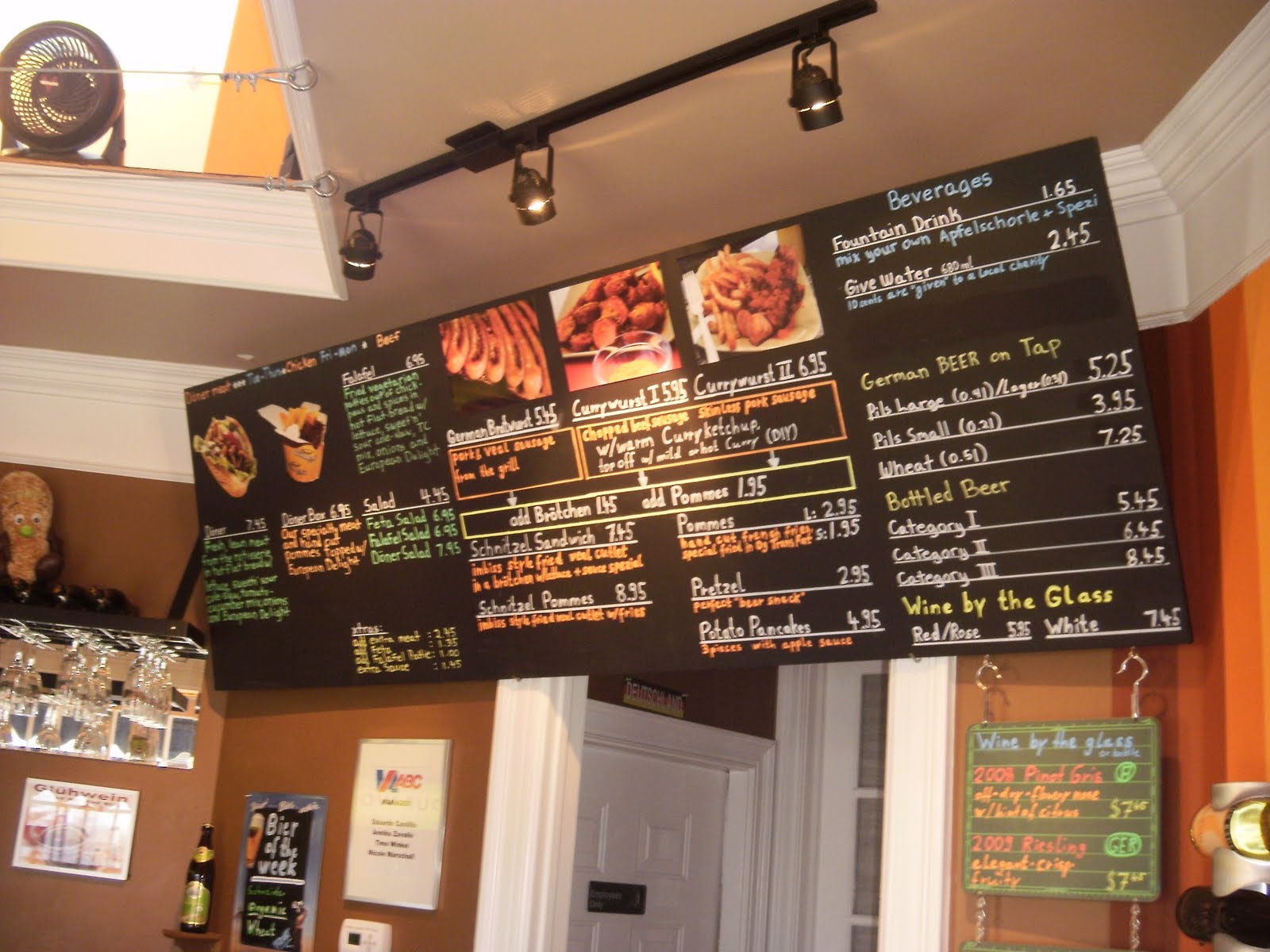
A couple of days ago my good friend Michael Stewart and I took a photographic safari through the Potomac valley above Washington, DC. These spur-of-the-moment road trips frequently take us to various diners and greasy spoons where we like to sample the simple but tasty fare offered in equally simple surroundings. This trip was no different and we enjoyed a late breakfast at a small, rather nondescript eatery in Cumberland, Maryland before wandering the quiet streets and nearby train yard. It was a breakfast to die for, and, considering the calories, one that could be equally lethal. Afterwards we continued to Harper’s Ferry, West Virginia and through the farms and vineyards of northern Loudoun County in Virginia. Later in the afternoon we found ourselves in Leesburg, Virginia and looking for another place to rest and enjoy a small repast and a cold beer. Michael, who is well-versed in the location and offerings of these local joints, suggested a stop at the Döner Bistro on the edge of downtown Leesburg. It sounded good to me.

The place was opened in 2008 as the successor to the popular Mighty Midget Kitchen, a small burger and barbeque joint opened at a nearby intersection back in 1946. Fashioned out of scrap metal taken from a surplus World War II B-17 bomber, the original “kitchen” was only large enough to accommodate one or two people taking and preparing take-out orders while the actual cooking was done on a smoker grill out back. The Mighty Midget moved to its present location in 1987 but eventually closed a few years later. It was reopened in 1996 and continued to operate until 2007 when it closed again. In the meantime, a couple of local entrepreneurs originally from Germany mourned the fact that there was no place to find Turkish-style doner kebab in Leesburg and environs. They launched Hamburg Döner (the adding of an umlaut was a nice Germanic touch) in 2006, selling them out of a converted van in a city parking lot.. The next year they took over the defunct Mighty Midget Kitchen and began preparing meals in the original scrap metal structure and serving them in the adjacent outdoor beer garden or inside at the bar and small dining room. In 2009 the establishment was renamed Döner Bistro.

In addition to its wide selection of traditional German fast food dishes such as Bratwurst, Schnitzel and Currywurst, Döner Bistro’s unique offering is the Döner Kebab, or simply a Döner. Although originally a popular Turkish street food consisting of marinated meat (usually lamb or chicken) grilled on a vertical spit and then sliced and served over rice, the German version (with umlaut), which was created by a Turkish immigrant in Berlin in the early 1970s and which is served at the Döner Bistro, is quite different when you break it down. The meat is tangy with Turkish spices and is served with salad and a German-style herb and garlic sauce and wrapped in a piece of warm flatbread. It resembles the Greek gyro, or souvlakia, which are both served with pita bread, but the Döner is an altogether different eating experience.

Snow was piled up around the entrance when we arrived and it was still a bit chilly to eat outside in the beer garden so we chose to sit in the tiny bar where we ordered our meal and enjoyed one of the many German beers available on draft and in bottles while listening to German techno-pop and watching the news about the revolution in Cairo. I chose one of my favorite beers, a Warsteiner Pilsner, and we chatted with a young fellow from Hamburg who was working the bar and who took our order. I told him I had never had a Döner before. I guess I had encountered and eaten them when I was traveling in Turkey and just assumed they were gyros (I was not into food back then like I am now). He told me that it is the number one fast food in Germany. Now I lived and studied in Germany in the early 1970s and I have traveled there several times since, but I had to confess that I had never heard of it. I thought I was familiar with the standard fare found in the ubiquitous Schnellimbiss [fast food joint or snack bar] throughout Germany, but I guess the Döner had not yet reached my stomping grounds in southern Germany before I left to return to the USA. Since my visit to the Döner Bistro I have spoken with friends in Germany and they have confirmed the overwhelming popularity of the Döner. Now I know. Better late than never they always say.

Friday, January 21, 2011

Wienermobiles and Whistles

A few days ago I posted my paean to bacon and so I have been thinking a lot about meat lately. And how can you think about meat and not reflect fondly on the hot dog? It is perhaps the most American of foods, a staple of summer picnics and cookouts. Humphrey Bogart once stated that “a hot dog at the ball park is better than steak at the Ritz." I can’t imagine going to a ball game and not finishing off a dog or two washed down by an ice cold beer. And growing up in the Midwest, I cannot think about hotdogs, or bacon for that matter, without evoking the name of Oscar Mayer, who, come to think of it, is also the King of Bologna as the 1973 advertising jingle reminds us - “My bologna (pronounced “baloney”) has a first name, it’s O-s-c-a-r, my bologna has a second name, it’s M-a-y-e-r . . . .” Can you see where I am going with this?

And who can forget the well-known 1963 “wiener song”?
Oh, I wish I was an Oscar Mayer wiener,
that is what I'd truly like to be,
'cause if I were an Oscar Mayer wiener,
everyone would be in love with me.
I have very fond memories of Oscar Mayer hotdogs in my youth. Hot dogs and Oscar Mayer went together. Our refrigerator was always stocked with its hot dogs, bacon (oooooooo . . . bacon), and other sliced sandwich meats in packages displaying the familiar red and mustard yellow Oscar Mayer logo.

These meat products trace their origins to the German-styled charcuterie produced by the Mayer brothers who brought their recipes from Germany to America shortly after the Civil War and who worked in the meat-packing business, first in Detroit and later around the stockyards on Chicago’s South Side. They later established a meat market on that city’s North Side and sold their meat products under the “Edelweiss” trademark, beginning in 1904. This changed to “Oscar Mayer Approved Meat Products,” in 1918, and the following year the brothers purchased a meat packing plant on the east side of Madison, Wisconsin. A few years later they opened a similar operation in Milwaukee. The rest is history.

In 1912, the company began to use a Model T Ford to deliver meats in and around Chicago, and in 1936 it came up with a new marketing strategy . . . using an automobile chassis onto which an oversized body in the shape of a hot dog was affixed. Dubbed the “Wienermobile,” this 27-foot motorized hot dog originally traveled around Chicago promoting the company’s “German-style wieners” and the wholesome goodness of its meats.

I got up close and personal with the Oscar Mayer Company (which is now a division of Kraft Foods and probably owned by the Chinese if you look deep enough), in the summer of 1965, when my family moved to Maple Bluff, an insular suburb of Madison on the shores of Lake Mendota. Prevailing winds out of the east would bring with them a redolent reminder of the company’s packing plant - the scent of countless cookouts and breakfasts gone by. The kids of the corporate chairman, a great grandson of the original Oscar Mayer, and the then company president were my classmates at Sherman Junior High School (later Sherman Middle School and now the Malcolm Shabazz City High School) which stands almost in the shadows of the packing plant, as does the old ice arena on Commercial Avenue where I use to play hockey after school.

I had heard of and seen pictures of the Oscar Mayer Wienermobile when I was a youngster, but it was during my time in Madison that I saw one up close for the first time at a fall festival held at Tenney Park. I had always thought that there was one Wienermobile driven by the one and only Little Oscar. That is how it all started out, anyway. As it turned out, by the time I had my first encounter of the Wienermobile kind, it was one of a growing fleet of Weinermobiles piloted by a phalanx of Little Oscars. And on that day in Tenney Park I discovered that the father of one of my other classmates was a member of the Little Oscar fraternity and in command of the Wienermobile on site. At the end of the day, I had the honor of riding with my friend and his dad on the trip back up Sherman Avenue to return the Wienermobile to its garage near the packing plant. As a parting gift, Little Oscar (at least the one I got to meet and talk to) gave me my very own Wiener Whistle cast in the image of the iconic Wienermobile.

Now the Wienermobile fleet is crewed by “Hotdoggers” trained at Hot Dog High, in Madison. What I would have given to have a diploma from HDHS to go along with my Wiener Whistle. A few years later, when I attended high school in Richmond, Indiana, we regularly played Frankfort High School, the “Home of the Hot Dogs.” I guess that might have been the next best thing.

The Wienermobile has been updated and modernized several times over the years. Al Unser took one of them on a test lap at the Indianapolis Motor Speedway in 1988 and clocked speeds in excess of 90 mph. Now, that is a fast wiener in anybody’s book. In these hard economic times a wise shopper tends to select store brands over the big name products. I seldom buy Oscar Mayer products anymore, but every time I see the familiar logo I think back to the old days and the backyard cookouts and the Wienermobile with Little Oscar at the wheel. Maybe in my next life I will come back as an Oscar Mayer hotdog. Everyone would be in love with me.

Tuesday, January 18, 2011

Salty, Smoky, and Greasy As Sin

Not long ago a friend noted on Facebook that people often demur when asked if they want bacon, yet if you cook it and serve it unannounced, “it will magically find a home. Bacon is persuasive.” I never really thought about it in those terms, but there is not a small measure of truth in it.

Let’s me be honest up front. I love bacon. As I said when I responded to my friend’s Facebook posting, I will take bacon anytime, anywhere, under any circumstance, regardless of the time of day, the day of the week, the season of the year, offered or withheld. I will beg, maybe even steal, for a rasher of bacon. It can be thin or thick sliced, hickory or maple smoked, sugar cured or not. I really don’t care. Well, I guess this is not entirely true. I will draw the line on Canadian-styled bacon. Don’t get me wrong. I will eat it and I enjoy it, but it is sliced ham in my book. Nothing more, nothing less. It is not bacon and don’t let anyone (especially Canadians) tell you otherwise. The same goes for “turkey bacon.” It looks and kind of tastes like bacon; it even smells and sizzles like bacon when it is frying in the pan. But don’t be fooled by this. It is not bacon! It does not have the fat, the salt, even the nitrates of real pork bacon. Some might say for these very reasons it is better for you. I am quite certain this is true, but we are not talking nutrition here folks! We are talking about bacon, the true essence of bacon. the greasy, salty, why the hell am I eating this stuff that’s bad for me bacon. When it is all said and done, I find I must agree with Homer Simpson - “Porkchops and bacon, my two favorite animals.” Well, bacon anyway. A final word from Homer on the eating and enjoying of real bacon. “You know that feeling you get when a thousand knives of fire are stabbing you in the heart? I’m having that right now . . . Ooh, bacon, unexplained bacon!” I love bacon!!

There are those who can quote chapter and verse why you should not eat
bacon. One of the people who commented on my friend’s Facebook entry noted that she had read somewhere that when vegetarians fall off their self imposed refusal to eat meat, more often than not bacon (real bacon) is the culprit. The popular Wisconsin (where they eat a lot of bacon) columnist Doug Larson once wrote that "life expectancy would grow by leaps and bounds if green vegetables smelled as good as bacon." The late James Beard, the noted chef and food critic who, along with Julia Child, brought gourmet French cooking to the United States after World War II, had long confessed that “if I were about to be executed and were given a choice of my last meal, it would be bacon and eggs. There are few sights that appeal to me more than the streaks of lean and fat in a good side of bacon . . . Nothing is quite as intoxicating as the smell of bacon frying in the morning, save perhaps the smell of coffee brewing." As my friend
commented on Facebook - “bacon is persuasive.”

It is also becoming pervasive. It is not just strips of pork bacon frying in a pan anymore. It has also long been used to wrap other foods. Think of filet mignon Then there is bacon-wrapped shrimp, scallops and oysters; bacon-wrapped pork roast, bacon-wrapped chestnuts and dates; bacon-wrapped asparagus; and one of my all-time favorites - bacon-wrapped hot dogs. And I just discovered what could very well be a new favorite . . . the bacon-wrapped corndog, a version of which one connoisseur has christened the “porndog” because the batter contains hot peppers and other “sinful” ingredients. And don’t forget bacon-flavored seasoning for those dishes that just seem to be missing that finishing touch, or bacon bits for your salad or sprinkled over other culinary offerings. There is also the obvious combination . . . bacon-wrapped bacon (and bacon-wrapped bacon-wrapped bacon, and on and on). Let us not overlook foods not normally associated with its crispy goodness: bacon-wrapped Twinkies, bacon-flavored donuts and other pastries, bacon-flavored ice cream and Jelly Bellies. I understand there is a vegetarian restaurant in San Francisco that serves coffee brewed with bacon. James Beard would have loved that before heading to the gibbet. And what do you do when you find the need, after feasting on bacon, to dislodge those crunchy little bacon bits that wedge between your teeth? Bacon-flavored dental floss. Yes, there is bacon-flavored dental floss. Oh, the humanity!

I am reminded of the late cowboy poet and former poet laureate of South Dakota, Charles “Badger” Clark, Jr., whose poem “Bacon” can be found in his Sun and Saddle Leather (1915).

You’re salty and greasy and smoky as sin
But of all grub we love you the best.
You stuck to us closer than the nighest of kin
And helped us win out in the West.
. . .
You’ve sizzled by mountain and mesa and plain
Over campfires of sagebrush and oak;
The breezes that blow from the Platte to the main
Have carried your savory smoke.

How much more persuasive can one food be?

But we love you and swear by you yet.
Here’s to you, old bacon, fat, lean streak and rin.’
All the westerners join in the toast,
From mesquite and yucca to sagebrush and pine,
From Canada down to the Mexican Line,
From Omaha out to the coast!

Yes, bacon is one of my favorite animals. To quote Homer. “Ohhhhh . . . . .. Bacon.”

Sunday, January 16, 2011

It's Googleable

What a wonderful new word . . . something capable of being found during a Google search, probably the most comprehensive and used Internet search engine. I can think of only very rare occurrences when I have typed in search terms and not come up with a “ghit,” or Google hit, on something even remotely connected to my intended search. The transitive verb “to google” has been used almost since the inception of this search engine and it has become a part of our everyday speech. The American Dialect Society, founded in 1889, called it the “most useful word” in North American English in 2002. In fact it has become synonymous with web searches regardless of which search engine is being used. “Google” has also been incorporated in other phrases having to do with the use of the search engine, such as the frequently used “Google Bomb,” “Googlewashing,” or “Google bowling,” all of which have to do with the intentional high ranking of websites turned up during a Google search. I find this all quite fascinating.

But I must confess that I have not heard the adjective “googleable” used before this weekend, although I guess it makes sense. If you can have a verb, why not an adjective? So I looked into it and sure enough there are folks out there that use this term regularly. There is also the derivative noun “googleability” which is the ease with which information about a person or thing can be found on an Internet search engine (not just through Google).

How did I find this information? By running a Google search of course. Doing so I found literally dozens of googleable words using “google” as a base. Here are a few of my favorites: “Googleheimer’s” - signing on to Google and then forgetting what you were going to google; “googlescrewed” - to look up directions on Google Maps and get lost when you follow them; “googlebator” - someone who googles their own name; and “googlechondria” - looking up your physical symptoms on Google. There are also some Google-based afflictions: “Googlerrhea” - looking up the definition of “Google,”and “Googler’s Remorse” - when you look up something and the search terms gives you results that you neither requested nor want. I will leave that one to your own imagination.

So I really opened up a Pandora’s box, and afraid of coming down with my own version of Googler’s Remorse, I decided to stop while I was ahead. I wonder what search terms folks will have to use for this blog posting to come up? What is its inherent googleability? Do I even want it to be googleable? It’s up to you. Whenever the “googletunity” strikes you.

Monday, January 10, 2011

From Cyberspace Came the Six Thousand

Today the number of viewer hits for Looking Toward Portugal surpassed the 6000 mark. I appreciate everyone who has tuned in over the past two years and I hope you will continue to do so. I have received a number of interesting and rewarding comments from some of you and I am gratified that these random thoughts have resonated with so many. Thank you!

Thursday, January 6, 2011

Pardon Me?

“Be good, be kind, be humane, and charitable; love your fellows; console the afflicted; pardon those who have done you wrong.” August words from the Russian novelist and playwright Maxim Gorky. We are taught from an early age to turn the other cheek and we should all strive to do this. But perhaps this gesture should be reserved for those who might receive at least a modicum of relief from such charity. You would think that, in this day and age, our politicians would have more important things to do than consider the pardoning of individuals who have been taking the big dirt nap for decades. I do not object to the act of pardoning a transgressor, but let’s take a look at the facts, or what we believe them to be.

Charles Crist, the Republican turned independent governor of Florida who left office earlier this week, was seeking perhaps one last grand gesture before relinquishing the reigns of power in Tallahassee. Governor Crist, who since 2007 had considered the pardoning of Jim Morrison, the former lead singer and factotum of the legendary band The Doors, finally asked the state’s Board of Executive Clemency to consider such a pardon. Unfortunately, Morrison died in Paris in July 1971 and remains dead nearly forty years later. Or does Governor Crist know something the rest of us don’t?

Two years before his death, during a concert in a Miami auditorium in March 1969, Morrison dropped his black leather pants and allegedly presented himself in flagrante delicto. The public outcry was immediate and intense and the local district attorney charged Morrison with a felony count of lewd and lascivious behavior along with more minor misdemeanor counts. Morrison eventually surrendered to the FBI (was this a federal offense?) and was subsequently tried in 1970, convicted only on the misdemeanor counts of profanity and indecent exposure, and sentenced to a monetary fine and six months in jail. He appealed his sentence and was released on bail. Not long after that he moved to Paris where he died before his appeal was heard. The conviction has stood for four decades.

In early December the Clemency Board acceded to the request by Governor Crist who, like many, including other members of the band, never believed Morrison had actually exposed himself. The Board voted unanimously to issue a pardon to the long dead Door a day after what would have been his 67th birthday. The pardon does not really address whether a “crime” was actually committed in the first place and this oversight has left a bad aftertaste for those who still believe Morrison was falsely charged. We can hope that Morrison may find a more peaceful rest as a result of Governor Crist’s largesse.

Not to be outdone, the former Democratic governor of New Mexico , Bill Richardson, who stepped down on New Year’s Day, considered as one of his last official acts a pardon for William Bonney (aka Henry McCarty, Henry Antrim, but best known as Billy the Kid) who died almost 130 years ago. One had to admit that Governor Richardson’s decision was fraught with more serious implications since Billy’s transgressions were slightly more serious than genitalia gone wild. Depending on your source of preference, Billy is alleged to have killed between 9 and 21 men, including three law enforcement officers, during his short life (he was gunned down by Sheriff Pat Garrett in July 1881 at the tender age of 21). The pardon under consideration was not for all of Billy’s alleged crimes. In fact, it was not so much a pardon as a belated amnesty from prosecution for the murder of the Lincoln County sheriff supposedly pledged by New Mexico territorial governor Lew Wallace in 1880 if Billy agreed to testify about other murders he had witnessed. Billy cooperated, yet the amnesty was never granted and Billy was eventually convicted of the sheriff’s murder and sentenced to be hanged. He escaped before the execution could be carried out, killing two deputies in the process. The entire question of the amnesty became moot when Garret shot and killed Billy a few months later.

Governor Richarson, unlike his Florida colleague, did not rely on the serious deliberations or good judgement of a state clemency board. Rather, he established a special website where any individual could go and register an opinion on whether a pardon/amnesty should be granted. Just over 800 individuals voted with a slight majority favoring the pardon. Richardson, in the final hours of his term in office, and citing inconclusive proof that Wallace had actually offered Billy amnesty, chose to ignore the supporters of amnesty and many historians by denying the amnesty/pardon. Old Billy, I am sure, does not care much one way or the other. But some good came out of this exercise. “It’s good for tourism,” Governor Richardson claimed. “It’s gotten great publicity for the state.” If he says so.

Governors Crist and Richardson remained true to that sage advice offered
by John Dryden in “The Conquest of Granada.” “Forgiveness to the injured does belong; But they ne’er pardon who have done wrong.” I know I sleep better knowing that justice has prevailed.