Tuesday, July 23, 2019

It Was the Summer of 69

Oh, when I look back now
That summer seemed to last forever
And if I had the choice
Yeah, I'd always wanna be there
Those were the best days of my life

      -- Bryan Adams
 
I don’t know if they were really the best days of my life, but at the time that summer of 1969 certainly ranked pretty high. It was an eventful time, fair to say a tumultuous time in our history. A lot happened then. Some of it good. Some of it bad. Almost all of it memorable.

In early June the last episode of "Star Trek" aired on NBC. And President Nixon announced that he was bringing 25,000 US troops from Southeast Asia. This seemed very important at the time as I had recently turned eighteen years old and I was graduating from Maine South Township High School in Park Ridge, Illinois. Shortly thereafter my family moved to suburban Milwaukee, Wisconsin, and I spent a couple weeks out in Southern California and in Texas before I went to work at a summer job to earn money for college in the fall.

There was some pretty awesome music to listen to on the radio driving to and from work and on weekend trips back to Chicago to visit my girlfriend at the time. My God, the Beatles were still together! Their song "Get Back" topped the charts for a few weeks (it would appear on the "Let it Be" album the following year). And how can I forget the Stones and "Honky Tonk Women," the King and "In the Ghetto," Dylan’s "Lay Lady Lay," The Youngbloods and "Get Together," or the Guess Who’s "These Eyes"? The Fifth Dimensions’ cover of "Aquarius/Let the Sunshine In," from the musical "Hair," was in high rotation that summer as was "Good Morning Starshine," from "Oliver," and "The Love Theme from Romeo and Juliet." Of course, there were also songs I would have preferred to forget altogether – "Sugar, Sugar" by the Archies, Tommy James and the Shondells’ "Crystal Blue Persuasion" (which still get some radio play even today), Jackie DeShannon’s "Put a Little Love in Your Heart," or Andy Kim’s cover of the Ronette’s 1963 hit "Baby, I Love You." Later that summer almost a half a million people converged on a small farm in Bethel, New York, for what became known as the Woodstock music festival which featured such legendary artists as the Who, the Grateful Dead, Jefferson Airplane, The Band, Joe Cocker, CSN&Y, and Jimi Hendrix and Janis Joplin (both of whom would die at age 27 the following year) would come to define an entire generation of young Americans.

One song,"Bad Moon Rising" by Creedence Clearwater Revival (who also performed at Woodstock) captured the summer’s darker side.
I see a bad moon a-risingI see trouble on the way
I see earthquakes and lightnin'
I see bad times today
. . . . .

I hear hurricanes a-blowing
I know the end is coming soon
I fear rivers over flowing
I hear the voice of rage and ruin


Later that June there was a violent confrontation outside the Stonewall Inn, a gay bar in Greenwich Village between gay rights activists and the New York City police which signaled the beginning of the LGBTQ rights movement in the Unites States. Almost a month later the headlines were reporting a fatal accident on Massachusetts’ Chappaquiddick Island, after which former Senator Ted Kennedy received a two-month suspended prison sentence after pleading guilty to leaving the scene of the accident during which Mary Jo Kopechne, a former campaign worker for the assassinated Senator Robert Kennedy, drowned. The darkest moment perhaps came later in the summer when Charles Manson and several members of his "family" went on a two night murderous rampage in Los Angeles which claimed the lives of eight innocent victims, including the actress Sharon Tate. At the same time Hurricane Camille, a Category 5 storm, struck the Mississippi and Louisiana coastlines with winds over 200 mph and 20 foot tides, killing over 250 in its wake. A bad moon rising indeed.

This past week we commemorated the 50th anniversary of the first manned mission to the surface of the moon on July 20, perhaps the highlight of that eventful Summer of 69. Two months earlier the Apollo 10 mission was a dress rehearsal for the Eagle, the lunar landing module . . . everything but the actual landing. It also transmitted the first color pictures of Earth from space. Apollo 11, carried Mission Commander Neil Armstrong, and crewmates Buzz Aldrin and Michael Collins to the moon and the entire world sat in front of its televisions watching that first small step for man, that giant leap for mankind as Armstrong left the first human footprint on the moon. Six lunar landings would eventually follow. That night, after watching the landing at my girlfriend’s house in Park Ridge, I drove home to Milwaukee, stopping along the way to stare up into the night sky and imagining what all this would mean for the future.

And now, fifty summers later, I am sitting at my kitchen table staring out at a lake in Maine. I am 68 years old, I have been married almost 45 years to a wonderful life companion, and I have a grown son I am very proud of. I look back on a long and satisfying professional career. There have been many days over this wide expanse of time I can consider as some of the best of my life. Yet those few weeks of the Summer of 1969 will, whether they brought joy or sorrow, remain fresh in my memory forever.

Sunday, July 21, 2019

Being Vacilando

Travels With Charley - Penguin Classics
Driving through northern Maine in the late autumn of 1960, John Steinbeck reflected on his planned road trip of discovery across America, still in its infancy. He recalled that the Spanish have a word that has no plausible counterpart in the English language. It is the verb vacilar, its present participle being vacilando. One might be tempted to translate them as "to vacillate," or "vacillating," but it does not mean this at all. This would imply that one has no goal or purpose in mind. If one is vacilando, it means that he or she - the vacilador - has a general inclination toward a place but is going nowhere in particular at the moment nor is there great care given to whether or not one actually arrives. Steinbeck tells his reader that this has become a state of being throughout Mexico and recalls walking the streets of Mexico, "We would choose some article almost certain not to exist there and the diligently try to find it."

A vacilador appears to be very much similar to the flâneur in France; one who does not expect to arrive at any particular place with any specific plan in mind. In Steinbeck’s instance, he and his dog Charley wanted to travel to the northern most point in Maine, on the Canadian border, before beginning his long westward trek across the northern tier of states to his native California. Which roads he would ultimately take, which places he would visit, and whatever would occur along the way . . . and when and if he would complete the journey, would remain a mystery.

As I spend my summer in Maine, I look forward to exploring more of the state’s lesser known points of interest. Where I will go, and what I will choose to explore . . . and when I will eventually post my thoughts here, is anyone’s guess. Life is an enigma.
__________

John Steinbeck. Travels with Charley: In Search of America. New York: The Viking Press, 1962.

Thursday, July 4, 2019

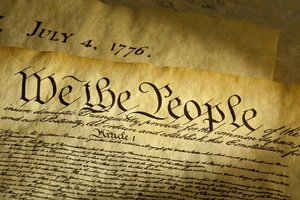
What July 4th is REALLY About

We hold these truths to be self-evident: That all men are created equal; that they are endowed by their Creator with certain unalienable rights; that among these are life, liberty, and the pursuit of happiness; that, to secure these rights, governments are instituted among men, deriving their just powers from the consent of the governed; that whenever any form of government becomes destructive of these ends, it is the right of the people to alter or to abolish it, and to institute new government, laying its foundation on such principles, and organizing its powers in such form, as to them shall seem most likely to effect their safety and happiness.

Saturday, June 29, 2019

Still Missing John Haines (1924-2011)

Today would have been John Haines' 95th birthday. John, who passed away in Fairbanks, Alaska in March 2011, was born in Norfolk, Virginia, the son of a career naval officer. As a boy, Haines attended school in Washington, DC while his father was stationed at the Washington Navy Yard.

After serving on a navy destroyer in the South Pacific during World War II, Haines studied at American University and the National Art School, both in Washington, and the Hans Hoffmann School of Fine Art in New York City and Provincetown, Massachusetts.

In 1947, Haines left Washington and eventually homesteaded acreage along the Richardson Highway approximately 68 miles southeast of Fairbanks, Alaska. It was here that he spent much of the next four decades running his trap lines and living off the land while trying to realize his artistic talents evolving from the visual to the literary arts, and his experiences in the Alaskan wilderness were the inspiration for his early poetry collections - Winter News (1966) and The Stone Harp (1971), the essay collection Living Off the Country (1981), and the memoir The Stars, the Snow, the Fire (1989).

Haines came back to Washington in 1991-92 as Jenny McKean Moore Writer-in-Residence at the George Washington University, and visited Washington frequently during the last two decades of his life. He also taught at several other colleges and universities; his last academic appointment was as an instructor in the Honors Program at the University of Alaska-Fairbanks.

His later books included New Poems 1980-88 (1990), The Owl in the Mask of the Dreamer (1993), Where the Twilight Never Ends (1994), Fables and Distances (1996), A Guide to the Four-Chambered Heart (1997), For the Century’s End: Poems 1990-1999 (2001), and Descent (2010).

Haines was honored for his writing, receiving the Lenore Marshall Poetry Prize, the Western States Book Award, two Guggenheim Fellowships, a National Endowment for the Arts Fellowship, a Bellagio Fellowship, a Lifetime Achievement Award from the Library of Congress, and the Alaska Governor’s Award for Excellence in the Arts, among others. He was also named a fellow of the Academy of American Poets in 1997.

I met John as a Jenny McKean Moore fellow at George Washington University in 1991 and we remained good friends during the final two decades of his life. He was a guest in my home during his visits to Washington, and I look back with particular fondness on the days he and I spent together in Big Sky, Montana in the autumn of 2004 following the release of A Gradual Twilight: An Appreciation of John Haines which I edited and which was published by CavanKerry Press.

So Happy Birthday, John! I still miss you.

Friday, June 28, 2019

Strawberry Season in Maine!

One of the first things we look forward to each summer when we arrive in Maine in late June is our attendance at the annual Strawberry Festival sponsored by the local historical society here in New Gloucester. This year is no different and last night we headed over to the First Congregational Church in the Lower Village along with summer friends and neighbors as the festival celebrated its 44th year. We have been vacationing in Maine for the past 31 summers, and have spent the entire summer (June - October) here for the past decade. What better way to actualize the belief that one truly can go home again.
 
And strawberries are on everyone’s minds this time of year. The strawberry season in Maine is all too short. The best time to pick them is typically during a three to four week period between mid-June and mid-July, with the height of the season right around the July 4th holiday. Unfortunately this year spring has come late with a great deal of rain and the harvest is running about a week behind schedule here in Cumberland and Androscoggin counties.

The earliest varieties were harvested only a week or so ago, and the local pick-your-own operations at the nearby Gillespie Farms, part of New Gloucester’s Pineland Farms Produce Division (just a mile or so from our summer cottage) is just getting underway. Gillespie’s is one of the memorable local PYO farms, cultivating 300 acres with a variety of fruits (strawberries, blueberries, and raspberries), sweet corn, and vegetables for wholesale and direct purchase. Its PYO operation is open during the growing season from the first strawberries in June through the last of the high bush blueberries in August. My wife always looks forward to a few early mornings picking a flat of strawberries. This season barely opened in mid June and there were very real concerns that the harvest would not arrive in time for the local festivals held around the Pine Tree State.

Disappointment was averted when last night the Historical Society served up "scrumptious" local native strawberries served over frozen custard from Hodgman’s stand, a summertime institution in the Upper Village since 1946, and fresh-baked biscuits, all of this topped off with genuine whipped cream. We gathered in the church’s Vestry Community Room where we were entertained by the dulcet tones of the Hall Family Band which this year stood in for the perennial Berry Berry Good Band. A good time was had by the hundreds who showed up.

Summer is here now and we look forward to seasonal weather and successful harvests before autumn descends on northern New England in September. Now I’m waiting for the fresh corn to be picked. It’s looking great.


Tuesday, June 25, 2019

Remembering Anthony Bourdain (1956-2018)

Today would have been Anthony Bourdain’s 63rd birthday. He took his own life in a hotel room in the small village of Kaysersberg, in eastern France, on Friday, June 8 as he was approaching his 62nd birthday. Shortly thereafter I posted a personal tribute to the man who taught me a great deal about how to enjoy food and travel, especially in cultures and with cuisines unfamiliar to me.

It has taken me some time to understand and express the impact Bourdain has had on me. He seemed, even when his responses bordered on irreverence, that he enjoyed life to the fullest. To paraphrase his close friend Anderson Cooper of CNN, Bourdain was always up for an adventure, and more importantly, sharing it with his legion of loyal readers and viewers. So why did he choose to end it all?

Writing in his book Medium Raw: A Bloody Valentine to the World of Food and the People Who Cook (2010), Bourdain implored people to open their minds and travel the world. "It seems that the more places I see and experience, the bigger I realize the world to be. The more I become, the more I realize how relatively little I know of it, how many places I have still to go, how much more there is to learn. Maybe that's enlightenment enough — to know that there is no final resting place of the mind, no moment of smug clarity. Perhaps wisdom, at least for me, means realizing how small I am, and unwise, and how far I have yet to go." We watched him as he traveled here and there while eating pretty much anything placed in front of him, whether it be an uncooked warthog anus in Namibia, or the most carefully prepared haute cuisine in New York or Paris. They read and listened as he boisterously opined about what he did not like, yet he was passionate about that which made him happy – the places, foods, and people he deeply cared for – as he continued on his quest to parts unknown and food untasted. "He was an explorer who removed degrees of separation from the world's sociological arithmetic," wrote Drew Magary in GQ last December. "A man who was always, in his words, hungry for more."

It has been a year since Anthony Bourdain left us. I still grow melancholy when I think there will be no more culinary adventures, no more of Bourdain’s brash claims mixed with considered opinions. Since his death I have gone back and watched many of my favorite episodes of his shows, and I have reread many of his books. I can’t help but smile as I watch Bourdain wander here and there, tasting and relishing this and that. Yet the melancholy always returns.

Many who knew Bourdain personally, and more who never met the man, have agreed since his death that he meant a great deal to a great many people and that what he gave to all of us cannot end with his passing. A few weeks ago, two renowned chefs and close friends - José Andrés and Eric Ripert, who was with Bourdain in France when he took his life – announced that today would be declared "Anthony Bourdain Day" during which friends and fans alike can remember and celebrate what he meant to them. They were also encouraged to share their memories under the hashtag #BourdainDay. So permit me to share again what I posted in the wake of Bourdain’s passing:

 
https://lookingtowardportugal.blogspot.com/2018/07/a-dog-on-short-chain-belated-tribute-to_6.html

 
Talking and writing about Bourdain helps keep his memory alive and vital. Still, there is that dull, empty spot down deep that just won’t go away. Perhaps Paula Froelich, a journalist and author who once dated Bourdain , said it best. "I just think it's lonelier without him in the world." It really is.


Wednesday, June 12, 2019

Anne Frank at 90

Anne Frank was born on this date in 1929 in Frankfurt am Main, Germany.  Had she lived she would have turned 90 years old.  But we will always remember her as a smiling 15 year old girl who dreamed of one day becoming a writer.

Most people think of her as a young Jewish Dutch girl living in Amsterdam, but she was actually born in Germany and immigrated to Holland with her family when she was four years old.  She retained her German citizenship.  They remained happy in their new homeland until 1940, just shy of Anne’s 11th birthday, when Holland was attacked and occupied by the armed forces of Nazi Germany which quickly enacted laws restricting the rights of Jews.  Anne's father tried to obtain asylum in the USA or Cuba but was unsuccessful.  Stripped of their German citizenship they managed to somehow survive in Amsterdam until the summer of 1942 when Anne’s older sister Margot was ordered deported to a labor camp.  The family and a few friends went into hiding in a secret room which Anne’s father had prepared at  Prinsengracht 263. 

Anne received a small diary on her 13th birthday, shortly before her family went into hiding, and over the next two years recorded her thoughts and feelings.  She dreamed of becoming a writer; writing and publishing stories, and even a novel.  Such dreams for a young girl hiding with her family in fear for their lives.

Their hiding place was discovered and stormed by the German Security Police on August 4, 1944.  Following their arrest and interrogation the family was sent to the Westerbork transit camp in northeastern Holland.  In late September they were  transported to Auschwitz, in Poland, arriving there three days later.  Miraculously Anne and Margot were spared from the gas chambers during the selections on arrival.   They remained at Auschwitz until late October or early November when they were transported with thousands of others to the Bergen-Belsen concentration camp in Germany.  Both sisters died there during an outbreak of typhus in the spring of 1945. 

Only Anne’s father survived the war.  He returned to Amsterdam to discover that Anne’s diary has been saved by his secretary.  Upon reading it he knew what he had to do.  


I want to be useful or bring enjoyment to all people, even those I've never met. I want to go on living even after my death! And that's why I'm so grateful to God for having given me this gift, which I can use to develop myself and to express all that's inside me!

The first copies of the now famous diary were published in June 1947.  It remains one of the most important reminders of the Nazi persecution of the Jews.  Today her diary is read in 70 different languages and warns the world of the dangers of anti-Semitism and racist discrimination . . . a valuable lesson in today’s world.  Thanks to her diary, Anne Frank continues to live in our memory today.

Thursday, June 6, 2019

Full Confidence in Their Courage and Devotion - Remembering the D-Day Invasion of Europe

It's a hell of a war, but God willing, we'll do what we came here to do.”
                – John Wayne, in “The Longest Day”


Today we mark the 75th anniversary of Operation Overlord - the D-Day invasion of France.  On the morning of June 6, 1944, after months of planning and preparation, over 150,000 US and Allied soldiers made airborne landings into coastal France followed closely by landings on the beaches of Normandy.  An armada of several thousand ships of all sizes and descriptions had slipped out of English ports in the darkness and crossed the English Channel to the European mainland where four years before Britain had retrieved its  battle-worn troops from the beaches at Dunkirk [Dunkerque].


As the Allied soldiers once again stepped ashore, they were greeted by a murderous hail of machine-gun and mortar fire by deeply entrenched German positions along the Atlantic Wall.  Having fought in North Africa, across Sicily and up the boot of Italy, the Allies and Operation Overlord were finally taking the war back to Western Europe for the final push to defeat Hitler’s Germany. 


The expectations of General Dwight D. Eisenhower, the supreme commander of the Allied Expeditionary Forces, were simply stated.  "You are about to embark on a great crusade. The eyes of the world are upon you and the hopes and prayers of all liberty-loving peoples go with you . . .  Your task will not be an easy one. Your enemy is well-trained, well-equipped and battle-hardened. He will fight savagely. I have full confidence in your courage, devotion to duty and skill in battle. We will accept nothing less than full victory."  Later that morning he would broadcast an announcement to the peoples of Western Europe, telling them of the landings and declaring, "all patriots, young and old, will have a part to play in the liberation." 


Today there are less than five thousand survivors of those who saw action during the initial stages of the Allied invasion.  We owe them, and all of those who died there or have passed on since then, a deep debt of gratitude.  These days we tend to throw the word “hero” around too carelessly.  But these men and women were all heroes in every sense of the word.

My father was part of that effort although he was not involved in D-Day or its immediate aftermath as the Allies attempted to move deeper into France.  He fought in Patton’s Third Army which landed in Cherbourg, west of the Normandy beaches, that July and  then began to move across France just after those who landed on D-Day and shortly thereafter finally achieved their breakout from Normandy.   I knew about that part of the conflict from what my father Hd told me as a young boy when I anxiously asked him “Dad,. What did you do during the war?”  It was not until a few years later that I began to fully understand the momentous importance of what those brave men and women accomplished on D-Day and the long days, weeks and months that followed.


I was thirteen years old when I finally saw “The Longest Day,” the 1962 Darryl Zanuck-20th Century film based on Cornelius Ryan’s 1959 book on the D-Day invasion of France (Ryan also wrote the screenplay).  It happened to be on the twentieth anniversary of that watershed event of the 20th century as well as my last day of 7th grade.  After our release from school I walked up to the theater on Pack Square, in Asheville, North Carolina, and sat through two complete showings of the three-hour film.  It was my first introduction to that historic struggle to turn the tide of war against Nazi Germany.  Over fifty years later this film, despite all of its Hollywood trappings, is still recognized, along with “Saving Private Ryan,” as perhaps the most complete effort to capture on film the scope and importance of that seminal historical event. For those involved in the invasion, it truly was “the longest day.”


So let us all take a moment today to remember those living and dead who were participants in that great struggle.  They all did what they came there to do and we are all thankful for their sacrifice.

Wednesday, June 5, 2019

Tiananmen Square - Thirty Years Later

Thirty years ago this week dozens of protestors, many of them young university students, were massacred in Beijing as they protested for democratic governmental reforms and greater personal freedoms.   As many as 10,000 were arrested during the imposition of martial law, and many of these disappeared without a trace.

What can one say about a country that will jail and murder dissenters in cold blood?  A country that cannot reconcile itself with its past is a country living in self-denial, a country that will fail learning from that past.  Even though the Chinese government has attempted to erase all memory of its crimes against its own people striving for basic human freedom and dignity, it is important that the rest of the world stand united in its condemnation of the cruel and unnecessary slaughter of a people brave enough to stand up for their beliefs in the face of their oppressors.

To commemorate this important historical benchmark I am sharing an earlier post:

http://lookingtowardportugal.blogspot.com/search?q=Tiananmen

“Who controls the past,” George Orwell warned, “controls the future. Who controls the present controls the past.”

Resistance is never futile.  Never forget the brave souls who spoke out and acted in June 1989.

Tuesday, June 4, 2019

National Cheese Day 2019

Other foods are celebrated so why not cheese?  “Does America have a more versatile food?  Best of all, National Cheese Day happens on June 4. Time to officially celebrate the delightful dairy item we’ve eaten in one form or another since the Roman Empire.”

Unlike other foods, cheese is seldom found by itself on most menus, but it is a key ingredient in so many dishes . . . pasta, pizza, burgers, salads, soups, appetizers, sauces . . . . You get the point! 

I love cheese!  Hardly a day goes by when I don’t enjoy it in one form or another.  To celebrate let me reshare a couple posts from a decade ago.  You’ll get the idea:

http://lookingtowardportugal.blogspot.com/2009/05/confessions-of-cheesehead-part-1.html


http://lookingtowardportugal.blogspot.com/2009/05/confessions-of-cheesehead-part-2.html

Here are a couple National Cheese Day activities recommended by National Today - https://nationaltoday.com/national-cheese-day/

– Try Something Scary!
Find a cheese that scares you a little bit and give it a go — you'll likely be surprised how much you like it. Looking for a suggestion? Give Epoisses de Bourgogne a try, if you can find it. It's got such a pungent aroma that it's been banned from public transportation systems in France!

– Make Your Own!
Making cheese can be a pretty simple process — it just requires a bit of patience! It's always interesting to go "behind the scenes" of our favorite food items, but with cheese in particular, it's pretty incredible seeing all the hidden steps that take place.

– Perhaps a new pairing?
Cheese seems to go with everything! Well, almost. But things get truly magical when you find perfect pairings that bring out different flavors. Have you ever tried figs with brie? They're delicious separate, but they're simply irresistible when brought together.

No matter how you choose to celebrate, get out there today and eat some cheese!


Friday, May 10, 2019

Springtime . . . Spargelzeit!


Spring has come to Germany and that can mean only one thing in the hearts and taste buds of many Germans.   Spargelzeit . . . the season to harvest and consume the native weiße Gold - white asparagus.  I had been an afficionado of the more familiar green asparagus since I was a child; it was a perennial crop on my grandparent’s Michigan farmstead and freshly picked spears found their way to the dinner table daily throughout the spring growing season.

It was not until I was a young university student in Freiburg in Breisgau, in the Black Forest of southwestern Germany, that I was first introduced to the tasty springtime delicacy that is Spargel - white asparagus.  The different colored asparagus

are not fundamentally different varieties, they are only grown differently.  White asparagus is covered with soil because the plant must be protected from light in order to remain pale.  In addition, white asparagus requires a specific combination of soil, temperature and rain in order to develop the perfect taste.  Today much of the German crop can be found in Baden-Wuerttemberg and Hesse, or across the Rhine River in the Alsace region of France.  Although white asparagus is available in the United State throughout much of the year, it is grown primarily in California or Mexico, and I find that its taste, texture, and aroma are no match for Germany’s white gold.  Americans views it more as a kickshaw; a notable contrast to the German fanaticism for this springtime treat.

Spargelzeit last only for two or three months, beginning with the onset of spring in late March to mid-April, and lasting until “Johanni," the birthday of John the Baptist on June 24.  The rules in hand: “Stich den Spargel nie nach Johanni“ [never pick asparagus after Johanni] and “wenn die Kirschen sind rot, Spargel ist tot” [when the cherries are red, asparagus is dead’] . . . not literally dead as asparagus is a perennial vegetable.  It  requires sufficient time to regenerate for the next season.  Harvesting white asparagus is also very labor-intensive as each individual spear must be carefully exposed by hand as deeply as possible and then "pricked" just above the root crown.

When shopping during Spargelzeit, one should always look for the freshest spears.  The head of the spears should be tightly compressed and they should be moist yet firm and white
without any discoloration.  They should be prepared and consumed as soon as possible although they can be kept wrapped in a moist towel in the refrigerator for a couple of days.  Some people will freeze Spargel, but in my humble opinion it always tastes best when served fresh.

There is no muss or fuss in the proper preparation of Spargel.  Simply place the fresh spears in a pot of boiling water for 15 to 20 minutes (do not overcook), adding a little salt, sugar, and butter.  Some will add lemon juice to the stock to maintain the white color. This can be tricky, however, as too much lemon juice can overshadow the unique taste and aroma of Spargel.  Once plated, many Germans will eat it with melted butter and a light herbal garnish.  Others might pair it with new potatoes (boiled separately from the Spargel), some hollandaise sauce, and perhaps thin slices of cured ham.  Still others might serve it as a side dish with cutlets or sausages.  Many Germans favor a mild white wine while others will wash it all down with a glass of beer.   To each his own.  I prefer to eat my Spargel with a few small new potatoes so that I might enjoy its inimitable flavor.  Simplicity at its best.

Spargelzeit is a special time indeed.   What better way to celebrate the advent of Spring?


Saturday, May 4, 2019

Forgetting Ohio??

 Hear the past a callin', from Armageddon's side
When everyone's talkin' and noone is listenin',
how can we decide?
Find the cost of freedom, buried in the
ground
Mother Earth will swallow you, lay your body down.

             = Stephen Stills, “Find the Cost of Freedom”

So many friends today are reminding me that this is Star Wars Day - “May the 4th be with you.”   Today I find myself reflecting instead on a seminal event in this country reckoning with the Vietnam War era.  Another tragic event of that war; not a battle fought in some faraway patch of jungle, but one fought on a small college campus - Kent State University - on a tranquil spring day in Middle America.

It was at the end of my freshman year in college, a year when anti-war protests on campuses across the country were beginning to heat up. I was attending a small liberal arts college in Florida associated with the Methodist Church, and there was very little in the way of protest there.  In fact, freshman and sophomore men were required to participate in the Army ROTC program.  Don’t get me wrong; there was anti-war sentiment on campus, but it never really blossomed into full-scale dissent and protest against the war taking place on larger campuses across the country.

Many of my fellow students participated in the nation-wide Moratorium to End the War in Vietnam, on October 15, 1969.  Called as a general strike, most colleges and universities refused to cancel classes that day although it was reported that class attendance was down as students participated in various protests.  It was a rather bizarre day at my college as it was a Wednesday and all the male students, including myself, were required to wear their ROTC uniforms throughout the day followed by a general drill in the afternoon.  Afterwards I dressed in my “civvies” for dinner and that evening about 300 students (approximately a quarter of the student body) gathered outside the ROTC building for a candlelight vigil.  We sang folk songs before marching to a nearby meditation garden for some more singing.  The next day several Florida newspapers ran stories about the various campus protests around the state.  One of our group was quoted: “There is nothing more beautiful than the American flag flying, but I believe there is nothing uglier than an American flag being lowered in a grave on top of a casket.”  Despite the faulty flag protocol for burial, the point was made. Pretty tame stuff, but we raised out voices against the war.

And who can forget Paul Filo's iconic photograph of Mary Ann Vecchio kneeling and crying beside the lifeless body of Jeffrey Miller?  The innocence of my generation came to an end that day.  On my way home from Florida to Wisconsin for summer break that day I Iistened and wondered where all of this was going to lead.   President Nixon said the anti-war protests would not affect his pursuit of an American victory in Vietnam.  How could it ever be a victory if the government was resigned to kill its own young to accomplish it?

A month after the killings at Kent State, Crosby, Stills, Nash & Young released their single “Ohio,” a haunting three-minute protestimonial penned by Neil Young.  Many radio stations throughout the country refused to play it, but I went out and bought it and played it over and over until the record popped and skipped.   

What if you knew her
And found her dead on the ground
How can you run when you know?


I thought back to that quote by my fellow student on Moratorium Day, and to all the flagged-draped coffins coming home from that remote patch of jungle so very far away.

We're finally on our own
This summer I hear the drummin'
Four dead in Ohio.


Today, 49 years later, I still remember.


Monday, April 22, 2019

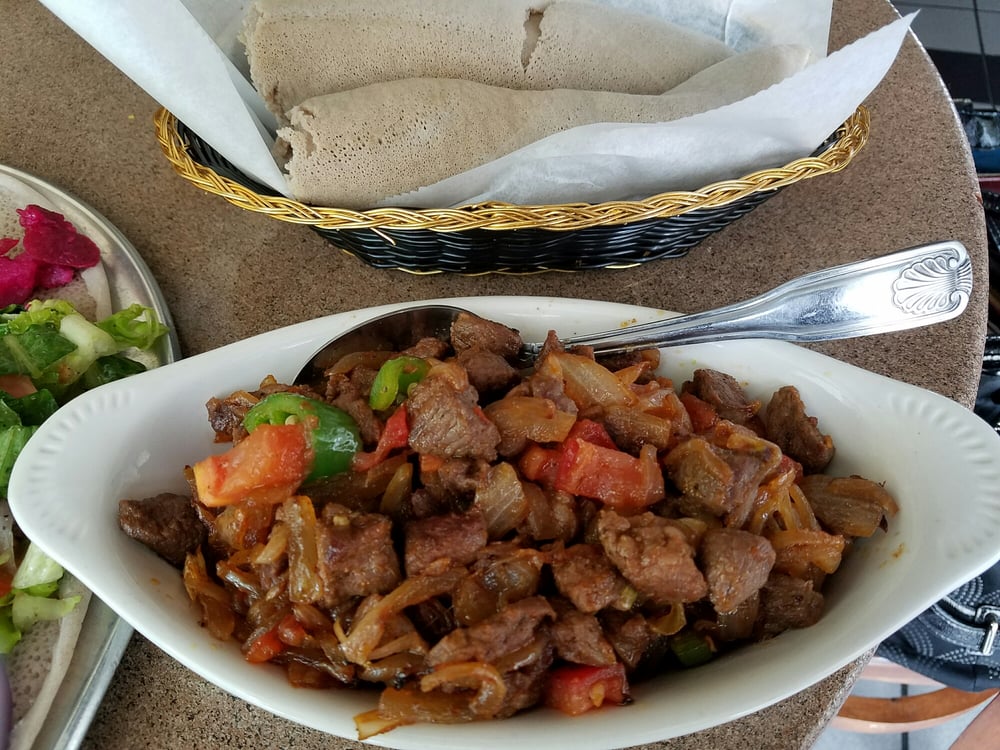
A Moveable Feast - In Search of an Ultimate Yebeg Tibs

Yebeg Tibs served on injera
Back on September 14, 2018, I posted a short essay on my discovery of two excellent Eritrean restaurants in Portland, Maine.  It is a foodie city for sure, yet I was still surprised to find these traditional eateries in Portland and to discover the growing Eritrean community in northern New England.  Now I have decided to return to my exploration of Ethiopian and Eritrean cultures and their traditional cuisines.  If you have never sampled them, I suspect you might upon the conclusion of my story. You are in for a treat.

I first encountered Ethiopian history, culture, and cuisine some 35 years ago in the Washington, DC area  where I have resided and worked since the mid 1970s.  A former colleague of mine had spent a few years with the Peace Corps in Ethiopia back in the 1960s when Emperor Haile Selassie still traveled by jeep to rural villages scattering coins of the realm to poverty stricken subjects.  Emperor Selassie had been overthrown in 1974 and murdered by a ruthless Marxist-Leninist coup .  The new communist regime in Ethiopia instituted policies that led to massive famine and genocide among minority ethnic communities throughout the country.  Following the coup a civil war broke out in the country pitting the new Ethiopian regime against the breakaway coastal province of Eritrea, and a massive refugee exodus from both regions began to flee their homelands.

Immigration legislation passed by the US Congress and the so-called “Diversity Visa Program” in the early 1980s contributed to increased emigration from Ethiopia to the United States as a result of the ongoing Ethiopian Civil War which ended in 1991 with the overthrow of the Marxist-Leninist regime by the coalition forces of the  Ethiopian People’s Revolutionary Democratic Front.  Additional Ethiopian and Eritrean immigrants arrived in the United States throughout the 1990s as a result of the war between Ethiopia and Eritrea which became an independent state in 1994 following a plebiscite the previous year.  Many of these new immigrants greatly enlarged the existing Ethiopian and Eritrean communities in Washington.   The Ethiopian Embassy estimates that upwards of a quarter of a million of Ethiopian descent presently reside in the Washington Metropolitan area, the largest Ethiopian population outside of the country itself.

 Many of these refugees, for one reason or another, ended up in the metropolitan Washington, DC area, primarily centered around the Adams Morgan neighborhood, and immigrant entrepreneurs began opening food establishments, bodegas, taxi companies and other small businesses through the region during the late 1970s.  As my interest in Ethiopian history and culture expanded, I discovered more books to read, most recently The Beautiful Things That Heaven Bears (2007) by Dinaw Mengestu. It tells the story of a young Ethiopian man who comes to DC during the diaspora to live and work and his introduction to life in his new American homeland. 


Washington abounds with a wide variety of eateries serving various traditional cuisines from around the world.  (Jonathan Gold, the food critic for the Los Angeles Times who recently passed away, was the first to prefer the term “traditional” over “ethnic” since these cuisines would hardly be considered ethnic among the cultures that created them.)  There are numerous Ethiopian restaurants, cafés and coffee bars of every size and description in Washington and its suburbs.  You can scarcely throw a large rock without hitting one, and everyone seems to have a special one they favor.

Early on my colleague and I preferred Lalibela, in a former row

house near Dupont Circle, and the Red Sea, on 18th Street, NW, in the Adams Morgan neighborhood which in the 1980s crowned itself “Little Ethiopia.”  I continued to frequent Lalibela while pursing my political economy studies at the nearby Institute for Policy Studies, and I remained a loyalist until it closed in the late 1980s.  

My sole allegiance soon passed to the Red Sea because it was where many local Ethiopian immigrants frequently gathered.  I figured the cuisine had to be authentic and good.  Rather spartan in its decor and furnishings, its variety of dishes from all regions of the country, including from what was then the breakaway province (and now the independent country) of Eritrea, were all excellent.  I favored the kitfo - very

lean raw ground beef mixed with niter kibbeh (clarified butter) and berbere (red chile mixed with cardamon) and mitmita spice and served with a dry cottage cheese on the side.  I frequently ordered the Eritrean dish zigni - beef cubes cooked in a rich tomato-based sauce flavored with berbere, cinnamon and cumin and garnished with hot peppers.  But our favorite offering was yebeg tibs - small and slightly charred cubes of lamb still tender and juicy in the middle served with chopped red onions and green pepper sautéed in niter kibbeh with berbere and other spices.  All of these wonderful dishes were, of course, washed down with imported Ethiopian beer.

A couple doors down the street from the Red Sea was Fasika which also had its own dedicated clientele.  And across the street was the Meskerem.  Opened in 1985, it was touted as the oldest Ethiopian restaurant in Washington, as well as America’s oldest Ethiopian restaurant operating at the same address.  It appeared more upscale than the Red Sea or Fasika and was, in my humble opinion, geared to non-Ethiopian afficionados and tourists; those who had little, if any, experience with the variety of Ethiopian cuisine.  Although there were at that time many traditional Ethiopian restaurants around town, and in the Maryland and Virginia suburbs, these three core restaurants in the Adams Morgan neighborhood anchored the “Little Ethiopia” colony in Washington in the 1980s and 1990s and offered many Washingtonians and visitors their first tastes of Ethiopian cooking with its variety of shiro (a stew made from chick peas and bean meal with onions, garlic, ginger, and chopped tomatoes); wat (a stew made from a mixtures of spices such as berbere blended with niter kibbeh, and prepared with chicken, beef, or lamb); and alicha (a mild stew of meat or vegetables made without berbere, but rather spiced with ginger or turmeric) served on injera (light) or sergegna injera (dark), a somewhat sour and spongy flatbread with teff (a gluten free grain) flour which is also torn in strips as a means of picking up food.  Ethiopian and Eritrean cuisine is all about finger food.  

Unfortunately, civil war tensions were imported along with the refugees of the Ethiopian/Eritrean diaspora and these occasionally surfaced in one of the many traditional restaurants and cafes around Washington and one would occasionally read or hear about such incidents in the local new media.  I never witnessed any violence but I did observe some vociferous arguments more than likely arising from these political tensions or victories for one side or the other on a distant battlefield, especially in those restaurants like the Red Sea that served both traditional Ethiopian and Eritrean dishes.

In the late 1980s my office temporarily moved to the intersection of Connecticut and Florida Avenue, NW, and across the street from a then well-know Italian/Ethiopian restaurant (Ethiopia and Eritrea were both colonized as part of Italian East Africa).  In the basement was a small “Eritrean Café” – just a small bar and a very few tables.  Members of the local Ethiopian expat community would dine upstairs while the separatist Eritreans were only welcome in the café.  Both served from the same Italian menu, the one difference being that during the lunch hour the café downstairs would serve what it billed as “The Eritrean Special” which was nothing more than a generous portion of Zigni served with hot peppers over injera which had long been one of my favorite dishes a few blocks away at the Red Sea, in the Adams Morgan neighborhood..  I would frequently enjoy the Special when I did not have time to wander far from my office for lunch.  More often than not I was the only one there and I got to know the kind lady who worked there and always knew what I wanted when I walked in.

With this new influx of immigrants fleeing the civil war the universe of the Ethiopian community in Washington changed.  The Adams Morgan neighborhood and the 18th Street and Columbia Road, NW business corridors, the heart of the that community, experienced a gradual gentrification and many of the old establishments and traditional restaurants were replaced with upscale eateries, boutiques, galleries, bars and clubs.  A more hip and urbane diner sought out the area and the old places found it hard to compete.   More Ethiopian restaurants were opening around town and in the suburbs to draw in the expat and local afficionados.  With little warning the Red Sea, Fasika’s, and eventually Meskerem - the anchors of “Little Ethiopia” - were shuttered and out of business.   

Regulars had to search out new venues and counted themselves fortunate that there was plenty to choose from throughout the metropolitan area.  I first migrated down 18th Street to the Ababa, another modest joint favored by Ethiopian taxi drivers of which there are a great many in the area.  There was also the resurrected Lalibela in the revitalized 14th Street corridor.  All are good and I have enjoyed many meals at these and others traditional eateries.  The quality of their yebeg tibs remained the gold standard when rating a new or unfamiliar spot. 


Yet despite their diffusion throughout the region, it was clear that the nucleus of the so-called “Little Ethiopia” had shifted from Adams Morgan to the Shaw and Cardozo neighborhoods – an area once known as the “Black Broadway,” the cultural mecca of Washington’s established African American community – and the revitalized and hip U Street, NW business corridor.  This enclave now has twice as many Ethiopian restaurants as Adams Morgan.

I eventually migrated to Dukem, in the U Street corridor, because it had been around for quite awhile and it had a good reputation.  This one-time local take away bodega gradually developed into a first rate restaurant with the rise of fortunes along the U Street.  And their yebeg tibs and the kitfo are to die for.  That was good enough for me.  A nightclub featuring

traditional music followed and the place draws a big crowd in the evenings.  Dukem continues to operate a take away and grocery next door with a wide variety of special ingredients required during the fast period of the growing Ethiopian Orthodox community in Washington.  I love the kitfo sandwich, that delicious buttery raw beef served on a hoagie roll.  Not your traditional Ethiopian fare, but delightful just the same.

Whereas the Shaw and U Street neighborhood have claimed the title of Washington’s “Little Ethiopia,” and few will disagree that it has become the epicenter of Ethiopian culture and cuisine in the Nation’s Capitol, one cannot deny that there has been a second major local immigrant population shift, this time into both the Maryland  and the Northern Virginia suburbs.  Downtown Silver Spring, Maryland hosts at least a dozen fine Ethiopian restaurants and cafés.  For myself, a Marylander, as well as several of my fellow gourmands on the other side of the Potomac River, it is no longer necessary to commute into the city to enjoy genuine traditional Ethiopian/Eritrean fare.  In Virginia I have discovered Enat, a family-run Ethiopian

restaurant in the Lincolnia neighborhood on the west side of Alexandria.  Located in a small strip mall, it serves a wide variety of meat and vegetarian dishes.  I don’t get here often as it is quite a schlepp across town.  But the yebeg tibs and the kitfo meet the gold standard and I enjoy them here when I am in the neighborhood.

I am fortunate enough to have an excellent Ethiopian restaurant within five minutes of my home in the Maryland suburbs.  Shagga, in Riverdale Park, follows recipes that have been handed down for generations.   There is nothing fancy or ground breaking here.  Housed in a former Dunkin Donuts shop (which I also frequented in the day), it is honest to goodness Ethiopian cuisine at its finest and I probably eat here more often than any other traditional restaurant in the area.  I am drawn mainly to the fact that it is so close and it serves two distinct versions of yebeg tibs.  The regular version consists
of lean cubes pf lamb sautéed in onions, green peppers and herbed niter kibbeh.  The alternative version of yebeg tibs is fueled with the addition of tomatoes and herbed pepper awaze chile sauce.  Shagga also offers yebeg wat, a lamb stew simmered in berbere sauce along with onions, spices and niter kibbeh, and yebeg alicha which is lamb simmered in a mild herbed niter kibbeh sauce with onions, garlic and ginger.  And I never pass on the three versions of kitfo – the orthodox version as well as adaptations including homemade spiced cheeses or onion and jalapeños peppers.   They are all excellent.  To top it off, the folks who run Shagga are as friendly as they can be.   What more does one need?

Over three decades later I continue to enjoy Ethiopian cuisine with family and friends every chance I get.  And I will continue my quest for the ultimate yebeg tibs at every opportunity.  In fact, I am off to Shagga now to enjoy what just might fit that bill.

So many good Ethiopian/Eritrean restaurants . . . so little time!

Thursday, April 18, 2019

I'm Back - I’ve Been Gone But Hopefully Not Forgotten

I have posted nothing here for almost three months and some folks have asked whether I or Looking Toward Portugal have somehow fallen through the cracks.  Have I mysteriously disappeared into a monastery high in the Himalayas?   Perhaps I may have descended into amnesia and no longer know who or where I am?  Or maybe I am just suffering from writers block?  I guess all of these are feasible explanations for my silence yet none of them are true.  Although I have not been posting in recent months, I continue to write almost daily on one thing or another.  I have just not had much to say, or time to report, from the edge of America.  Actually, much of my time since the holidays has been spent working through the latest draft of my first novel and I have not wanted to interrupt my concentration.  As a result, I am pleased to report that I am making solid progress and I am happy with the results to date.  Still there are other matters to attend to and it is high time I give them more serious consideration.  So stay tuned . . . there is more to follow here in the coming weeks and months.  I’m back!

Tuesday, January 22, 2019

American Apartheid: Wounded Knee Was an Atrocity, Not a Punch Line

In his continuing saga of cheap racist and misogynist comments and tweets disparaging Senator Elizabeth Warren (D-MA) as Pocohontas, Pejorative Donnie has sunk to a new low with his recent tweet making light of the December 29, 1890 massacre of hundreds of unarmed Lakotah Sioux by the US 7th Cavalry Regiment at Wounded Knee Creek [Èha kpé Ópi Wakpála], on the Pine Ridge Reservation in South Dakota.

Responding to a photograph of Senator Warren and her husband posted on Instagram, PD tweet:

If Elizabeth Warren, often referred to by me as Pocahontas, did this commercial from Bighorn or Wounded Knee instead of her kitchen, with her husband dressed in full Indian garb, it would have been a smash! 
 
Once again PD has proven beyond doubt that he has no concept of history, American or otherwise, for if he did, he would have understood that making light of one of the most shameful chapters of that history is beyond the pale of decent and civilized discourse. But then again, this has never stopped him in the past. PD has invented a humanitarian crisis on America’s southern border while appearing painfully ignorant of the one of his own making in this country with his violation of basic human rights for immigrant and refugee families who have come to this country in search of freedom and the pursuit of happiness. Add to this the humanitarian crisis that has long challenged the Native American First Nations in this country that have been marginalized, insulted and mistreated and forced to live squalor. I have been to Wounded Knee and I have seen nothing like it until I saw Soweto and Alexandra, on the outskirts of Johannesburg, or the Cape Flats, near Cape Town . . . surviving vestiges of the abhorrent practice of apartheid - apartness in Afrikaans - in South Africa. Had Pejorative Donnie ever visited Pine Ridge, or witnessed the squalor of Native American reservations and ICE detention camps in Trump’s America, perhaps he might not be so quick to fire off an ill-advised tweet. But probably not.

And this brings me to another related matter. This past Saturday (January 19) marked the third annual Women’s March in Washington, DC and in communities throughout the United States where women and men marched in solidarity against the unjust and inhumane policies of the Trump administration. Ironically, on the previous day an Indigenous Peoples March was held on the National Mall in Washington where America was once again reminded of the scope of Pejorative Donnie’s racist slander. As part of this event, Omaha tribal elder Nathan Phillips, a former Marine and a Vietnam War veteran, had conducted an annual sacred pipe ceremony at Arlington National Cemetery honoring Native America veterans . . . women and men who have served a country that continues to treat them unjustly. At the end of the day’s activities Mr. Phillips was beating his drum and quietly singing on the steps of the Lincoln Memorial when he was accosted by a group of white students from Covington Catholic High School, an all-boys college preparatory school in northern Kentucky. Many of them were sporting PD’s signature red MAGA [Make America Great Again] caps while taunting, mocking and otherwise intimidating Mr. Phillips with chants including "Build the Wall." One of these students got right in Mr. Phillip’s face while being egged on by his noisy cohorts. This student rabble was part of a March for Life being held the same day in Washington and one wonders where the adult chaperones were and why they permitted this viscerally disgusting display that was captured on film from numerous angles and later posted on YouTube and other social media platforms. The ugly vocabulary of hate bred out of ignorance was voiced under the visage of an earlier president who tried to heal a divided nation with a promise of "malice toward none, with charity for all." It quickly went viral and was roundly condemned worldwide as it should be. US Representative Deb Haaland (D-New Mexico), one of the first two Native American women elected to the US Congress, tweeted: "The students’ display of blatant hate, disrespect, and intolerance is a signal of how common decency politics decayed under this administration. Heartbreaking." How soon we forget.

Over the past couple of days there have been offers of "alternative facts" by those involved concerning the "true" nature of this encounter. The students claim they were the victims, being called racists and "Trump babies." But there for all to see are those red MAGA hats that have become de rigeur symbols of the racism and intolerance advanced by PD and the crypto/neo-fascist minions throughout his administration. One has only to watch the video to figure out what actually happened. This is what occurs when ignorance reigns over truth. This is what occurs when the President of the United States, by his own words and deeds, gives currency to racism and the politics of hate and intolerance by setting apart and marginalizing peoples on the basis of nationality, place of birth, gender and gender identity, religion and political opinion.

A new American apartheid, something we had hoped was cast onto the ash heap of history long ago, is descending. How much longer are we going to allow this shameful behavior to continue?


Monday, January 21, 2019

We Are Bound Together

January 15, 1929 - April 4, 1968
This year, as we celebrate what would have been his 90th birthday, 

Let us turn our thoughts today
To Martin Luther King
And recognize that there are ties between us
All men and women
Living on the earth
Ties of hope and love
Sister and brotherhood
That we are bound together
In our desire to see the world become
A place in which our children
Can grow free and strong
We are bound together
By the task that stands before us
And the road that lies ahead
We are bound and we are bound


                       --- James Taylor, "Shed a Little Light"

https://www.facebook.com/JamesTaylor/videos/shed-a-little-light-james-taylor-and-lowcountry-voices/1842970492392417/