Friday, February 25, 2011

The Cincinnati Kid

I grew up a city kid. My folks moved around a lot when I was young and my early years were often spent in large apartment complexes like the kind that sprung up in and around America’s cities in the years of growth and prosperity that followed World War II. We first lived in older, more established apartment houses on the south and north sides of Chicago, my hometown, but we moved into newer quarters when we eventually settled in Kansas City, Detroit, Los Angeles, and finally in Cincinnati. I was young and so I do not have vivid recollections of some of these earlier places, but I do have very strong and resilient memories of our time in Cincinnati in the late 1950s.

Home was Swifton Village, a 1200 unit red brick apartment complex constructed around 1950 along Langdon Farm Road, on the city’s northeast side and not far from the old Cincinnati Gardens. It was hard to believe that this area was ever farmland. The apartments themselves were nothing fancy; a two-story square box with a small living room, dining room and kitchenette on the first floor and two small bedrooms and a bathroom upstairs. There was a small step-up front porch and a concrete stoop out back off the kitchen which faced onto a fenced-in asphalt playground surrounded by other apartment units and a long building housing individual garages. This was my home turf, where I hung out with my friends after school and on the weekends. I was a baby boom kid and so there was always a lot of kids my age to play with.

This was a different time and out parents allowed us to run far afield and our travels often took us to other playgrounds in the complex. We also managed to climb onto the roofs of the garage buildings and roamed the various basement laundry rooms looking for adventure (and occasionally trouble). I recall a bunch of us once picking dandelions growing on a grass commons located between two buildings and then wandering through the complex trying to sell our pretty little bouquets for quarters. Some people were not too pleased with our “vandalism” and complained to our parents. That was the end of that experiment in free enterprise. But there was always plenty of other things to do.

Our wanderings also took us to the new open-air Swifton Village Shopping Center, built a couple years before we arrived and situated along the western edge of the complex. There were all sorts of stores there and it was a fun place for kids to hang out. My barbershop was there and I remember sitting in the barber’s chair one day when I heard the news that Superman was dead. I ran home to tell my folks and they explained that George Reeves, who played Superman on television, had shot himself in Hollywood. There was also a new swimming pool between the complex and the shopping center and we spent many a summer day there.

When we first moved to the area in 1958, I attended Carthage Elementary School a few miles west of the complex. Each school day I would catch a city bus in front of our building for what seemed like a long trip up Seymour Avenue. And every afternoon the long trip home. The next year a new school, Swifton Primary, opened up just a few blocks away on Rhode Island Avenue and it was just a short walk from home. Most of the kids in the school were from the complex. So were some of the teachers.

Our next door neighbors just happened to be my teacher at Swifton Primary and her family. Can you imagine living next door to your teacher? My folks got a constant and running commentary of what old Stevie was up to in the classroom. That was a treat for me, I can tell you. Two episodes come immediately to mind. One day in class we were asked to write a short essay about what our parents did for a living. I knew my dad was some kind of an engineer (not the kind that drives trains I found out), so that was pretty easy. But mom stayed home during the day and I was not quite sure what she did. But I assumed that among other things she fixed stoves; she always seemed to be spending a lot of time around ours. It seemed logical to me at the time. Well, you guessed it. My teacher/neighbor knocked on the door one day and asked my mother if she would take a look at her stove. Mom did and told her it looked pretty much like ours. When asked if she could fix it, my mother grew perplexed until she found out why my teacher had come over in the first place. Now fast forward to my class art show. I had created a rather nice desert scene out of tempera paint, complete with cacti and a large butte (maybe it was a mesa). My teacher/neighbor praised my work to my parents during an evening PTA meeting and they told me they would hang it up when I brought it home. That day came and my teacher rolled up my painting and placed it a long cardboard tube. You know the kind . . . the one that acts and sounds like a giant kazoo as you march around the classroom blowing through it? Well, I went home that afternoon and my painting remained behind, stuffed in the classroom trash can. I can’t remember now whether I told my parents what happened, but I am quite sure the news reached our doorstep. Regardless, I think that was pretty much the end of my career as an artist. Don’t let that smiling face fool you. This is the Cincinnati Kid we are talking about.

I was really into baseball back then as were most of my buddies. After our dads got home from work we would frequently walk up to the nearby Gardens (where we also went to see the circus and the Ice Capades) to catch a bus down to Crosley Field to watch the Reds play. These were some of my earliest sports heroes - Roy McMillan, Frank Robinson, Vada Pinson, Smoky Burgess, Orlando Pena and so many others. In fact, some of the Reds lived in Swifton Village and we would occasionally see one or the other during our playday forays throughout the complex.

When we left Cincinnati for Asheville, North Carolina, in the spring of 1960, we moved into the first house of our own. There was a front and back lawn and lots of trees. The Cincinnati Kid had moved on to greener pastures. Swifton Village fell on hard times in the 1960s and early 1970s with white flight to the suburbs. Crime became rampant and eventually most of the complex was empty and in disrepair. A few years ago it was completely torn down and replaced with new single family homes with lawns and trees. Both Carthage and Swifton schools are closed and up for sale. I have never been back and it looks like Thomas Wolfe was right in this case. I could not go home again even if I wanted to. But the memories are strong and pleasant.

Wednesday, February 16, 2011

A Little Taste of Turkey

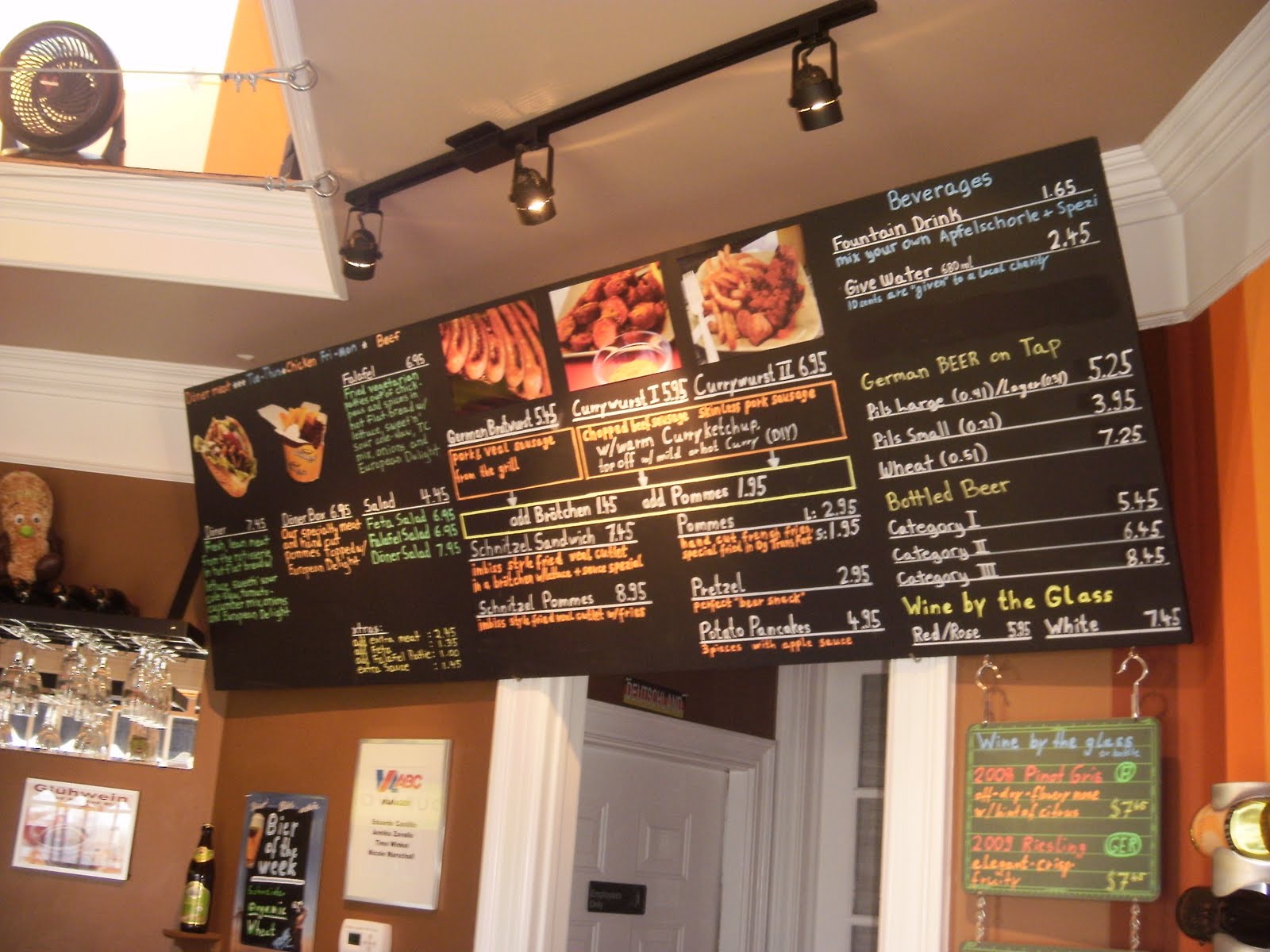
A couple of days ago my good friend Michael Stewart and I took a photographic safari through the Potomac valley above Washington, DC. These spur-of-the-moment road trips frequently take us to various diners and greasy spoons where we like to sample the simple but tasty fare offered in equally simple surroundings. This trip was no different and we enjoyed a late breakfast at a small, rather nondescript eatery in Cumberland, Maryland before wandering the quiet streets and nearby train yard. It was a breakfast to die for, and, considering the calories, one that could be equally lethal. Afterwards we continued to Harper’s Ferry, West Virginia and through the farms and vineyards of northern Loudoun County in Virginia. Later in the afternoon we found ourselves in Leesburg, Virginia and looking for another place to rest and enjoy a small repast and a cold beer. Michael, who is well-versed in the location and offerings of these local joints, suggested a stop at the Döner Bistro on the edge of downtown Leesburg. It sounded good to me.

The place was opened in 2008 as the successor to the popular Mighty Midget Kitchen, a small burger and barbeque joint opened at a nearby intersection back in 1946. Fashioned out of scrap metal taken from a surplus World War II B-17 bomber, the original “kitchen” was only large enough to accommodate one or two people taking and preparing take-out orders while the actual cooking was done on a smoker grill out back. The Mighty Midget moved to its present location in 1987 but eventually closed a few years later. It was reopened in 1996 and continued to operate until 2007 when it closed again. In the meantime, a couple of local entrepreneurs originally from Germany mourned the fact that there was no place to find Turkish-style doner kebab in Leesburg and environs. They launched Hamburg Döner (the adding of an umlaut was a nice Germanic touch) in 2006, selling them out of a converted van in a city parking lot.. The next year they took over the defunct Mighty Midget Kitchen and began preparing meals in the original scrap metal structure and serving them in the adjacent outdoor beer garden or inside at the bar and small dining room. In 2009 the establishment was renamed Döner Bistro.

In addition to its wide selection of traditional German fast food dishes such as Bratwurst, Schnitzel and Currywurst, Döner Bistro’s unique offering is the Döner Kebab, or simply a Döner. Although originally a popular Turkish street food consisting of marinated meat (usually lamb or chicken) grilled on a vertical spit and then sliced and served over rice, the German version (with umlaut), which was created by a Turkish immigrant in Berlin in the early 1970s and which is served at the Döner Bistro, is quite different when you break it down. The meat is tangy with Turkish spices and is served with salad and a German-style herb and garlic sauce and wrapped in a piece of warm flatbread. It resembles the Greek gyro, or souvlakia, which are both served with pita bread, but the Döner is an altogether different eating experience.

Snow was piled up around the entrance when we arrived and it was still a bit chilly to eat outside in the beer garden so we chose to sit in the tiny bar where we ordered our meal and enjoyed one of the many German beers available on draft and in bottles while listening to German techno-pop and watching the news about the revolution in Cairo. I chose one of my favorite beers, a Warsteiner Pilsner, and we chatted with a young fellow from Hamburg who was working the bar and who took our order. I told him I had never had a Döner before. I guess I had encountered and eaten them when I was traveling in Turkey and just assumed they were gyros (I was not into food back then like I am now). He told me that it is the number one fast food in Germany. Now I lived and studied in Germany in the early 1970s and I have traveled there several times since, but I had to confess that I had never heard of it. I thought I was familiar with the standard fare found in the ubiquitous Schnellimbiss [fast food joint or snack bar] throughout Germany, but I guess the Döner had not yet reached my stomping grounds in southern Germany before I left to return to the USA. Since my visit to the Döner Bistro I have spoken with friends in Germany and they have confirmed the overwhelming popularity of the Döner. Now I know. Better late than never they always say.

Friday, January 21, 2011

Wienermobiles and Whistles

A few days ago I posted my paean to bacon and so I have been thinking a lot about meat lately. And how can you think about meat and not reflect fondly on the hot dog? It is perhaps the most American of foods, a staple of summer picnics and cookouts. Humphrey Bogart once stated that “a hot dog at the ball park is better than steak at the Ritz." I can’t imagine going to a ball game and not finishing off a dog or two washed down by an ice cold beer. And growing up in the Midwest, I cannot think about hotdogs, or bacon for that matter, without evoking the name of Oscar Mayer, who, come to think of it, is also the King of Bologna as the 1973 advertising jingle reminds us - “My bologna (pronounced “baloney”) has a first name, it’s O-s-c-a-r, my bologna has a second name, it’s M-a-y-e-r . . . .” Can you see where I am going with this?

And who can forget the well-known 1963 “wiener song”?
Oh, I wish I was an Oscar Mayer wiener,
that is what I'd truly like to be,
'cause if I were an Oscar Mayer wiener,
everyone would be in love with me.
I have very fond memories of Oscar Mayer hotdogs in my youth. Hot dogs and Oscar Mayer went together. Our refrigerator was always stocked with its hot dogs, bacon (oooooooo . . . bacon), and other sliced sandwich meats in packages displaying the familiar red and mustard yellow Oscar Mayer logo.

These meat products trace their origins to the German-styled charcuterie produced by the Mayer brothers who brought their recipes from Germany to America shortly after the Civil War and who worked in the meat-packing business, first in Detroit and later around the stockyards on Chicago’s South Side. They later established a meat market on that city’s North Side and sold their meat products under the “Edelweiss” trademark, beginning in 1904. This changed to “Oscar Mayer Approved Meat Products,” in 1918, and the following year the brothers purchased a meat packing plant on the east side of Madison, Wisconsin. A few years later they opened a similar operation in Milwaukee. The rest is history.

In 1912, the company began to use a Model T Ford to deliver meats in and around Chicago, and in 1936 it came up with a new marketing strategy . . . using an automobile chassis onto which an oversized body in the shape of a hot dog was affixed. Dubbed the “Wienermobile,” this 27-foot motorized hot dog originally traveled around Chicago promoting the company’s “German-style wieners” and the wholesome goodness of its meats.

I got up close and personal with the Oscar Mayer Company (which is now a division of Kraft Foods and probably owned by the Chinese if you look deep enough), in the summer of 1965, when my family moved to Maple Bluff, an insular suburb of Madison on the shores of Lake Mendota. Prevailing winds out of the east would bring with them a redolent reminder of the company’s packing plant - the scent of countless cookouts and breakfasts gone by. The kids of the corporate chairman, a great grandson of the original Oscar Mayer, and the then company president were my classmates at Sherman Junior High School (later Sherman Middle School and now the Malcolm Shabazz City High School) which stands almost in the shadows of the packing plant, as does the old ice arena on Commercial Avenue where I use to play hockey after school.

I had heard of and seen pictures of the Oscar Mayer Wienermobile when I was a youngster, but it was during my time in Madison that I saw one up close for the first time at a fall festival held at Tenney Park. I had always thought that there was one Wienermobile driven by the one and only Little Oscar. That is how it all started out, anyway. As it turned out, by the time I had my first encounter of the Wienermobile kind, it was one of a growing fleet of Weinermobiles piloted by a phalanx of Little Oscars. And on that day in Tenney Park I discovered that the father of one of my other classmates was a member of the Little Oscar fraternity and in command of the Wienermobile on site. At the end of the day, I had the honor of riding with my friend and his dad on the trip back up Sherman Avenue to return the Wienermobile to its garage near the packing plant. As a parting gift, Little Oscar (at least the one I got to meet and talk to) gave me my very own Wiener Whistle cast in the image of the iconic Wienermobile.

Now the Wienermobile fleet is crewed by “Hotdoggers” trained at Hot Dog High, in Madison. What I would have given to have a diploma from HDHS to go along with my Wiener Whistle. A few years later, when I attended high school in Richmond, Indiana, we regularly played Frankfort High School, the “Home of the Hot Dogs.” I guess that might have been the next best thing.

The Wienermobile has been updated and modernized several times over the years. Al Unser took one of them on a test lap at the Indianapolis Motor Speedway in 1988 and clocked speeds in excess of 90 mph. Now, that is a fast wiener in anybody’s book. In these hard economic times a wise shopper tends to select store brands over the big name products. I seldom buy Oscar Mayer products anymore, but every time I see the familiar logo I think back to the old days and the backyard cookouts and the Wienermobile with Little Oscar at the wheel. Maybe in my next life I will come back as an Oscar Mayer hotdog. Everyone would be in love with me.

Tuesday, January 18, 2011

Salty, Smoky, and Greasy As Sin

Not long ago a friend noted on Facebook that people often demur when asked if they want bacon, yet if you cook it and serve it unannounced, “it will magically find a home. Bacon is persuasive.” I never really thought about it in those terms, but there is not a small measure of truth in it.

Let’s me be honest up front. I love bacon. As I said when I responded to my friend’s Facebook posting, I will take bacon anytime, anywhere, under any circumstance, regardless of the time of day, the day of the week, the season of the year, offered or withheld. I will beg, maybe even steal, for a rasher of bacon. It can be thin or thick sliced, hickory or maple smoked, sugar cured or not. I really don’t care. Well, I guess this is not entirely true. I will draw the line on Canadian-styled bacon. Don’t get me wrong. I will eat it and I enjoy it, but it is sliced ham in my book. Nothing more, nothing less. It is not bacon and don’t let anyone (especially Canadians) tell you otherwise. The same goes for “turkey bacon.” It looks and kind of tastes like bacon; it even smells and sizzles like bacon when it is frying in the pan. But don’t be fooled by this. It is not bacon! It does not have the fat, the salt, even the nitrates of real pork bacon. Some might say for these very reasons it is better for you. I am quite certain this is true, but we are not talking nutrition here folks! We are talking about bacon, the true essence of bacon. the greasy, salty, why the hell am I eating this stuff that’s bad for me bacon. When it is all said and done, I find I must agree with Homer Simpson - “Porkchops and bacon, my two favorite animals.” Well, bacon anyway. A final word from Homer on the eating and enjoying of real bacon. “You know that feeling you get when a thousand knives of fire are stabbing you in the heart? I’m having that right now . . . Ooh, bacon, unexplained bacon!” I love bacon!!

There are those who can quote chapter and verse why you should not eat
bacon. One of the people who commented on my friend’s Facebook entry noted that she had read somewhere that when vegetarians fall off their self imposed refusal to eat meat, more often than not bacon (real bacon) is the culprit. The popular Wisconsin (where they eat a lot of bacon) columnist Doug Larson once wrote that "life expectancy would grow by leaps and bounds if green vegetables smelled as good as bacon." The late James Beard, the noted chef and food critic who, along with Julia Child, brought gourmet French cooking to the United States after World War II, had long confessed that “if I were about to be executed and were given a choice of my last meal, it would be bacon and eggs. There are few sights that appeal to me more than the streaks of lean and fat in a good side of bacon . . . Nothing is quite as intoxicating as the smell of bacon frying in the morning, save perhaps the smell of coffee brewing." As my friend
commented on Facebook - “bacon is persuasive.”

It is also becoming pervasive. It is not just strips of pork bacon frying in a pan anymore. It has also long been used to wrap other foods. Think of filet mignon Then there is bacon-wrapped shrimp, scallops and oysters; bacon-wrapped pork roast, bacon-wrapped chestnuts and dates; bacon-wrapped asparagus; and one of my all-time favorites - bacon-wrapped hot dogs. And I just discovered what could very well be a new favorite . . . the bacon-wrapped corndog, a version of which one connoisseur has christened the “porndog” because the batter contains hot peppers and other “sinful” ingredients. And don’t forget bacon-flavored seasoning for those dishes that just seem to be missing that finishing touch, or bacon bits for your salad or sprinkled over other culinary offerings. There is also the obvious combination . . . bacon-wrapped bacon (and bacon-wrapped bacon-wrapped bacon, and on and on). Let us not overlook foods not normally associated with its crispy goodness: bacon-wrapped Twinkies, bacon-flavored donuts and other pastries, bacon-flavored ice cream and Jelly Bellies. I understand there is a vegetarian restaurant in San Francisco that serves coffee brewed with bacon. James Beard would have loved that before heading to the gibbet. And what do you do when you find the need, after feasting on bacon, to dislodge those crunchy little bacon bits that wedge between your teeth? Bacon-flavored dental floss. Yes, there is bacon-flavored dental floss. Oh, the humanity!

I am reminded of the late cowboy poet and former poet laureate of South Dakota, Charles “Badger” Clark, Jr., whose poem “Bacon” can be found in his Sun and Saddle Leather (1915).

You’re salty and greasy and smoky as sin
But of all grub we love you the best.
You stuck to us closer than the nighest of kin
And helped us win out in the West.
. . .
You’ve sizzled by mountain and mesa and plain
Over campfires of sagebrush and oak;
The breezes that blow from the Platte to the main
Have carried your savory smoke.

How much more persuasive can one food be?

But we love you and swear by you yet.
Here’s to you, old bacon, fat, lean streak and rin.’
All the westerners join in the toast,
From mesquite and yucca to sagebrush and pine,
From Canada down to the Mexican Line,
From Omaha out to the coast!

Yes, bacon is one of my favorite animals. To quote Homer. “Ohhhhh . . . . .. Bacon.”

Sunday, January 16, 2011

It's Googleable

What a wonderful new word . . . something capable of being found during a Google search, probably the most comprehensive and used Internet search engine. I can think of only very rare occurrences when I have typed in search terms and not come up with a “ghit,” or Google hit, on something even remotely connected to my intended search. The transitive verb “to google” has been used almost since the inception of this search engine and it has become a part of our everyday speech. The American Dialect Society, founded in 1889, called it the “most useful word” in North American English in 2002. In fact it has become synonymous with web searches regardless of which search engine is being used. “Google” has also been incorporated in other phrases having to do with the use of the search engine, such as the frequently used “Google Bomb,” “Googlewashing,” or “Google bowling,” all of which have to do with the intentional high ranking of websites turned up during a Google search. I find this all quite fascinating.

But I must confess that I have not heard the adjective “googleable” used before this weekend, although I guess it makes sense. If you can have a verb, why not an adjective? So I looked into it and sure enough there are folks out there that use this term regularly. There is also the derivative noun “googleability” which is the ease with which information about a person or thing can be found on an Internet search engine (not just through Google).

How did I find this information? By running a Google search of course. Doing so I found literally dozens of googleable words using “google” as a base. Here are a few of my favorites: “Googleheimer’s” - signing on to Google and then forgetting what you were going to google; “googlescrewed” - to look up directions on Google Maps and get lost when you follow them; “googlebator” - someone who googles their own name; and “googlechondria” - looking up your physical symptoms on Google. There are also some Google-based afflictions: “Googlerrhea” - looking up the definition of “Google,”and “Googler’s Remorse” - when you look up something and the search terms gives you results that you neither requested nor want. I will leave that one to your own imagination.

So I really opened up a Pandora’s box, and afraid of coming down with my own version of Googler’s Remorse, I decided to stop while I was ahead. I wonder what search terms folks will have to use for this blog posting to come up? What is its inherent googleability? Do I even want it to be googleable? It’s up to you. Whenever the “googletunity” strikes you.

Monday, January 10, 2011

From Cyberspace Came the Six Thousand

Today the number of viewer hits for Looking Toward Portugal surpassed the 6000 mark. I appreciate everyone who has tuned in over the past two years and I hope you will continue to do so. I have received a number of interesting and rewarding comments from some of you and I am gratified that these random thoughts have resonated with so many. Thank you!

Thursday, January 6, 2011

Pardon Me?

“Be good, be kind, be humane, and charitable; love your fellows; console the afflicted; pardon those who have done you wrong.” August words from the Russian novelist and playwright Maxim Gorky. We are taught from an early age to turn the other cheek and we should all strive to do this. But perhaps this gesture should be reserved for those who might receive at least a modicum of relief from such charity. You would think that, in this day and age, our politicians would have more important things to do than consider the pardoning of individuals who have been taking the big dirt nap for decades. I do not object to the act of pardoning a transgressor, but let’s take a look at the facts, or what we believe them to be.

Charles Crist, the Republican turned independent governor of Florida who left office earlier this week, was seeking perhaps one last grand gesture before relinquishing the reigns of power in Tallahassee. Governor Crist, who since 2007 had considered the pardoning of Jim Morrison, the former lead singer and factotum of the legendary band The Doors, finally asked the state’s Board of Executive Clemency to consider such a pardon. Unfortunately, Morrison died in Paris in July 1971 and remains dead nearly forty years later. Or does Governor Crist know something the rest of us don’t?

Two years before his death, during a concert in a Miami auditorium in March 1969, Morrison dropped his black leather pants and allegedly presented himself in flagrante delicto. The public outcry was immediate and intense and the local district attorney charged Morrison with a felony count of lewd and lascivious behavior along with more minor misdemeanor counts. Morrison eventually surrendered to the FBI (was this a federal offense?) and was subsequently tried in 1970, convicted only on the misdemeanor counts of profanity and indecent exposure, and sentenced to a monetary fine and six months in jail. He appealed his sentence and was released on bail. Not long after that he moved to Paris where he died before his appeal was heard. The conviction has stood for four decades.

In early December the Clemency Board acceded to the request by Governor Crist who, like many, including other members of the band, never believed Morrison had actually exposed himself. The Board voted unanimously to issue a pardon to the long dead Door a day after what would have been his 67th birthday. The pardon does not really address whether a “crime” was actually committed in the first place and this oversight has left a bad aftertaste for those who still believe Morrison was falsely charged. We can hope that Morrison may find a more peaceful rest as a result of Governor Crist’s largesse.

Not to be outdone, the former Democratic governor of New Mexico , Bill Richardson, who stepped down on New Year’s Day, considered as one of his last official acts a pardon for William Bonney (aka Henry McCarty, Henry Antrim, but best known as Billy the Kid) who died almost 130 years ago. One had to admit that Governor Richardson’s decision was fraught with more serious implications since Billy’s transgressions were slightly more serious than genitalia gone wild. Depending on your source of preference, Billy is alleged to have killed between 9 and 21 men, including three law enforcement officers, during his short life (he was gunned down by Sheriff Pat Garrett in July 1881 at the tender age of 21). The pardon under consideration was not for all of Billy’s alleged crimes. In fact, it was not so much a pardon as a belated amnesty from prosecution for the murder of the Lincoln County sheriff supposedly pledged by New Mexico territorial governor Lew Wallace in 1880 if Billy agreed to testify about other murders he had witnessed. Billy cooperated, yet the amnesty was never granted and Billy was eventually convicted of the sheriff’s murder and sentenced to be hanged. He escaped before the execution could be carried out, killing two deputies in the process. The entire question of the amnesty became moot when Garret shot and killed Billy a few months later.

Governor Richarson, unlike his Florida colleague, did not rely on the serious deliberations or good judgement of a state clemency board. Rather, he established a special website where any individual could go and register an opinion on whether a pardon/amnesty should be granted. Just over 800 individuals voted with a slight majority favoring the pardon. Richardson, in the final hours of his term in office, and citing inconclusive proof that Wallace had actually offered Billy amnesty, chose to ignore the supporters of amnesty and many historians by denying the amnesty/pardon. Old Billy, I am sure, does not care much one way or the other. But some good came out of this exercise. “It’s good for tourism,” Governor Richardson claimed. “It’s gotten great publicity for the state.” If he says so.

Governors Crist and Richardson remained true to that sage advice offered
by John Dryden in “The Conquest of Granada.” “Forgiveness to the injured does belong; But they ne’er pardon who have done wrong.” I know I sleep better knowing that justice has prevailed.

Saturday, January 1, 2011

A New Day, A New Year, A New Decade . . . A New Start?

It seems like only yesterday everyone was talking about the advent of a new century and worried about Y2K and the end of life as we know it. Well, it has been a tumultuous decade for sure. Little did we know just how much our lives were going to change so quickly. Ten years can make a big difference.

Now just about everything we do and think is governed by a new reality ushered in by the events of September 11, 2001 and this country’s war on international terrorism. We now find ourselves at war in Iraq (don’t let anyone tell you it is over, not as long as Americans continue to die there) and in Afghanistan (nine years and counting). We can no longer travel freely and without fear in our own country. We can no longer say or write what we believe without fearing that we will be labeled “unpatriotic” by those who feel they represent and speak for all Americans, those who want to take America back to its core values by voicing platitudes without backing them up with action. Talk is cheap, and if you look around, it seems to me they want to take more away than give back to us our American birth right. Fear seems to govern everything we do and by giving in to it, we are capitulating to the merchants of fear at home and abroad, those who will take because we are too afraid to defend what is rightfully ours.

I am reminded of another time when America stood on a similar brink. The country had been devastated by the Great Depression and the specter of totalitarianism was beginning to spread its long fingers across Europe with the rise of Adolf Hitler in Germany. Franklin D. Roosevelt assumed the Presidency in early 1933 and during his inaugural speech he addressed the American people “with a candor and a decision which the present situation of our people impels.” His words that day still ring true:
This is pre-eminently the time to speak the truth, the whole truth, frankly and boldly. Nor need we shrink from honestly facing conditions in our country today. This great nation will endure, as it has endured, will revive and will prosper. So, first of all, let me assert my firm belief that the only thing we have to fear is fear itself - nameless, unreasoning, unjustified terror which paralyzes needed efforts to convert retreat into advance.

It is time for our current leaders to speak with equal candor and decision. We should all do what we feel is right to make our country great again. Not red states or blue states, but united states. We must do what is necessary so that we can once again live without fear. So now, as we begin a new year, a new decade of the 21st century, we wonder what lies ahead of us. More of the same? I certainly hope not. There’s the word . . . “Hope.” Time for a new start. Let us not abandon our hope for a better time to come. We must all work together again, just as FDR urged the American people to give up petty differences for the common good.
It is the insistence, as a first consideration, upon the interdependence of the various elements in and parts of the United States of America - a recognition of the old and permanently important manifestation of the American spirit of the pioneer. It is the way to recovery. It is the immediate way. It is the strongest assurance that recovery will endure.
Let us all work together to make 2011 a watershed year, a benchmark in our history, when “they” and “us” once again become “we.”

Friday, December 24, 2010

Wishing You a Festive Holiday Season

Wishing all of my gentle readers a very festive holiday season. May you seek peace and tranquility among your family and friends.
नमस्ते / Namaste
Steve

Thursday, November 25, 2010

Celebration of the Second Anniversary of Looking Toward Portugal

Today marks the second anniversary of Looking Toward Portugal, a collection of occasional postings begun on a whim on a quiet evening in Gainesville, Florida where we were spending the Thanksgiving holiday. A few days letter I posted a few reminiscences of a trip to Marjorie Kinnan Rawling’s nearby farm and citrus grove in Cross Creek. Since then these postings have run the gamut from descriptions of other road trips past and present, reflections on foods both domestic and exotic, remembrances of distant childhood years and friends and family now gone, and musings on favorite writers and poets and the places they lived and wrote about. I have enjoyed writing and sharing them with all of you, and I have been gratified by the reception they have found from a wide and sometime unexpected audience. I look forward to sharing more of these random thoughts in the future. Thank you for tuning in. I hope you will continue to do so.

Monday, November 22, 2010

A Fading Memory of Camelot

This morning I came across an interesting column by Walter Shapiro, and his lead sentence grabbed me. “The answer - even though I have not been asked the question in perhaps 15 years - is high school chemistry class.” He is referring to the question so many of my generation and older have been asked over the years. Where were you when you heard the news that President John F. Kennedy had been shot in Dallas that fateful day 47 years ago?

I can no longer remember when I was last asked this question, but my answer was immediate and always the same. I was sitting in Mr. Ballard’s math class at David Millard Junior High School, in Asheville, North Carolina. The rumors and guessing began almost immediately. Was the story true? Had the President been wounded? Was he dead? We could not believe that the reports we were hearing were true. Soon enough we learned that they were. I was sitting in art class when the teacher left the room for a minute or two only to return with tears in her eyes. She did not have to tell us anything more. All of this was difficult for a 12 year old boy to fathom. What happens now? We were told to go home and be with our families.

Being in school when the news broke, I did not see Walter Cronkite sitting before the television camera that afternoon, taking his glasses on and off as he reported the events in Dallas that culminated in his choked up announcement that the young President was dead. It was a long, quiet walk to the downtown bus terminal on Pack Square. The streets and sidewalks were eerily vacant as the autumn leaves rustled in the breeze. When I arrived home I found my mother sitting before the televison set as Cronkite continued to describe what had happened. Dad eventually came home from work and for the next three days we watched as the United States and the world came to terms with the gravity of what had occurred in Dallas. Shapiro is correct when he says that the “memories of that terrible weekend are an inescapable part of who I am today.” They are impossible memories to erase.

The following spring I traveled with my class to the New York World’s Fair and on the way home to North Carolina we stopped for a two-day visit to Washington, DC. We visited all the monuments, but it was the trip across the Potomac River to Arlington Cemetery that remains clearest in my memory. There we filed pass Kennedy’s grave on a quiet hillside below the Custis-Lee Mansion. From there we had a panoramic view of city. The grave was not the massive marble plaza it is today. Then it was a simple mound of evergreen branches surrounding the Eternal Flame ignited the day he was buried and a lone bugler chirped a broken note during the playing of Taps. Just a few days ago I drove across Memorial Bridge, the one the funeral cortege used that day. The flame still flickers over the city at night.

It was Chaucer who suggested that time heals all wounds. It did not seem like one would ever recover from the events of November 22, 1963. But we have. The shining days of Camelot have been dimmed by the scrutiny of history and a succession of other tragedies that have awakened us to the dangerous and unpredictable times in which we live. Two generations have grown into adulthood and middle age since those black and white images greeted us on that late autumn weekend 47 years ago. Now we ask each other - “Where were you on September 11, 2001?”

Yet, for those of us who can remember where we were when we heard the news that President Kennedy had been shot and killed, we recognize to this very day that it was then we perhaps lost our innocence. Nothing would ever be the same again. This is something to reflect upon despite the passage of time and the dimming of memories.

Saturday, November 13, 2010

Live Free or Fry

When I first started this “blog” almost two years ago, I pledged to myself that I would steer clear of politics and other questionable activities. And I have remained true to this promise. Well, until now. And what I am writing here is not really politics, per se, although politics will surely play a significant roll in this before it’s all over.

Anyone who has followed these postings over the past two years will know how strongly I feel about the Great North Woods of northern New Hampshire (as well as adjacent areas of northern Vermont and western Maine). These areas are still covered with endless miles of forested hills interrupted occasionally with river valleys dotted with small villages and farms that have been in families for generations. I visit this region as often as my schedule permits and I have come to think of it as a spiritual home. Truly God’s Country! One can stand on any hilltop and look in any direction and see nothing but hills, forests and lakes. It is hard to fathom the possibility that this might all change if the power companies have their way.

In early October it came as a shock to those who call the North Country home when they learned that Hydro-Québec, the provincial-owned Canadian energy giant, and Northeast Utilities and its subsidiary Public Services of New Hampshire [PSNH], in the United States, had entered into a partnership known as “Northern Pass.” It would establish high-tension power routing 1,200 megawatts of electricity from a hydro project near Sherbrooke, Québec, across the international border at Pittsburg, New Hampshire, and then down the length of the state, through the Connecticut River valley and the White Mountains to a converter station in Franklin, and finally to Deerfield. From there the electricity would be distributed into the New England regional power grid. None of this electricity would benefit the people of North Country yet they would have to watch their magnificent landscapes and view sheds be ruined by a 150-foot clear-cut swath through their hills, forests and valleys and 130-foot tall towers carrying the new high-tension power lines.

Although PSNH had established its proposed route across New Hampshire, something the people of New Hampshire knew nothing about until now, the last few miles of the route, from just north of Colebrook to Canadian border in Pittsburg, have not been announced, nor has Hydro-Québec, which is studying the route through Canada, informed the good folks on that side of the border where it intends to run the lines nor has it established the border crossing. This said, all concerned parties in the US have only until December 16 to registers comments and/or opposition to the Northern Pass project before hearings are scheduled in the coming months. How is it possible to comment on a project for which concrete route information is not yet available?

But this has not stopped the people of the North Country, as well as a growing number of Canadians, from voicing their opposition to Northern Pass. Over the past weeks they have been showing up in growing numbers at meetings of the boards of selectmen in communities that will be impacted by this project to put their questions and concerns to PSNH representatives. Besides their worries about esthetics, they also want to know about the possible drop in property values in an area already struggling in these hard economic times. What about easements and the possibility that eminent domain will be applied to those who don’t want these lines going through their properties?

They are also organizing and networking as they prepare for the battles to come over this project. Concerned Citizens Against the Powerlines have scheduled an organizational meeting in Colebrook this coming week. There is also a Facebook page - “Stop The Northern Pass - No High Tension Power Lines in Coos County” - which is serving as a sounding board for those opposed to this project. A similar project was defeated almost thirty years ago when a less-organized opposition forced the power companies to go through Vermont before crossing into southern New Hampshire. Why can’t these new lines use existing right-of-ways? Why can’t they be buried? What about the potentially dangerous effects on the health of those who live near these lines? The verdict is still out on this. There are lot of questions that need to be answered, and the good people of the North Country will not sit still until they get the answers they expect and deserve. Let us not forget that this area established an independent Indian Stream Republic back in the 1830s when neither the newly- established United States nor British Canada represented their best interests. These folks are still fiercely independent. I wish them well. They deserve better than they are getting.

So now I will step down off my soapbox. I have said what needed to be said. But don’t be surprised if I step up again in the coming months. This ain’t over by a long shot!

Saturday, November 6, 2010

Where Are You Going My Little One?

As I sit here at the hotel in Dumfries, Virginia this evening, I am flooded with memories of two of the most memorable days of my life, both of which occurred here in northern Virginia. We have lived in Maryland for the past 34 years yet this near yet foreign land holds sway over us. Tonight I am reminded of the song “Turn Around,” written by Harry Belafonte, and which became popular several decades ago as a commercial ditty. Our son Ian (our one and only) was married this afternoon in a beautiful ceremony held just down the road, in Quantico, Virginia. The wedding comes just four days before his 29th birthday. Where have all those years gone? It seems like only yesterday I watched Ian come into the world on a cold, gray November morning.

Learning that Sally Ann was pregnant in the spring of 1981, we prepared for an eventual delivery at the Columbia Hospital for Women, one of the oldest hospitals in Washington, DC established shortly after the Civil War. We had even toured the maternity ward in preparation for that blessed day. Not long before Ian was born, our OB-GYN moved her practice to Northern Virginia and we went with her. Ironically, this hospital, where over a quarter of a million babies were delivered during its long and distinguished history, closed its doors permanently in May 2002 and the building has been transformed into an upscale condominium complex.

So, when the contractions came in the wee hours of November 10, 1981, we began what seemed to be a timeless journey from our suburban Maryland apartment to Arlington Hospital (now the Virginia Hospital Center). We had just been to that hospital the previous morning for a sonogram, and all too soon we found ourselves in the very same birthing room where Ian entered the world at 11:57am on that overcast morning. Now fast forward almost three decades. Ian was raised at our home in Mount Rainier, Maryland and attended the local public schools from which he graduated in 1999. He followed in his dad’s footsteps and attended the University of Maryland and graduated in 2005 with a Bachelor of Science in Anthropology (I received my doctorate at Maryland in 1984). Ian got a job and has continued to live and work in Maryland . . . about a half hour away over in Montgomery County. It was there he met Katie, a Virginia girl, who, as it turns out, has become the love of his life. Just a year ago, shortly before Thanksgiving, he popped the question, and today we have returned to Virginia to watch Ian and Katie begin their life together and to celebrate with family and friends who came great distances to share in our happiness.

It was a beautiful day for a wedding. Autumn came late this year and so the fall foliage is still at its peak color. Sitting in the church during the ceremony I looked at Ian standing up there and remembered when he was born not too many miles away. That day suddenly came back to me in every small detail. I looked down at him in his crib and wondered what his life would be like, what would he become. And now I know. He has grown into the man I always hoped and knew he would be. This evening at the reception I watched him dance with his mother and I can’t think of a moment I was prouder of him. Sally Ann and I wish him and Katie every happiness in the world.
__________
Photograph by Michael G. Stewart

Tuesday, November 2, 2010

A Sherwin-Williams Day

Late October and it was time to once again look toward Chesapeake Bay and the autumn rockfish (striped bass) migration through the Bay. My son Ian and I had fished together during the spring trophy season, but he is getting married in just a few days and so he was not able to join me on this latest outing. But there is always next spring and we will certainly fish together again soon.

Some of the usual suspects, and a couple new faces, arrived at the marina on Tilghman Island around 6:30am to load our gear on board the “Nancy Ellen.” Moored nearby were two workboats preparing to take a large party out to hunt sea ducks. We stood along the stern sipping coffee in the early morning darkness watching these hunters arrive, one of them decked out in full Scottish regalia, and commenting on who - anglers or hunters - would have the better day on the water.

We threw off our ropes and slipped our mooring into Knapp’s Narrow for the short trip down to Harris Creek and into the broad mouth of the Choptank River. The sun was just beginning to rise above the eastern horizon as we motored past the sleeping village of Tilghman to starboard. Soon we were rounding the southern end of Tilghman Island at Fairbanks and Black Walnut Point and passing into the open Bay. As we did, Captain Bill Fish was keeping a watchful eye, staring through his binoculars toward Cook’s Point and the southern shoreline of the Choptank River and observing the movement of birds across the water. They are the tell-tale signs of where the fish might be.

The previous day’s strong winds had churned the Chesapeake into a froth of whites caps and sea spray as I crossed the Bay Bridge from Annapolis to Kent Island and I was afraid the trip might be canceled. Earlier in the month we had come to Tilghman to catch a boat out to Poplar Island but the rough seas forced it to remain at its slip in the Narrows. Fortunately, the winds calmed somewhat overnight and both the river and the Bay had a pretty good chop with a steady breeze blowing out of the southwest. When not gazing through his binoculars, Captain Fish was in constant contact by radio and cellphone with other captains. “Looked good here the other day,” he commented to the others. “We are not fishing the other day” came a reply from one of the boats.

After an hour or so on the water we arrived off the mouth of the Little Choptank River where we joined a growing fleet of boats, most of them from the Western Shore. We all jockeyed for position as we watched for the arrival of the fish. Baitfish were passing beneath us in growing numbers and birds worked the surface in search of an easy meal. It was not long before we began to spot rockfish moving into False Channel. At 8:30am Captain Fish gave us the signal to “drop the junk in the water” and we were soon trolling a slough known to the local crabbers and fishermen as the James Island stone piles with white Shassy Shad and a chartreuse bug recently concocted by the good captain.

The first fish hit after trolling for 15 minutes - 17 inches, a nice fish but too short by an inch. Back over the side it went. A few more tossers hit before I landed the day’s first keeper squeaking by at just over 18 inches. How cruel are the fates that a fraction of an inch can make the difference between freedom and the cooler. It looked like we had found a promising but precarious spot for fish as we maneuvered among sets of crab pots scattered among the rock piles and shallow ledges northwest of James Island. We had fished this general area back in May during the trophy season, but then in deeper water, closer to the shipping channel. Now we were watching for rocks as well as fish and we lost lengths of expensive fishing line and a few rigs that snagged on bottom structure or a derelict crab pot while landing several more fish . . . a few for the cooler and more returned to the water to be caught another day. Those are the breaks.

Slack tide arrived mid morning and the birds disappeared and with them the fish. We kept trolling the shoals but the only thing to come aboard were a couple of blue crab. With only three fish in the cooler after two hours of fishing, the captain broke out an umbrella rig as we reset our lines at different lengths and depths. This became a time of mostly quiet reflection as we watched and listened to what the other boats were doing (not much) and Captain Fish tried to figure where we might go to get back on the fish. Some dozed or nibbled on the provision we had brought with us. I sat in the wheelhouse with the captain and made a few notes.

This was my fourth trip with Captain Fish. He sees me coming like a chef sees a restaurant critic sitting at one of his tables. I pull out my pocket notebook and the captain closes his eyes and gently shakes his head. “Oh no, what is he going to write about this time?” No worries. The captain always puts us on the fish and he wants his sports to come home with fish in the cooler. But whether they are large or small, keepers or tossers, in my book they are all fun to catch. And even if there is not a single fish in the cooler when we arrive back at the dock, it was a great day to be out on the water. Good friends, great scenery and a captain who knows his stuff. He has nothing to fear from my pen.

With a flooding tide the baitfish and the rockfish returned and we moved south of James Island and into deeper water. For every fish that went into the cooler we returned three or four to the water. The action was quick as we continued to move our rigs around. By 1:45pm we had eight fish in the cooler as the wind and the chop returned. We needed two more to make our limit and we finally had these by 3pm when it was time to make our way back to Tilghman Island. As we pulled our “junk” aboard and stowed our gear, someone commented that it was a perfect “Sherwin-Williams” day. We had “covered the world” looking for fish and we were going home tired but with smiles on our faces. The tossers were fun to catch and I did not mind setting them free. I look forward to making their acquaintance again when they have grown up a little bit. Maybe in the spring.

That evening we had rockfish for dinner before I headed back across the Bay and home. Captain Fish had filleted our catch upon our return to the dock and these were broiled and served with roasted red potatoes. The meal you eat today was asleep last night in Chesapeake Bay. May can’t here soon enough.

Wednesday, October 27, 2010

Autumn Leaves

"Then summer fades and passes, and October comes. [We'll] smell smoke then, and feel an unsuspected sharpness, a thrill of nervous, swift elation, a sense of sadness and departure." This is one of my favorite quotes from Thomas Wolfe whose 110th birthday was celebrated earlier this month. I can appreciate Wolfe’s observations on the advent of autumn. It truly is my favorite season of the year. Perhaps Albert Camus said it best. "Autumn is a second spring where every leaf is a flower." What a great image - awakening juxtaposed with a retreat into sleep. But this year autumn has added meaning.

Autumn has finally arrived in Maryland, and not soon enough after one of the hottest summers on record here along the Atlantic Seaboard. We even had a few rather uncomfortably hot days during our summer sojourn at the lake in Maine. The first days of autumn here in Maryland, just over a month ago, were memorable as temperatures once again climbed into the high 90s, hopefully for the last time this year. Yet soon the weather and temperatures turned more seasonable and the telltale signs of the fall season, which came unusually late this year, arrived finally and all seems right in the world. And why should it be so? Our son Ian, our one and only, is getting ready to marry the love of his life in just a few days and I am pleased, and take a certain degree of comfort, in the fact that we will have autumn foliage to enjoy on that very special day.

In the meantime, Sally Ann and I were able to take our annual road trip to look for pumpkins, apple cider, and the other accouterment of autumn. These trips tend to be northward, into the northern precincts of Maryland and over the border into southern Pennsylvania, and this year was no different. The farther north we traveled, the leaves turned more hues of autumn color. As we travel these rural byways I am reminded of those memorable Midwestern autumns when I was a kid, when we raked leaves from the yard and piled them curbside in front of our house. Dad would set fire to the pile while we continued to feed more leaves to the flames. Decades later the smoke and the aroma of burning leaves still tingle my nose. We stop by familiar nurseries where flowering plants and trees have given way to piles of pumpkins and gourds of every size, color and description. Shelves are stocked with canned goods from summer fields and orchards. We also stop by our favorite bison ranch in Linesboro, Maryland where we fill our cooler with various cuts for our freezer.

At the end of the day we make our way southward, to Baltimore, where we have a quiet dinner at our friend’s restaurant in the East Harbor neighborhood. When we arrive home, we put away our culinary treasures and scatter the pumpkins we have purchased on the front porch and various rooms around the house. It was a welcome respite to drive through the autumnal landscapes we have come to love over the years.

Now we must turn our attention to Ian’s wedding and we hope the autumn leaves will stay around for that blessed event. I sit here in my kitchen and look out to the leaves falling all around, and I am reminded of something John Muir once wrote. "I wonder if leaves feel lonely, when they see their neighbors falling?”

Wednesday, September 22, 2010

Paris Postcards

I recently learned from an acquaintance that she and her husband were leaving for France where they plan to enjoy the onset of autumn with a month-long walk through the countryside. How much I envy them. This past summer Sally Ann and I were in rural Québec a couple of times and a good friend reminded me how nice it is to be in New England one moment, and with a quick step across an arbitrarily drawn line on a map, one is suddenly transported to France. Well, not exactly, but it is the next best thing. Still, I am reminded of my own trips to la belle France, especially to Paris.

My first visit to the French capital came in June 1968, at a time when the city, perhaps the entire world, was in turmoil. Martin Luther King had been murdered in Memphis that spring followed by widespread rioting in several American cities, including here in Washington, DC, in nearby Baltimore and Salisbury, Maryland, and in Wilmington, Delaware. Bobby Kennedy’s assassination came only two weeks before I left for Europe. This country’s military actions in Southeast Asia had reach a crescendo in the spring with the battle at Khe Sanh. Eastern Europe was in turmoil with Alexander Dubcek’s attempt to moderate his predecessor’s hardline Stalinist policies in Czechoslovakia which would lead to the Soviet invasion of that country in August. Nigerian genocide in secessionist Biafra went largely ignored by the rest of the world. Civilization as we knew it appeared to be teetering on the brink.

The month before I arrived in Paris the city and the rest of France had suffered through a crippling general strike which brought about the near collapse of Charles de Gaulle’s 10-year Fifth Republic (he eventually dissolved parliament and briefly went into exile In Germany). Workers closed factories and students occupied their universities, threw up barricades and fought the police who used heavy-handed tactics to restore order. Much of the Left Bank - the Latin Quarter and the areas around the Sorbonne - were sealed off by the police.

Upon my arrival the country was gearing up for new national elections which would, ironically, give de Gaulle an even stronger mandate than before. Much of the Left Bank, including the areas around the Sorbonne, had returned to some semblance of order as students abandoned their barricades. But the tension was still palpable. I had no real agenda upon my arrival. I simply wanted to be a flâneur, what Charles Baudelaire described as an individual who walks through a city in order to truly experience what it has to offer. And that is what I did. I wandered the streets of Paris just to see what there was to see. And what I saw was the aftermath of the recent unrest. Many of the ancient cobblestone streets had been torn up, the cobbles thrown at the police by the student protesters. There were still a few burned out automobiles about, and the remnants of barricades near the Sorbonne. This was all new to a young fellow from America’s heartland. But changes were coming there, too.

I would return to the United States later that summer to similar protests in the streets of my hometown when Mayor Daley ordered the Chicago police to put down protests surrounding the Democratic National Convention. There I had my first and only exposure to tear gas on my way to visit the Shedd Aquarium, on the lakefront.

During the summer of 1971, I spent a quiet few months at home in Wisconsin preparing for the upcoming academic year in Germany where university students, much like their American counterparts, were questioning their own government.. I would also return to Paris, my first trip back in three years, where I planned to spend several days of “decompression” in preparation for the cultural and linguistic “bends” I expected upon my arrival in Germany. I was excited to be going back and I remembered those heady days of June 1968 during my first visit to the city. Yet I was looking forward to a more tranquil visit.

Upon my arrival in Paris in late August 1971, I had occasion to visit the old
American Center for Artists and Students, a rather shabby and dilapidated building at 261, Boulevard Raispal, in the Montparnasse. Founded in 1931, it had become a destination and hang-out for many notable Americans living in or visiting Paris. By the 1960s, it was one of the few places where one could see American experimental theater, attend readings by American writers and poets, and enjoy the best of American culture. It was also a gathering place for American students, those who were attending university, as well as those like myself, who were just passing through and were happy to find a place to read an American newspaper while enjoying a real American hamburger. I had been there in 1968, when it was still dealing with the after shocks of the unrest that summer.

Not so in 1971. There were many young Americans in Paris on their own individual pilgrimages of discovery. It was here that I fell in with a group who were off on a Métro ride to the Père Lachaise cemetery in search of the grave of Jim Morrison, the charismatic frontman of The Doors who had died in Paris in early July, just a month prior to my arrival. The grave was still unmarked and we had several conflicting reports as to where it might be located. We never found it, but it gave me another chance to be a flâneur as I wandered through the cemetery looking for the final resting places of others - Balzac, Chopin, Moliere, and two of my favorite painters - Eugene Delecroix and Armedeo Modigliani. I also visited the Pantheon, not far from my hotel in the rue Monge (Gaspard Monge, a French mathematician and draftsman designed the building), which is the final resting place of Voltaire, Zola, Hugo and others.

During another visit to the Center, I met a group of American students attending the Sorbonne and we spent a good part of one afternoon and early evening in various bistros and brasseries along the Boulevard-Saint-Germain. As the evening wore on, one of our group told us about a party later that evening at the home of James Jones, the American expatriate writer best known for his novel From Here to Eternity (1952) which I first read the year before, around the same time I read his The Merry Month of May (1970), in which he describes the unrest in Paris in 1968. We eventually made our way across Pont de l’Archevêché and the Pont Saint-Louis, to the Île-St.-Louis, ending up outside a rather elegant 17th Century building facing the river on the Quai d’Orleans. I was introduced to Mr. Jones, who graciously welcomed us to his home, and the rest of that evening remains a pleasant blur of images fueled by some wonderful French wine. There was a constant coming and going of people with knots of conversation and debate in every room and niche of that grand residence. Several of us eventually ended up walking quai-side below the Pont de la Tournelle before taking it back to the Left Bank as I made my way to my hotel.

I would not return to Paris until the late summer of 1981 . . . a brief stopover on my way to Vienna on business. I was stuck at a hotel near the airport and only had an opportunity to go into the city for one afternoon and evening, I returned to the Pere Lachaise cemetery where I finally found Jim Morrison’s grave. And I ended up at a Vietnamese restaurant in the rue Monge that I first discovered a decade earlier. The place looked much as I remembered it. Eating Vietnamese cuisine in Paris in 1971 seemed just a tad revolutionary what with the posters of Bác Hô (“Uncle Hô” Chi Minh) and Viet Cong banners on the walls. The banners were now gone although a small framed picture of Hô remained. But the food was just as good as I remembered. Unfortunately, the old American Center was gone and I wondered where American students and expatriates congregate now?

It has been almost 30 years since I have been to Paris. Maybe it is time to go back again. I enjoy my occasional trips to Montréal and to rural Québec, but perhaps it is time to be a true flâneur again (in Montréal this term is rather pejorative, referring to one who is loitering). I would love to return to the back streets of the Left Bank where I wandered here and there with no set agenda or schedule. There is still much to see and experience.

Friday, September 17, 2010

Back Home in Maryland and All Caught Up

We have returned home to Maryland after a wonderful and relaxing three month sojourn in Maine. I did quite a bit of writing, including several items to be posted here, but I had only limited access to the Internet while I was away and therefore I was unable to post the items in a timely fashion. The following items are now posted and I am all caught up:


May 31: "Five More Minutes"

June 29: "Ayuh . . . Goin' to Maine"

July 9: "Still Looking Toward Portugal"

July 13: "J'aime le Quebec"

July 27: "Island Poetry"

August 3: "Frying the Cheese"

August 13: "Living in the Past: Rediscovering 'Retro Beers' "

August 17: "When Baseball Was Fun: Remembering Smokey Maxwell"

And stay tuned for a new posting in the next few days. It's good to be back!
__________
Photograph courtesy of Michael Stewart